
Brazilian Empadas vs Empanadas: How Are They Different?
A Brazilian bakery case and an Argentine street cart, placed side by side, would give you two pastries that look just about the same. One gets labeled empada, the other empanada (just one letter apart), and the two of them are dough wrapped around a savory filling. Even die-hard food lovers get these two mixed up, and most restaurant menus across the United States don’t do much to help with that.
The mix-up runs way deeper than just the spelling. These two foods share the same Iberian roots, and they show up under nearly identical descriptions all over the internet. You’ll find them at casual get-togethers all across Latin America. Walk into a Brazilian padaria for the first time and grab an empada when you’re expecting an empanada – what you bite into will be a crumbly and buttery shell that sort of shatters in your mouth instead of one that folds over. It’s a very different texture from what you had in mind.
The tray wasn’t mislabeled. Empadas and empanadas parted ways a long time ago – in dough, in shape, in filling philosophy and in the part that each one plays within its own food culture. They each took root in a different region and got refined over generations into something that’s very much its own. Of the foods mixed up in Latin American cuisine, it’s probably the one I get asked about the most.
The difference between these two matters – if you’re at a restaurant trying to read a menu, at a dinner party or in your own kitchen, where one swap for the other will give you a result that no one planned for.
Here’s what actually makes these two delicious pastries different from each other.
Table of Contents
Both Have Roots in the Iberian Peninsula
When colonizers arrived in Latin America, they brought their food traditions with them. The idea of a filling wrapped inside dough was helpful and portable enough to adapt to local ingredients and tastes – it’s a big part of why it spread so fast and took root in a number of places. The end result almost never looked the same from one region to the next.
Each region brought its own local ingredients, its own flavor preferences and its own techniques in the kitchen. These two foods trace back to the same origin. For centuries, they evolved on their own separate tracks (long-term isolation tends to pull them in very different directions).
Just because two foods share a common ancestor doesn’t mean they ended up in the same place – and Latin America shows that. The region is very large, with wildly different cultures, climates and culinary traditions. Each of them put their own stamp on this borrowed idea until the empada and the empanada grew into two very different foods. At this point, the two only have filled dough in common – it’s more or less where the comparison stops. The family resemblance is genuine enough. But past that, there just isn’t a whole lot connecting them.
Geography and time are probably the two biggest reasons that these foods feel so different from each other. The ingredients that were available along the coast of Brazil were just not the same as what cooks had to work with in Argentina or Colombia. Regional tastes developed on their own. Recipes and methods drifted in their own directions. After enough generations of all that separate development, these foods each grew into their own tradition – with their own identity, their own loyal following and their own very particular way they’re made.
The Dough Makes All the Difference
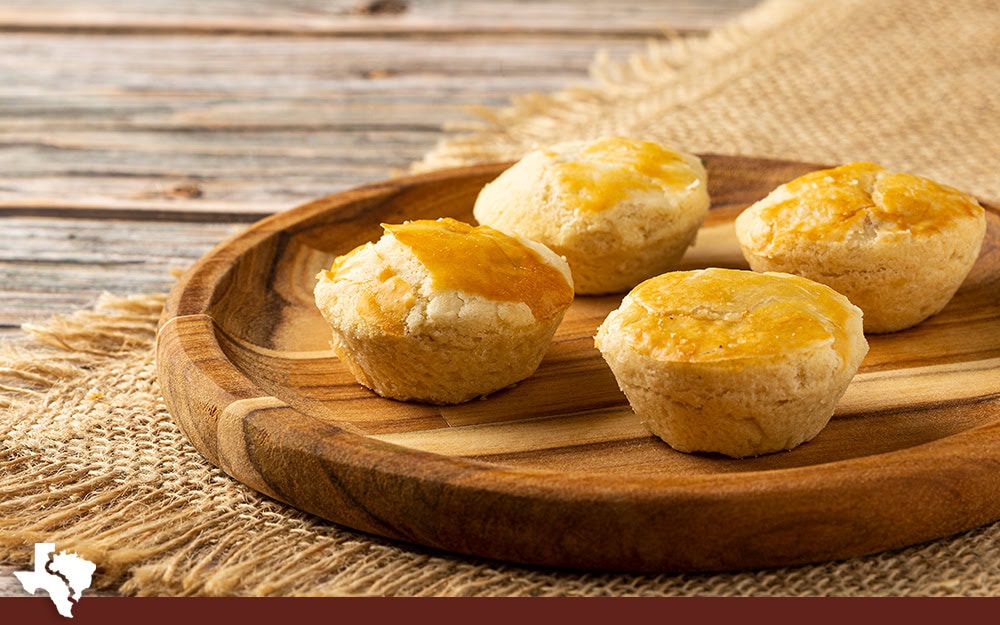
The dough is where these two pastries start to become very different, and the difference between them is pretty wide. Empadas use a shortcrust dough. It’s rich – buttery and dense, much closer to what you’d find in a tart shell than anything bread-like. The dough holds its shape beautifully in the oven. But bite into one, and it shatters and crumbles into these flaky little pieces. That almost fragile quality is a big part of what makes them feel so indulgent – and it’s one of my favorite parts about them.
Empanada dough is thin and flexible. It’s made to fold snugly around the filling and create a tight seal, and it holds up just as well in the oven as it does in a pan of hot oil – which is part of what makes it so versatile. The texture is where the two really split, though. Instead of crumbling or falling apart, there’s a slight pull and chew to it – a little bit of resistance that makes the whole bite feel sturdy and satisfying in your hand.
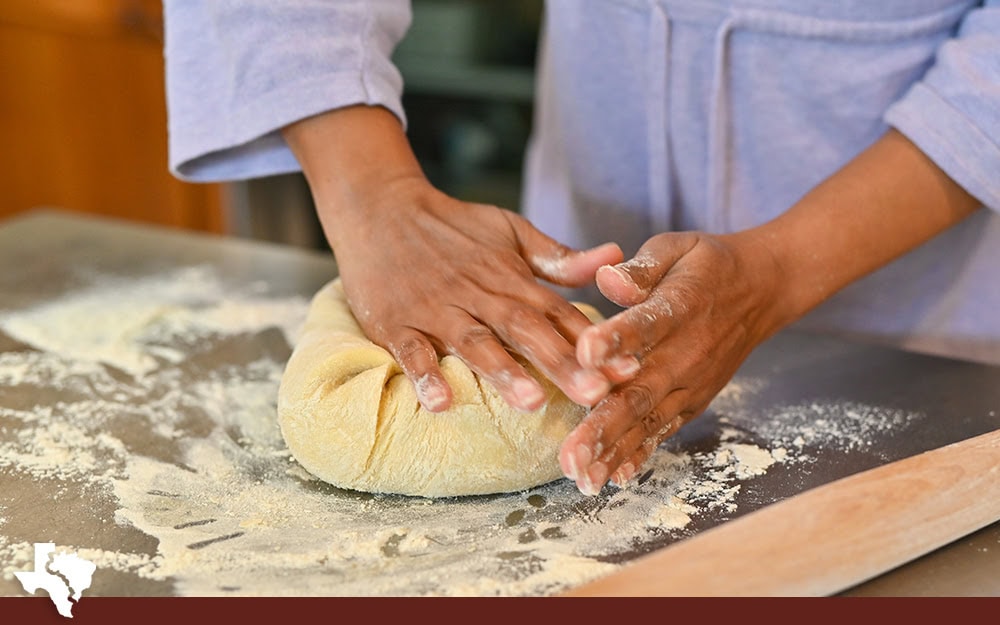
The textural difference between these two actually does change the whole eating experience. The empada’s shortcrust has this rich and almost delicate quality to it – it’s the kind of pastry that you want to eat slowly and with your full attention. The empanada’s dough is made to be handled, though. It’s a genuine grab-and-go food in a way that an empada just isn’t.
That comes from the dough alone – before we even get to what’s going on inside. The filling is, of course, a big part of it too. The dough is what drives the entire experience, though – a well-made dough is the difference between something crumbly and delicate and something a little more flexible and satisfying to bite into.
How the Shape and Size Set Them Apart
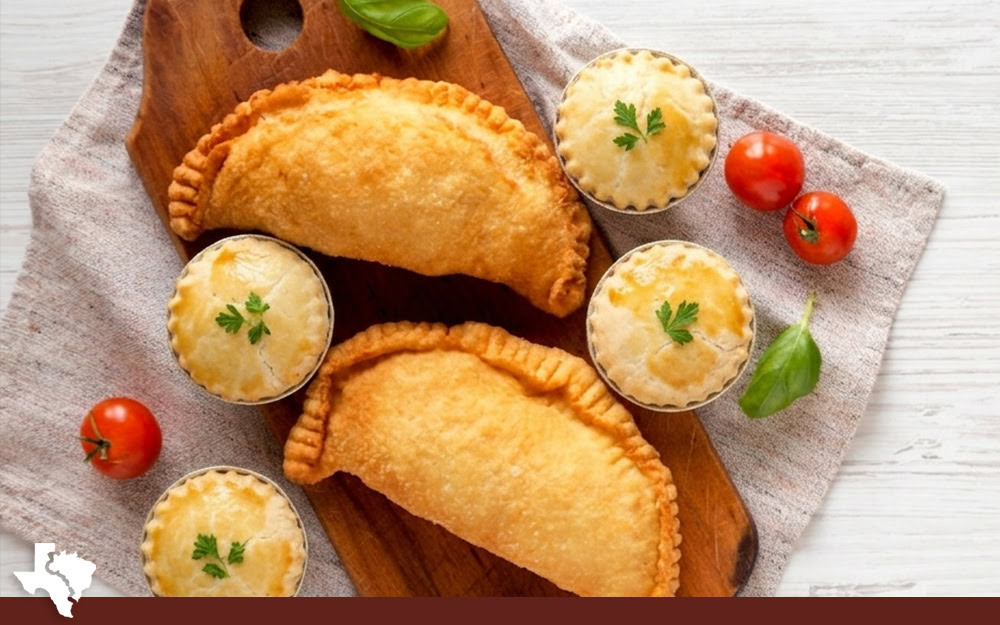
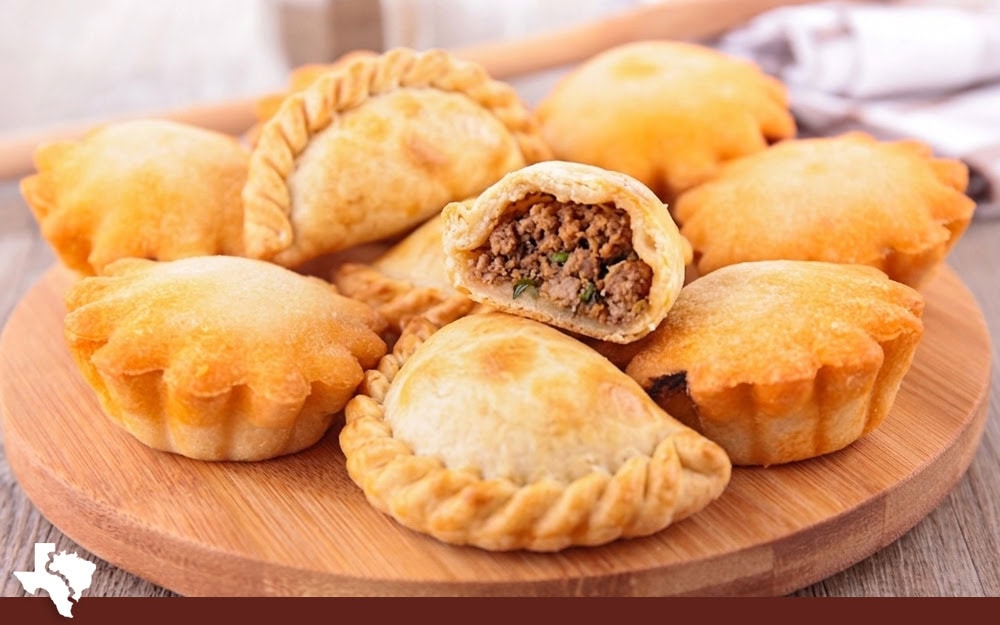
With these two pastries, their shape is a great place to start – and the differences between them actually run pretty deep. Empadas are small and round with a cup-like base and a flat pastry lid pressed neatly on top. Empanadas get folded into a half-moon shape with crimped or sealed edges all along the curved side.
The empada and the empanada just don’t look like they have much in common if you put them side by side. An empada is a self-contained little pie (almost like something that you’d pull out of a miniature muffin tin), while an empanada is a folded dough pocket sort of halfway between a calzone and a turnover. Even the way you’d grab one off a plate is a whole different motion.
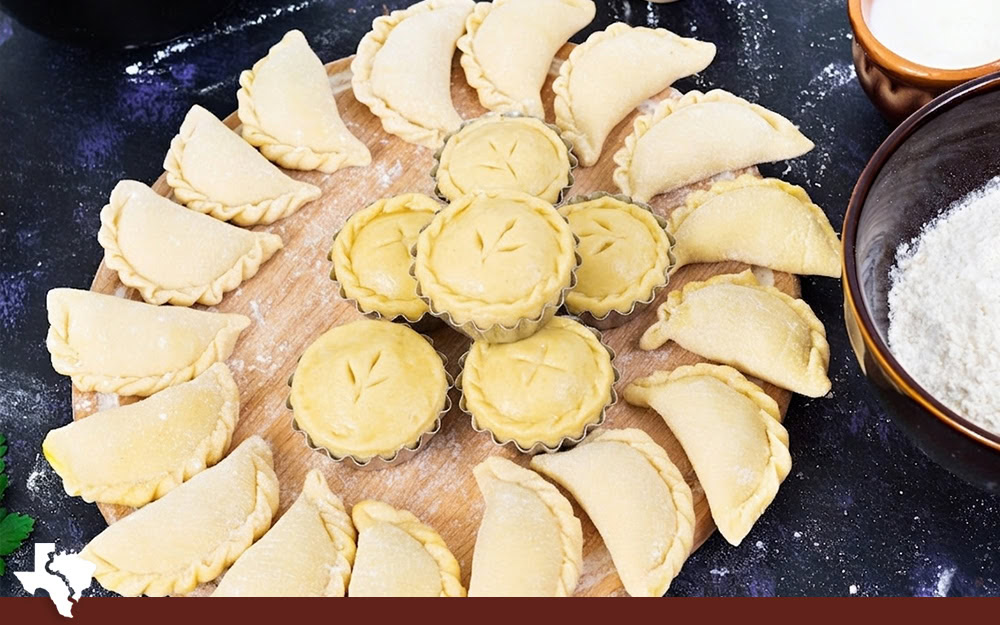
The structure of each one also changes how you eat it. The empada’s cup-and-lid design holds the filling snugly inside, and you can finish one in just a few bites – it’s a compact little pastry. The empanada’s folded shape opens up into a much wider pocket on the inside, which lets it hold chunkier fillings without any mess. In a way, the two designs are helpful answers to the same basic problem of how to hold a savory filling neatly inside pastry dough. Each shape can just depend on what the filling needs, and the logic behind each shape clicks into place pretty fast once you see it that way.
With those shape differences covered, the next natural place to look is at what goes inside these pastries. The fillings for empadas and empanadas are just as different as their exteriors are, and each one pulls from a pretty different culinary tradition. In my experience, this tends to be the part of the comparison that gets everyone the most excited – and it’s not hard to see why.
Each Region Has Its Own Filling Story
The fillings are what make these pastries what they are – and their story goes back a few centuries. Brazilian empadas stick pretty close to a handful of classic filling combinations – shrimp, heart of palm and chicken with cream cheese are the ones that you’ll usually come across. These flavors run pretty deep in Brazil’s food culture, rooted in the country’s coastal geography and in its long agricultural history. No matter which part of Brazil you’re eating in, those fillings are going to feel right at home.
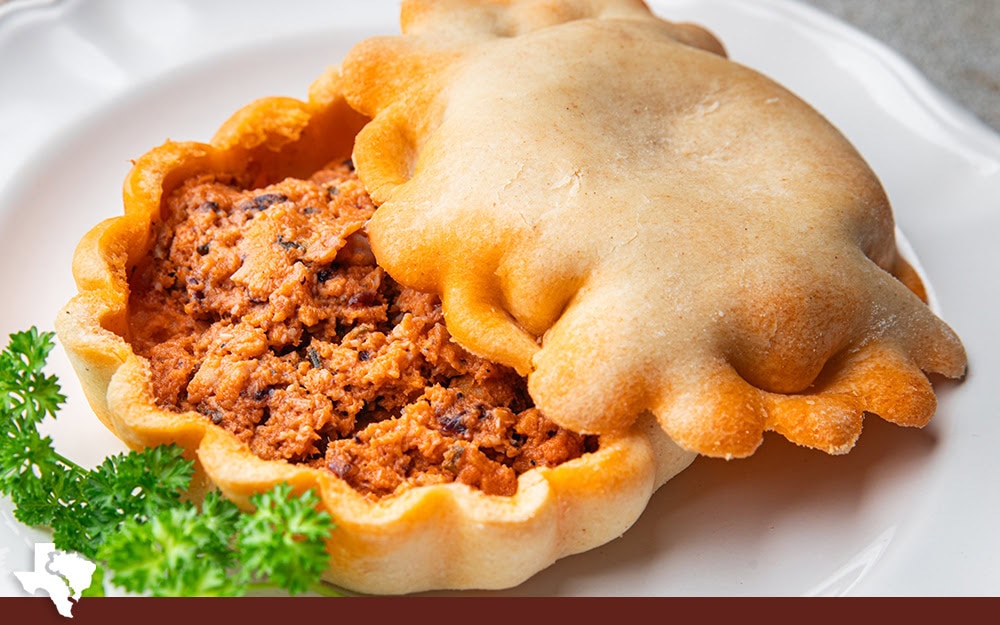
Empanadas are also pretty regional, and the filling changes pretty dramatically based on where you are. You might find spiced beef and olives tucked inside in Argentina. Go to Chile, and suddenly, hard-boiled eggs and raisins are in the mix. Colombia puts its own spin on the proteins and the seasonings altogether, and the result tastes like something that actually does belong to that region. Every variation has its own identity, and each one lands a little differently on the palate.
For centuries, cooks in every region worked with whatever was available to them – what grew nearby and what they’d raise or catch. That geography and those limitations, more than anything else, are what gave these pastries their own personality over time. The filling was never just a recipe – it was a direct reflection of the land it came from.
What makes the empanada family so interesting is this sort of story. Brazilian empadas held pretty close to their traditional roots – empanadas traveled across a massive geographic range and picked up new influences at each stop. Every country, every region and in plenty of cases every household eventually landed on its own version of the recipe. Geography had already shaped an identity for these pastries long before anyone had thought to write one down. That history matters.
How You Eat Each One
How you eat each one of these pastries turns out to be just as different as the pastries themselves. Empadas in Brazil are made to be bite-sized – small enough to grab off a tray and finish in two bites. At birthday parties, office events and weekend get-togethers, a platter of empadas is more or less expected – something to reach for between conversations instead of something that you would sit down for. No plate, no fork, no fuss. The whole point is to fill the gaps in the evening – not to fill you up.
At a Brazilian get-together, there’s usually a tray of little empadas that makes its way around the room, which is very much their natural home. The whole point of the food is to make sure everyone stays comfortable as they move around and talk instead of pulling anyone away from the crowd and sitting them down at a table.
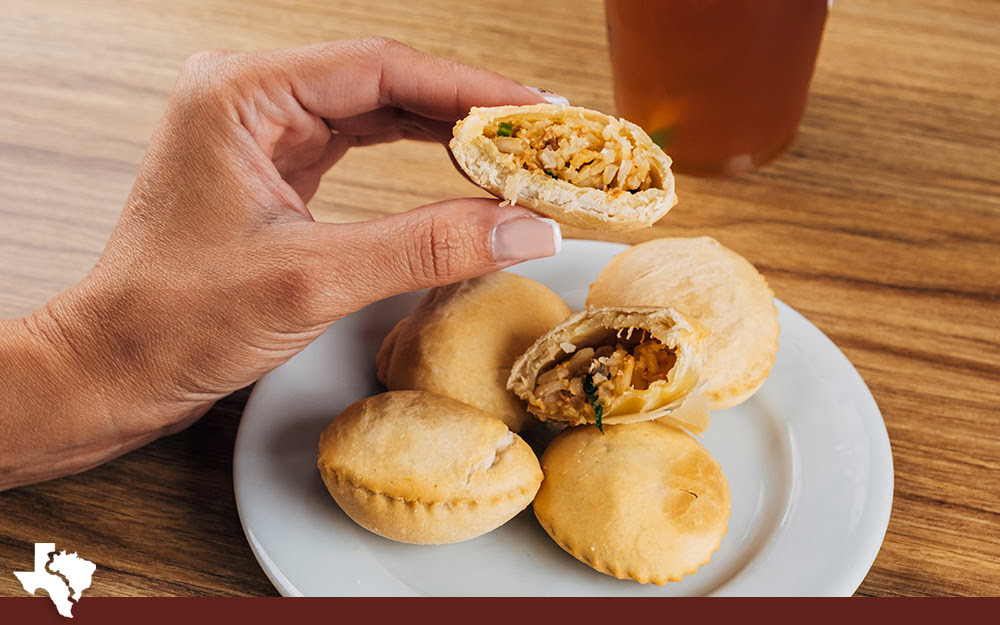
Empanadas hold a very different place in day-to-day life across Argentina, Chile and Colombia. Hand-sized and filling enough to count as a full meal on their own, these are not party snacks – these are lunch. The move in Buenos Aires is to grab one from a street vendor and eat it on the way out the door. No tray, no table – just a warm pastry passed over to you in a napkin, and you’re on your way.
Both are portable – it’s more or less where the similarities end. One is meant to be passed around in small bites at a party or social get-together, and the other is meant to actually get you through the afternoon. That size difference wasn’t an accident – it does tell you quite a bit about what each culture wanted from its pastry. A Brazilian host would never set out a single large empada for each guest, and an Argentine street vendor would never hand over a little tray of bite-sized ones for lunch – each pastry is the size it needs to be, and there’s a reason for that.
The Real Reason People Mix These Up
Empadas and empanadas like to get mixed up, and it’s easy to see why. The names are nearly identical. They’re each stuffed pastries with deep roots in Latin American cuisine. Plenty of English-language menus either translate them loosely or just use the two terms like they’re interchangeable.
That last point deserves a little extra attention. A menu that lists something as an “empada” or “empanada” isn’t always a reliable indicator of what the kitchen is actually making – and to be fair, that’s not necessarily the restaurant’s fault.
Latin American cuisine is wonderfully diverse, with dishes spread across different countries and cultures throughout the region. It’s pretty easy to get them mixed up – there’s legitimately a lot to keep up with. Food writers, well-traveled foodies and home cooks can all run into this mix-up eventually.
A big part of the mix-up comes from the assumption that all stuffed pastries from this part of the world follow the same basic blueprint. The dough, the shape, the size and how each one gets prepared – these all point back to very different culinary traditions. Brazil and the wider Spanish-speaking world each came up with their own version of it separately, and the differences between them run pretty deep.
The empada and the empanada start to show their differences when you eat them. The empada comes in a compact little shell with a crumbly and buttery crust that practically falls apart as you bite into it. A baked or fried empanada gives you something chewy and foldable instead – a whole different sort of satisfaction. They’re legitimately delicious. You’ll start to see each one for what it is.
Savor the Moment at Texas de Brazil
Empadas and empanadas are two separate foods that just share a name and a distant common ancestor – and that’s where the similarities end. The dough is different, the shape is different, the fillings are different, and the situations where you’d actually run into each one are nothing alike. With that in mind, a bakery case, a restaurant menu or a party spread should make more sense the next time you’re staring at one. Two very different foods, two very different culinary traditions – and each one is well worth a try.
That knowledge is only part of the experience, though. The best part is sitting down to eat food this delicious with everyone that you love to be around. Brazilian dining has its own way to turn any meal into a full event. That spirit comes alive the most at the table. Texas de Brazil is a great place to learn what Brazilian food is all about. At our churrascaria, the warmth and generosity of the Brazilian dining tradition come straight to your seat – our gauchos carve fire-roasted meats tableside and our 50-item gourmet salad area is loaded with chef-prepared dishes to round out every plate.
There are plenty of great ways to make Texas de Brazil part of your next celebration – or just a casual weeknight dinner. Our eClub gets you $20 off your next visit. Gift cards are always a wonderful option for anyone who deserves a great meal. Our online Butcher Shop lets you order premium cuts delivered straight to your door. Whenever the time feels right to pull everyone together around the table, make your reservation – we’d love to have you.