
Bem Passado or Mal Passado? Brazilian Doneness Terms
A Brazilian churrascaria is its own dining experience, and it starts right as you walk in the door. Giant skewers of meat, servers making their way between tables and a general sense that you’d better have some idea of what you want before anyone stops at your seat – there’s plenty to take in all at once. And when a churrasqueiro finally makes his way over to your table with a beautiful cut of beef and a pair of tongs ready to go, you really don’t want to go blank on the Portuguese.
Doneness vocabulary is the part that tends to trip diners up the most. “Bem passado” and “mal passado” are genuine opposites (well done and poorly done), but the full range between them has quite a bit more going on than a word-for-word translation would lead you to believe. The Brazilian doneness scale and the English one don’t line up the way that you’d hope they would. The categories don’t correspond one-to-one, the names hardly ever match up cleanly, and a few of the middle options don’t have a direct English equivalent at all – which is something to keep in mind.
A pink ao ponto is a meal in its own right – it’s also quite the contrast next to something overcooked. And it all usually starts with a single phrase said at just the right time.
What’s nice is that the vocabulary list is pretty short and the pronunciation is actually quite forgiving – even for non-native speakers. A handful of these terms is all that you need before the whole experience can get quite a bit better.
Here are the Brazilian doneness terms so you can order confidently!
Table of Contents
What the Brazilian Steak Terms Really Mean
Mal passado means rare, ao ponto is your medium and bem passado is well done – and those three are the easy part.
What you’ll have to know is that these terms don’t map one-to-one onto their English equivalents. Ao ponto, just for an example, tends to land closer to medium-well in practice, and the exact result can vary a bit based on the cut and the cook. It’s not a strict standard – it’s more of a heads-up, so you won’t be confused when your plate arrives. Brazilian steakhouses like to cook at very high heat, which means even a medium order can come out with less pink if you’re used to that temperature back home.
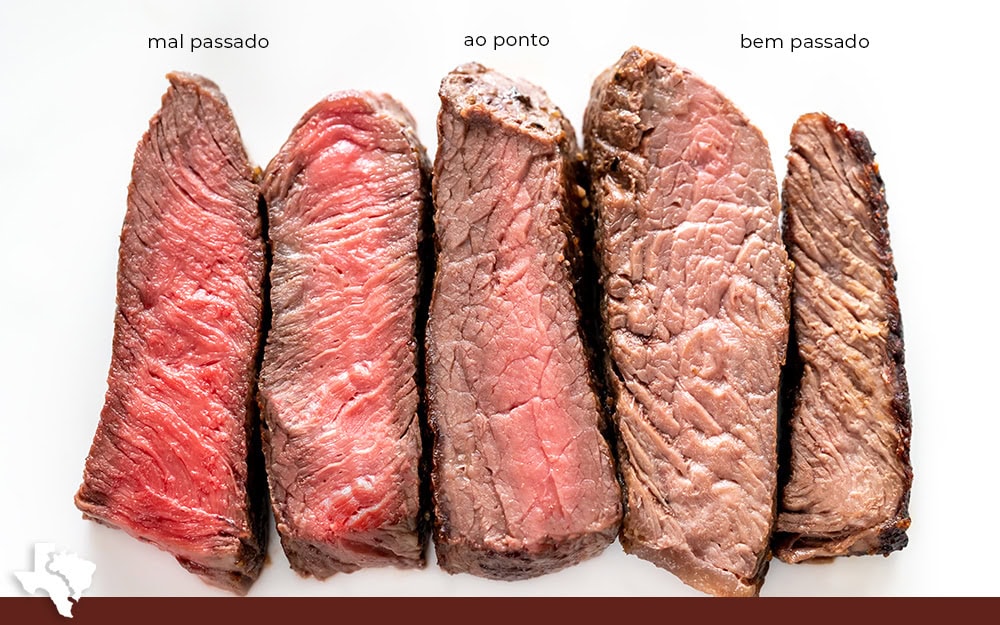
Some restaurants will also give you a couple of in-between options if you want to be a little more precise with your order. Ao ponto para mal passado sits right in between rare and medium, and ao ponto para bem passado lands between medium and well done. Not every place will carry these (the more laid-back places will usually just stick with the standard three), but most upscale churrascarias and rodízio restaurants will have them available if you want them.
You should also know that at a rodízio, the servers will come around with different cuts throughout the meal. If you have a preference for how a particular cut is done, just mention it when the server comes by – most of the staff are very used to those kinds of questions and are happy to work with you.
Once you’ve seen how it all works, it’s pretty easy to sort out – and the staff at most Brazilian steakhouses will be happy to see a guest who already knows what they want.
Why Ao Ponto Is a Brazilian Favorite
Ao ponto is the most popular doneness level in Brazil, and it’s not even close (it falls right in the middle of the range and is cooked through). But it’s still tender and juicy and loaded with flavor. For most Brazilians, that’s just what a great cut of meat is supposed to be.
For anyone raised on American or European fine dining, that might read as a fairly conservative choice. Medium-rare is about the gold standard in those food cultures – a warm pink center is what most chefs and restaurants point to as the mark of a well-cooked steak. Ordering anything more done at a decent steakhouse might get you a bit of a look from your server.
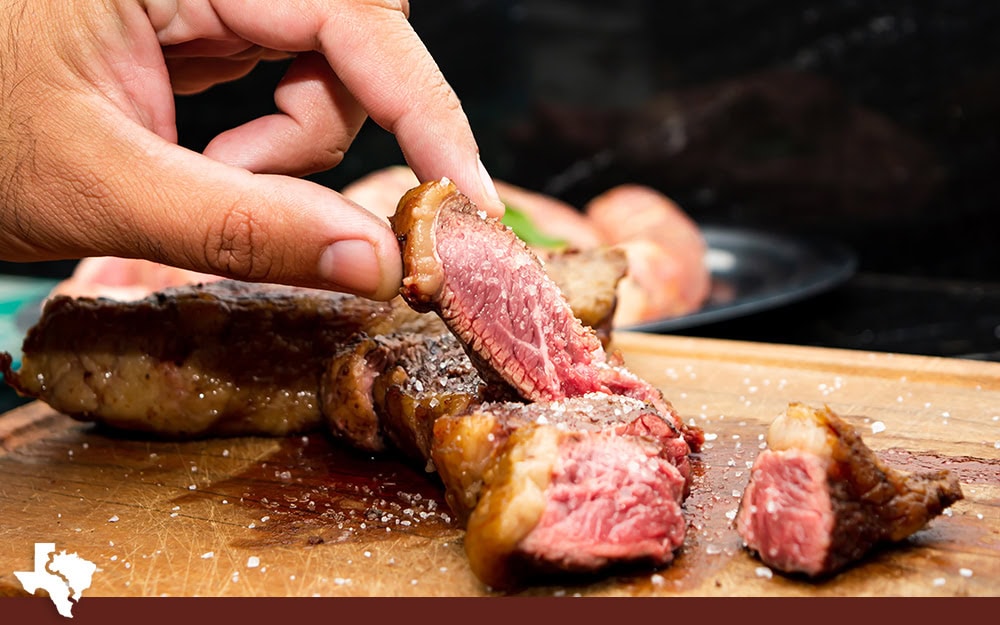
The whole mindset around it is a bit different in Brazil. The preference is for meat that’s cooked through, but still juicy and tender (not dried out), and ao ponto hits that mark just right. It’s not about staying away from pink – it’s a genuine love for a texture, warmth and even doneness from edge to edge.
Churrascaria culture plays a big part in it. At a traditional Brazilian steakhouse, the gauchos walk the dining room all evening and carve the meat tableside directly off the skewer in a steady flow. That style of service calls for a doneness level that’s able to manage the heat and still make everyone at the table happy. Ao ponto fits that role better than anything else – it’s the most reliable and the most popular option in that setting.
A preference for rare or medium-rare is no problem whatsoever in Brazil. Any decent churrascaria or steakhouse will cook your meat just the way that you like it, no questions asked. Mal passado is a well-understood order and a legitimately respected one. Ao ponto just happens to be where most locals land by default – not something the rest of the table has to follow.
How the Churrasco Tradition Built These Terms
The roots go back to the churrasco tradition in southern Brazil (Rio Grande do Sul, specifically), where the gaucho culture had made cooking over an open flame into a genuine way of life.
A gaucho didn’t need a thermometer or a timer to know what was actually happening on the grill. That skill came from years at the fire, and it was built on touch, sound and the way the fat moved across the surface of the meat. At some point, knowledge like that needed its own vocabulary to go with it, and the words that developed around it eventually became the shared language of every pitmaster and diner in the culture.
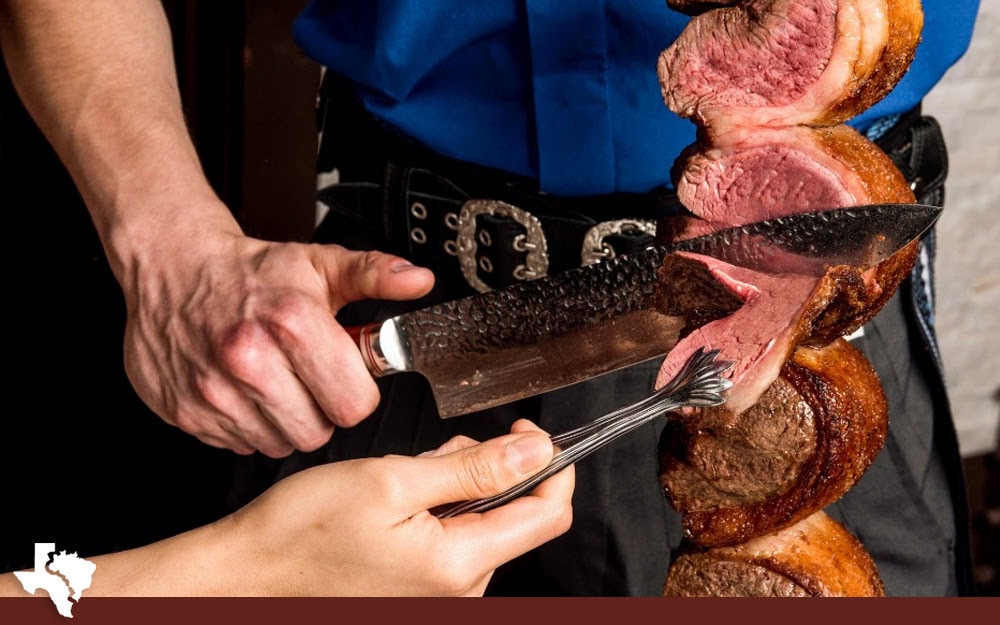
Rodízio-style service is a big part of why those terms made their way into day-to-day conversation. A server on the floor with a skewer in hand doesn’t have time to stop and explain every option to a table of ten. Every diner at the table needs to have an answer ready – just a word or two. That steady exchange between the grill and the table is what turned mal passado, ao ponto and bem passado into a sort of shorthand that nearly every Brazilian just knows.
What’s interesting about this system is that it didn’t come from a test kitchen or a training manual – it grew out of actual diners at a table, with food right in front of them. The care behind each term was built up over years of practice at the fire. The consistency came from millions of meals served in restaurants where the grill literally never stops. It’s a language that earned its place the hard way – it’s a big part of why you’ll have to know it for your next visit to a Brazilian steakhouse.
Your Order Matters to the Churrasqueiro
The churrasqueiro takes their work personally – and rightfully so. A skilled churrasqueiro has spent years learning about fire, meat and timing and can size up a table in about two seconds flat. A guest who knows what they want is something a churrasqueiro picks up on straight away.
Walking right up to the grill and saying “mal passado” with confidence sends a direct message – just what you want, and you’re ready for whatever comes off that grill. That directness has a way of paying off – you’ll usually end up with a better cut, sliced with a little more care and attention than the person in front of you probably walked away with.
The reverse holds just as true. A half-hearted order (where you point vaguely, stumble over the term and wave it off like it doesn’t matter) leaves the churrasqueiro with nothing to work with but a guess. At a live-fire grill, a wrong guess means that you walk away with a cut of beef cooked to somebody else’s liking – not yours.
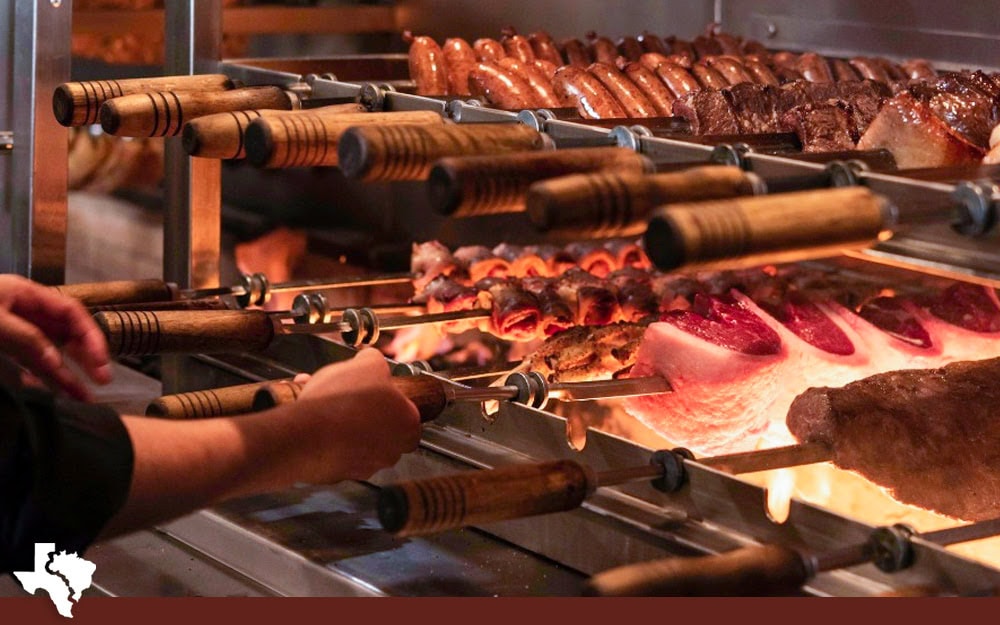
None of this is about whether your Portuguese is perfect. The bigger picture is the difference between a basic transaction and an exchange with somebody who actually wants to get your order right. The churrasqueiro cares about the end result just as much as you do, and a direct answer gives them something they can use. A little preparation ahead of time goes a long way – it can be the difference between walking away with just what you came for and an order that you’d sooner forget.
Most of the terms start feeling pretty familiar after you’ve seen them a couple of times. A little fluency with the language does go a long way in a place like this, and the churrasqueiro will feel that difference every time.
How a Region Shapes Its Rare Meat Views
Brazil is a massive country, and attitudes toward meat doneness can change pretty dramatically based on where you are in the country. An order that would be unremarkable in São Paulo might get you a long pause and a second look in a smaller town out in the interior. Both of these reactions are understandable – food preferences don’t develop in a vacuum. Culture, geography and history all play into what locals think of as normal on a plate.
In cities with a strong fine dining culture, restaurant kitchens are comfortable with all kinds of requests, including a rare steak. But if you walk into a traditional churrascaria out in a rural area, the attitude toward how meat is cooked tends to be far more rigid – rare might not even be part of the conversation.
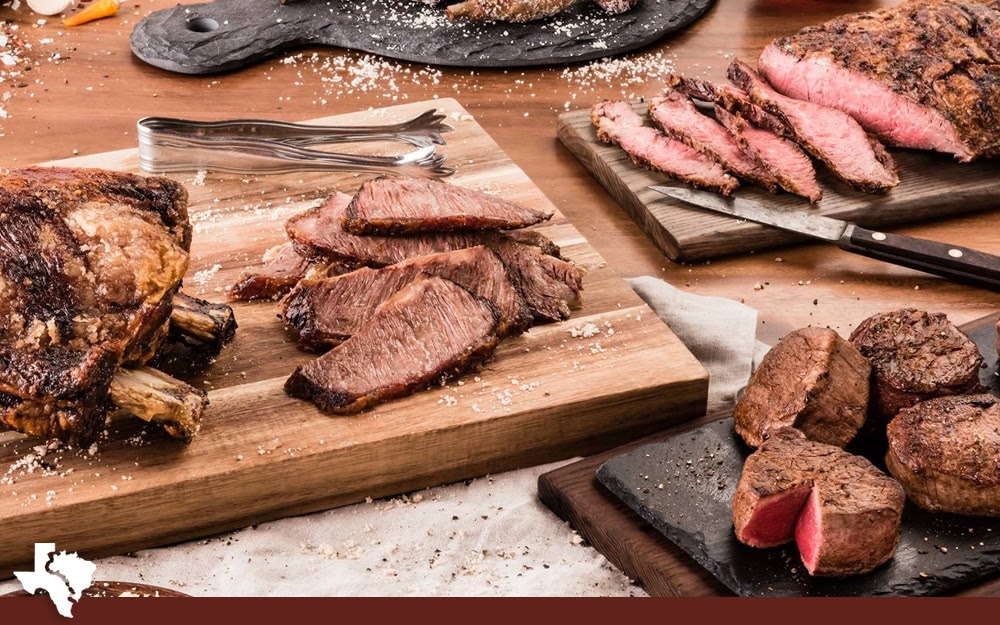
Across Brazil, the preference for well-done meat goes back generations – and there’s a very real reason behind it. Before refrigeration was available everywhere, the way meat was stored and handled made well-done the far safer and more reliable option. That gets passed down through family meals and local food traditions. After enough generations, it becomes part of the regional identity.
Keep this in mind when you place your order. In plenty of these places, the context matters more than what the menu says. A family-run place out in the countryside will have a very different comfort zone than an upscale steakhouse in a big city – and each of those environments will feel natural to those who grew up there.
A region’s preference for low-and-slow cooking versus a high-heat sear comes from the land itself – the local climate, family traditions that were passed down for generations and the meals that have been eaten around the same tables for hundreds of years.
How to Order Steak in Brazil
A churrascaria counter or a rodízio table can be quite a bit to take in the first time that you walk up to one. The great news is that a single phrase will get you pretty far if you know it.
“Ao ponto, por favor” is the safest place to start and lands you right in the middle (not too pink or too firm), and it works in just about any restaurant across Brazil. Most servers and passadores will know what you mean, no questions asked.
Not every menu will list doneness options, and plenty of waiters won’t think to ask either. So don’t wait for them to ask – speak up when they arrive at your table or flag them down when the meat comes around on the skewer. A confident request is all it takes.
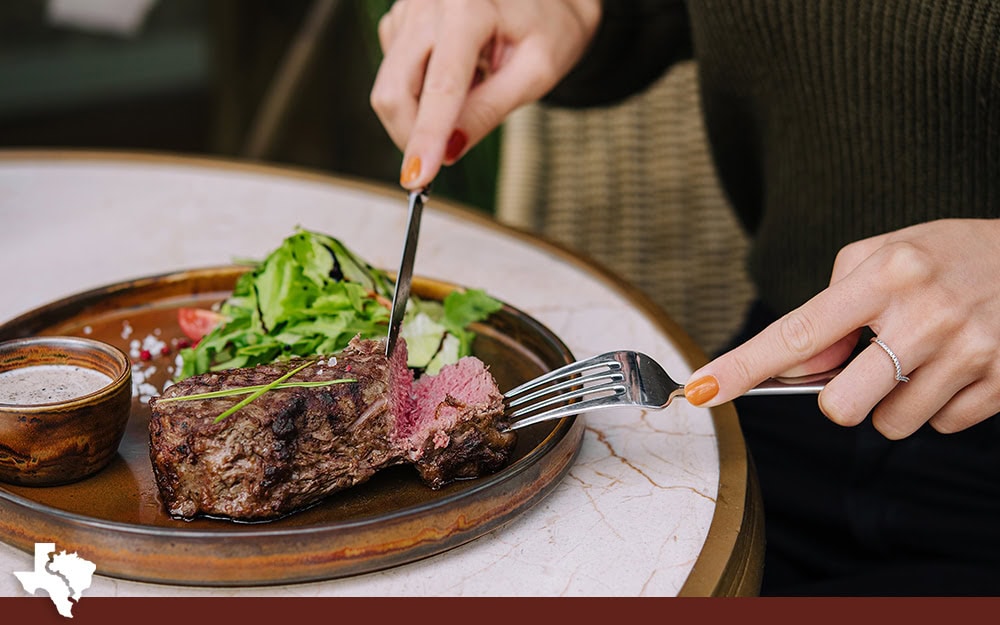
Steaks can come out more done than expected every now and then – it happens. A friendly word to your server goes a long way, and most restaurants will be more than happy to bring out a fresh cut or find something a little closer to what you had in mind – just keep it light and relaxed. Something like “ficou muito bem passado para mim” gets the point across (you’re more or less telling them it came out a bit too well-done for your taste) and you won’t need to make it a bigger deal than it is.
It’s worth mentioning – if you ordered ao ponto and the meat still looks pretty red in the center, there’s no reason not to send it back, or you can always pass on that cut and wait for the next round at the rodízio. And no one expects you to eat something that you didn’t order. The staff at these restaurants see all kinds of preferences every day, and a small correction is never a big deal.
Savor the Moment at Texas de Brazil
Picking up a handful of Portuguese words before sitting down at a Brazilian steakhouse can legitimately change the whole evening. A well-placed order is one small detail that makes the night feel a little smoother for everyone at the table, including yourself. And the quiet satisfaction that comes with actually entering a new food culture and feeling like you belong (even just a little) is hard to put a price on.
Brazilian churrasco culture has always had a warmth to it, and the communities in that world love to welcome newcomers who arrive with a little curiosity and a willingness to try what’s in front of them. Whether you order mal passado, ao ponto or somewhere in between, the fact that you already know what to ask for puts you well ahead of the average first-time visitor.
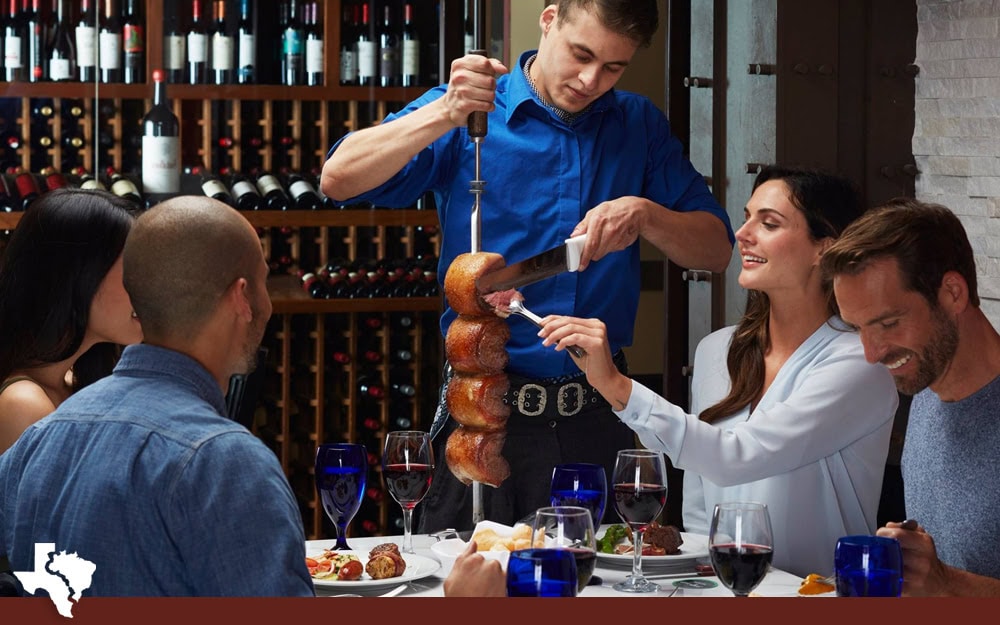
Whenever you’re ready to put any of this into practice, Texas de Brazil is a great place to start. Our gauchos carve fire-roasted meats right at your table (picanha, filet mignon, lamb chops and more), and our 50-item gourmet salad area gives you plenty to come back to in between rounds. For a full night out, reservations are easy to make right on our website. Our gift cards are also a great option for almost any occasion – birthdays, anniversaries and holidays – you name it. Our eClub membership gets you $20 off your next visit, and our Butcher Shop lets you order premium cuts to be delivered straight to your kitchen. Whenever you’re ready, the table is there.