
What to Eat at a Brazilian Steakhouse If You Don’t Eat Beef
You’re invited to a Brazilian steakhouse for a birthday or work dinner. But there’s a problem. Churrascarias are known for their picanha, their sirloin, and their beef-heavy skewers. But you don’t eat beef. Maybe it’s religious, maybe it’s health, maybe it’s personal – many Hindus, for example, don’t eat beef – but you have a problem.
When you go to a Brazilian steakhouse, you’re paying a fixed per-person price. But if you can’t eat much of what’s served to you, you’re going to go home hungry as beef skewers pass in front of you.
You’re in luck! Most churrascarias don’t just grill beef. They grill chicken, from garlic legs to chicken hearts to bacon-wrapped delights. They grill pork, from ribs to linguiça sausage to parmesan-crusted pork loin. They grill lamb chops. Some even grill shrimp! And of course, you have the salad bar with hearts of palm, cheeses, smoked salmon, and a variety of salads.
If you want to know what cuts to wait for, how to build a meal, and how to make the most of your experience at a Brazilian steakhouse, you’ve come to the right place.
Remember, too, that Brazilian steakhouses give you a card with two sides, one green to show you want more meat, and one red to show you want to pause. They also have all kinds of sides on the table, from pão de queijo to fried bananas to polenta. And, of course, you can always talk to your servers and ask them for specific cuts you might want.
Table of Contents
The Simple System Behind a Rodízio Meal
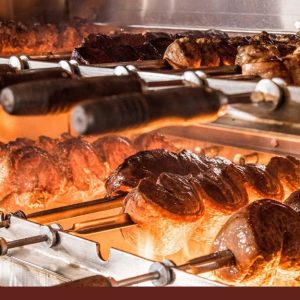
Rodízio is the Portuguese word for “rotation”, and that’s what it is – a constant rotation of tableside meat service. You pay a fixed fee per person for the meal, and servers (known as gauchos or passadores) bring long metal skewers (espetos) with meat on them and cut off pieces for you to enjoy directly onto your plate.
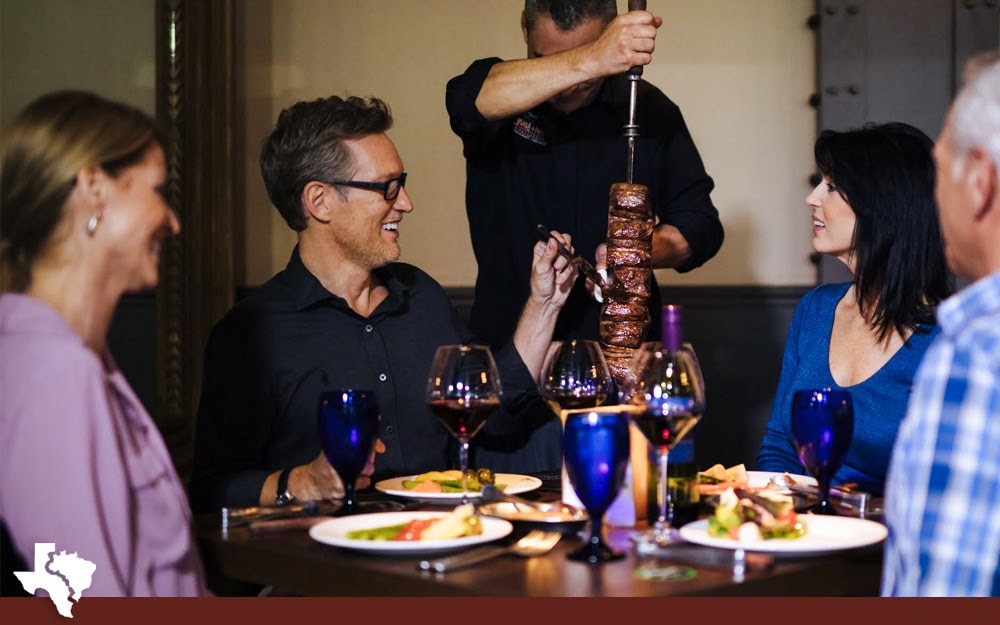
You’ll be given a card, with a green side and a red side. The green side is “yes, bring me meat” and the red side is “hold on a moment”. You can flip the card back and forth throughout the meal.
Rodízio service comes from the gaúcho cowboys of the pampas in Rio Grande do Sul in southern Brazil. These gaúchos would roast their meat on skewers over open fire pits, with little more than coarse salt (sal grosso) for seasoning.
Most of the skewers you’ll be offered will be beef, such as picanha, fraldinha, alcatra, filet mignon, and beef ribs. Non-beef skewers are also part of the rotation.
This is important to know, because it means you can flip your card to red and avoid being stuffed with beef skewers until the non-beef skewers come around. This gives you time to enjoy the salad bar and other items on the menu, too.
What Chicken Cuts Does a Brazilian Steakhouse Serve?
The chicken skewers you find at a Brazilian steakhouse, known as frango, are often not as hyped up as the beef cuts. But that doesn’t mean they aren’t delicious.
Garlic-marinated chicken legs and thighs, or coxa and sobrecoxa, are a common option. They’re usually marinated with garlic, salt, and either lime or white wine.
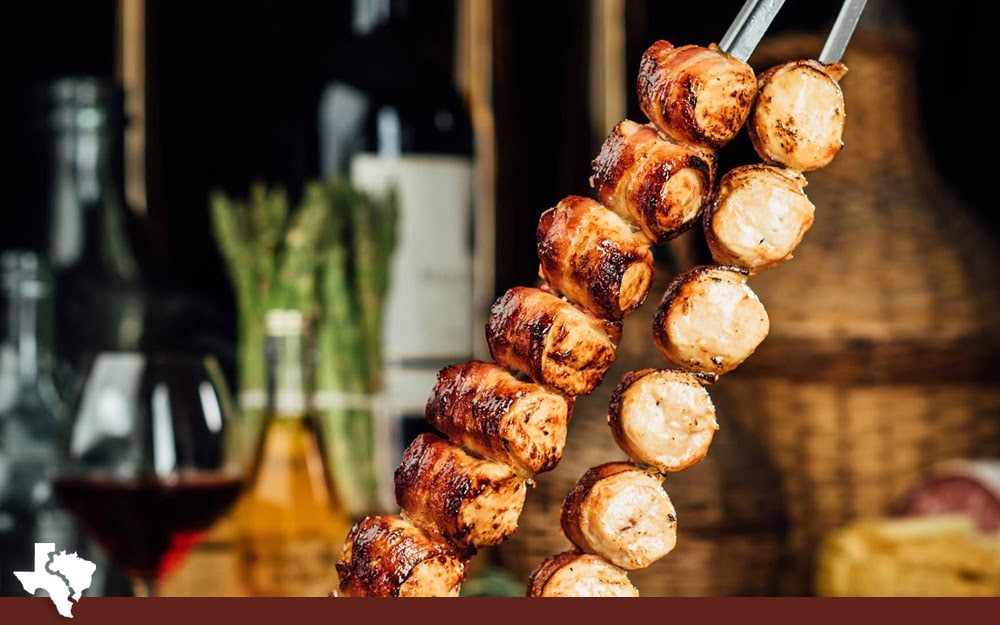
Coração de galinha, or whole chicken hearts, are also common. These are whole hearts, usually a few of them on a skewer, and are a common part of a Brazilian backyard churrasco, often with nothing more than coarse salt as a seasoning. They cook quickly over high heat and have a firm, slightly chewy texture with a mild flavor. They aren’t always on the menu at Americanized Brazilian steakhouse chains. But you can ask if they have them on hand.
Bacon-wrapped chicken is also common, though it’s usually breast chunks wrapped in bacon. The bacon helps infuse more fat and moisture into the lean breast meat. The downside is, if you’re avoiding pork, you can’t have these – the bacon imparts both flavor and fat to the chicken, so simply not eating the bacon isn’t going to help.
Why Thighs Beat Breasts on Skewers
Why is chicken thigh a better option than chicken breast on a skewer? Thigh is dark meat, so it has more fat and more connective tissue. The collagen in the connective tissue breaks down and softens as the temperature rises, and it helps keep the meat juicy even when it’s past the point of being perfectly cooked. Breast meat is extremely lean, and dries out very quickly when it passes 165°F / 74°C. Skewers often have to make multiple passes and let time pass between carvings, and the thighs are more resilient to that treatment.
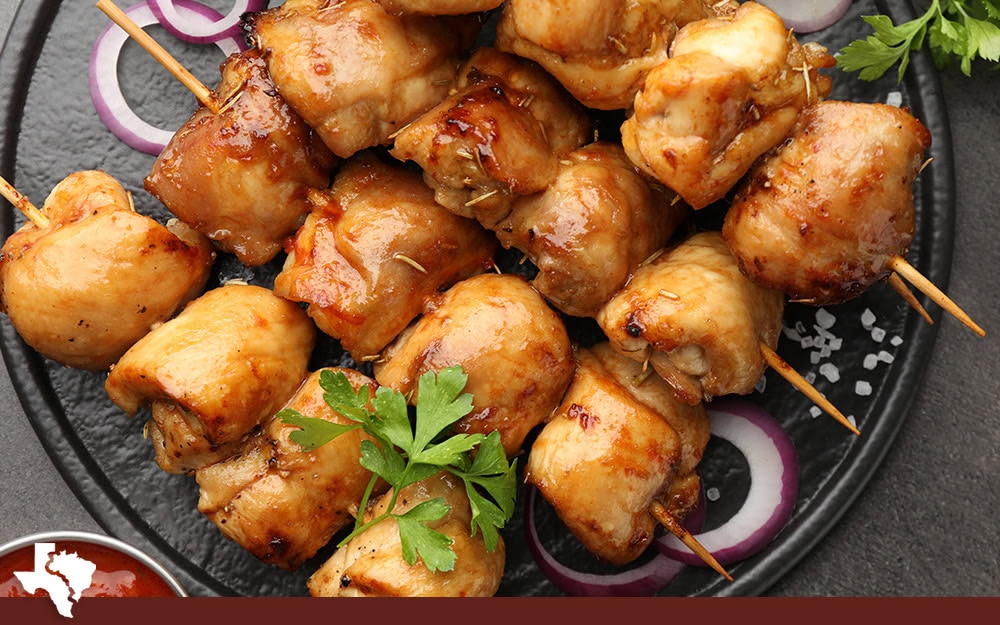
As with beef, you can’t choose how well-done your chicken is – it’s always going to be fully cooked.
Read on for the details.
Pork Ribs, Loin, and Sausage at Brazilian Steakhouses
A couple of different pork options are available at Brazilian steakhouses.
Pork ribs (costela de porco) are a common option, often carved to order from their skewers right at your table. They’re also often seasoned relatively simply, with a coarse rock salt to bring out the flavors of the meat.
Parmesan-crusted pork loin is another option available at places like Texas de Brazil. This leaner cut of pork is coated in cheese, which forms a crust when it’s cooked over the grill.
Pork sausage, linguiça, is a sausage originating from Portugal and commonly seasoned with garlic and paprika. In Brazil, it’s often not cured. The trick with sausage is that the recipe can vary from restaurant to restaurant and supplier to supplier, so some may mix in beef or chicken; if you’re strict about not eating beef, ask your server if the sausage is entirely pork.
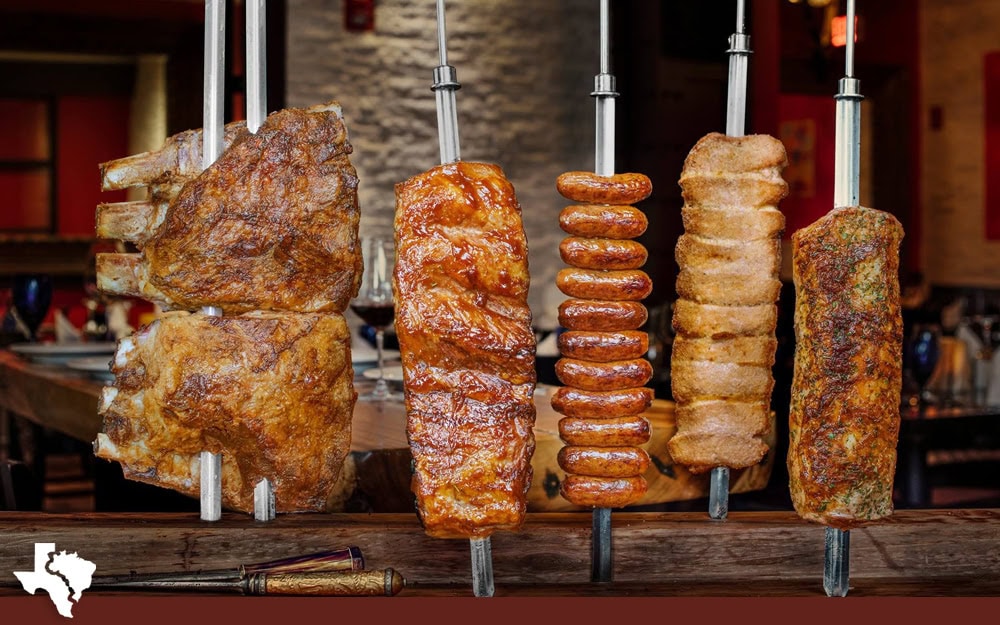
According to the USDA, whole cuts of pork are safe to eat when cooked to 145 degrees Fahrenheit, with a three-minute rest. This was changed from 160 degrees in 2011, and is why the loin and ribs may still be slightly pink when they arrive at your table. Ground pork, including sausage, should still be cooked to 160 degrees, according to the USDA.
Grilled pineapple (abacaxi) is also a common side. It’s usually coated in brown sugar and cinnamon, which caramelize on the grill. The acidity of the pineapple is a nice contrast to the fattiness of the pork, and the sweetness is a nice counterpoint to the salt crust.
Lamb Is Still a Red Meat
Another red meat option, lamb, or cordeiro, is also available at many Brazilian steakhouses. Lamb chops and leg of lamb are available on gaucho skewers, at restaurants like Texas de Brazil. Lamb is often marinated with garlic, mint, and sometimes rosemary.
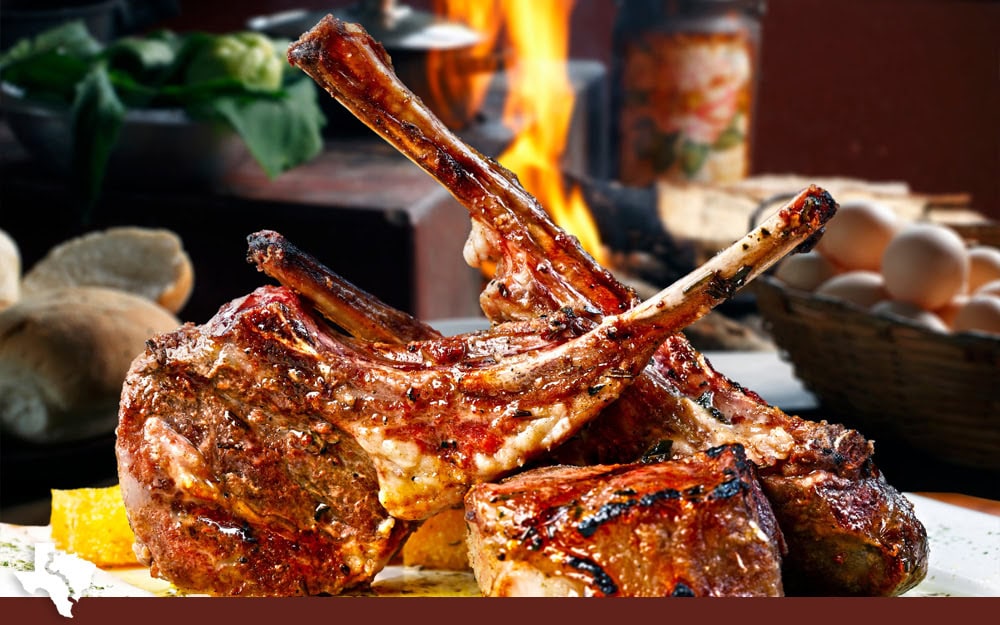
The question here is, why don’t you eat beef? If it’s a religious choice, lamb is a great alternative. If it’s a health concern, though, lamb is still a red meat and is listed as a Group 2A meat by the IARC. So, be sure of your reasons before you turn the card to green.
Shrimp and Seafood at a Churrascaria
Many of the more upscale churrascarias have started to offer grilled shrimp skewers as well. These are just like the beef, threaded on an espeto and carved or slid off for you to enjoy. They’re usually seasoned with garlic. Butter, lime, and coarse salt. Shrimp is a very fast-cooking food on a grill, and it can go from perfectly cooked to a rubbery mess in very short order, so you have to keep an eye on it.
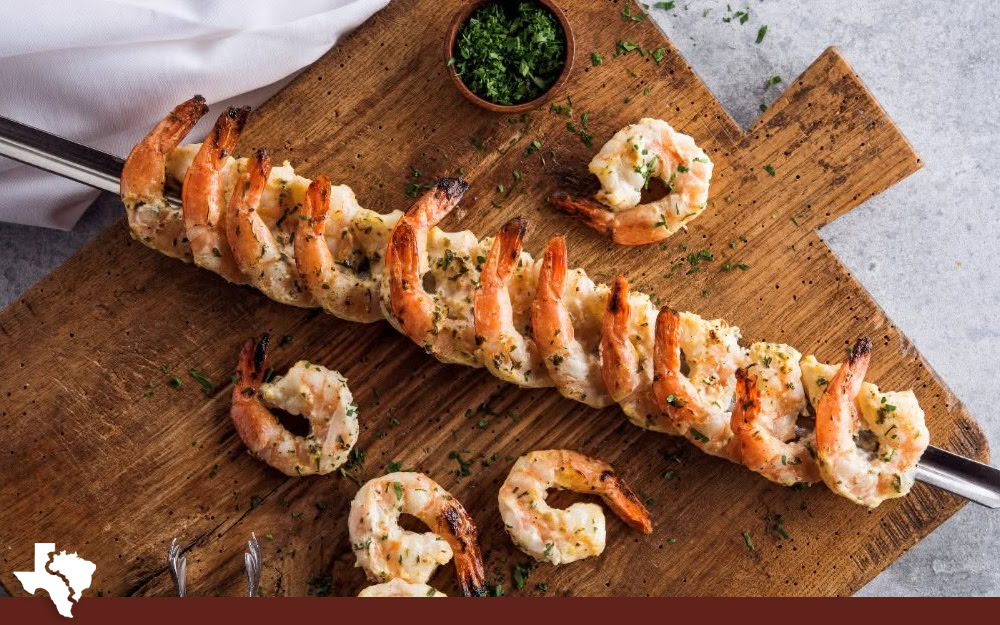
Seafood is often an added-on item or a separate entrée, and may cost extra. It’s also not available everywhere, and will vary depending on the specific chain and location. If you’re looking for a particular seafood option, you may want to check the menu online or call ahead to see if it’s available when you make your reservation.
Why is there less seafood than meat? Well, remember that the gaúcho tradition behind churrascarias is built around grilling beef.
Can You Make a Full Meal at the Salad Bar?
If you’re not interested in the meat at all, you can still get a full, satisfying meal from the salad bar alone.
Some churrascarias call this area the Market Table. Whatever the name, this is where you can get a variety of different foods.
Breads, Salads, and Brazilian Staples
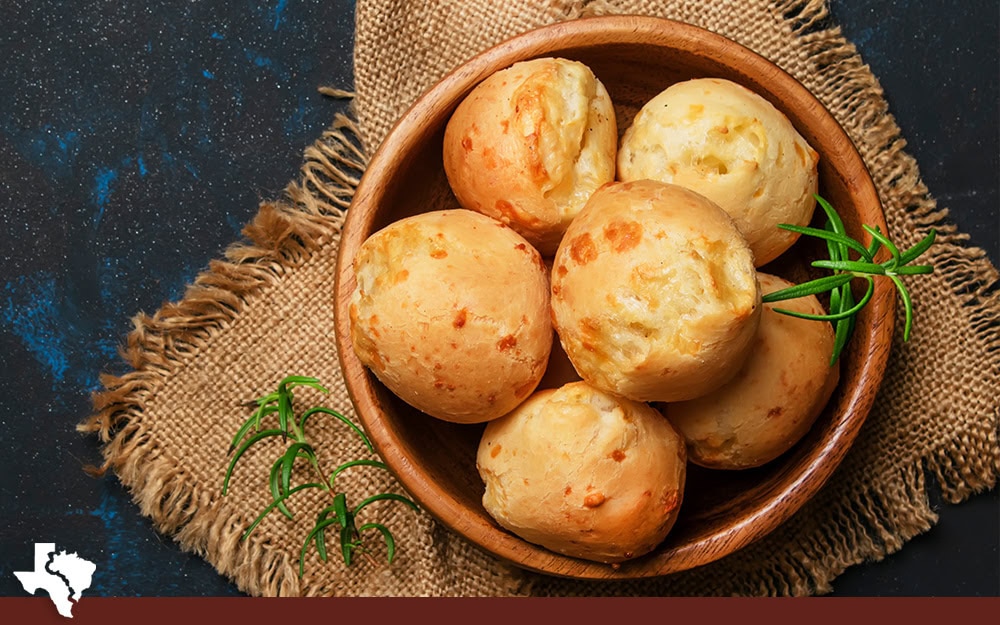
Pão de queijo are small cheese bread rolls originating from the Minas Gerais region of Brazil. They’re made using tapioca starch from cassava, called polvilho, so they’re typically naturally gluten-free. They’re usually brought to you warm and refilled on request.
Hearts of palm, or palmito, are the inner core of certain kinds of palm trees, most commonly the pupunha (peach palm), the juçara, or the açaí palms. Brazil is a large producer and consumer of hearts of palm, and they’re a great, mild, and tender food, often served sliced or in salads.
Speaking of salads, you’ll often find a variety of different salads on the salad bar. These include mixed greens, tomato and cucumber, marinated vegetables, and more.
Cheeses, often including fresh mozzarella and harder, aged cheeses, are also common.
Grilled or roasted vegetables, asparagus, and mushrooms are also common options.
Brazilian white rice, sautéed with garlic and onion, is another common option.
Black beans, or feijão preto, are a common everyday staple of Brazilian cuisine, usually served alongside rice. Together, they make a hearty and protein-packed foundation for a meal.
You’ll also often find various sides brought to your table, including fried bananas, polenta, and mashed potatoes.
Watch for Hidden Meat
There’s one thing you need to watch out for, and that’s feijoada. This is Brazil’s national dish, a black bean stew that usually includes carne seca, a dried and salted beef, and pork, including sausage, bacon, and sometimes ribs. The plain black beans might be available as a side separate from feijoada. But it’s worth checking.
Farofa, or toasted cassava flour, is also sometimes cooked with bacon.
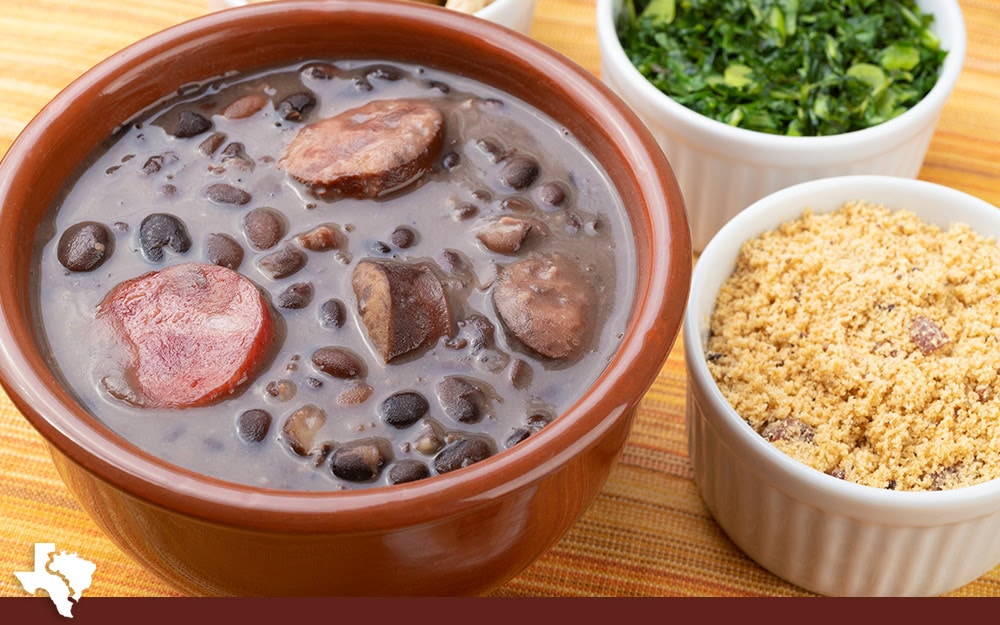
Some soups might be made using beef stock, so it’s always worth asking your server first. You’ll often also find cured meats like prosciutto and salami on the salad bar, so be careful.
Many churrascarias also offer a lower price for just the salad bar.
Pro tip – try not to get too full on the bread before you start on the other foods. Pace yourself on the pão de queijo.
Another great option to try is the vinagrete, a salsa made of tomatoes, onions, and vinegar that is delicious over rice. You can also try the couve, which is collard greens sliced thin and sautéed with garlic.
If you’re vegan, remember that pão de queijo has cheese in it and often has eggs in it as well, so it’s not vegan.
Tell Your Gaucho What You Want
First and foremost, make sure you let your gaucho know that you don’t eat beef. When they first come around, before they start bringing out the beef skewers, make sure you let them know.
You can tell them you’ll have them come back around for the chicken, the pork, the lamb, or even the shrimp if they have it on tap at your location (sometimes it’s an add-on).
- Chicken: frango com bacon or chicken hearts (coração de frango)
- Pork: linguiça sausage, pork loin (lombo), and pork ribs
- Lamb: lamb chops or leg of lamb (cordeiro)
If you’re watching them go around and they start to bring out the beef, you can tell them to skip the beef cuts (picanha, fraldinha, alcatra, maminha, and so on) and ask them what they’re bringing out next. You can also tell them what you want, rather than waiting for it to come around. If you want a specific piece of meat (like a crispy edge, or an end slice, or a specific level of doneness), you can ask for it.
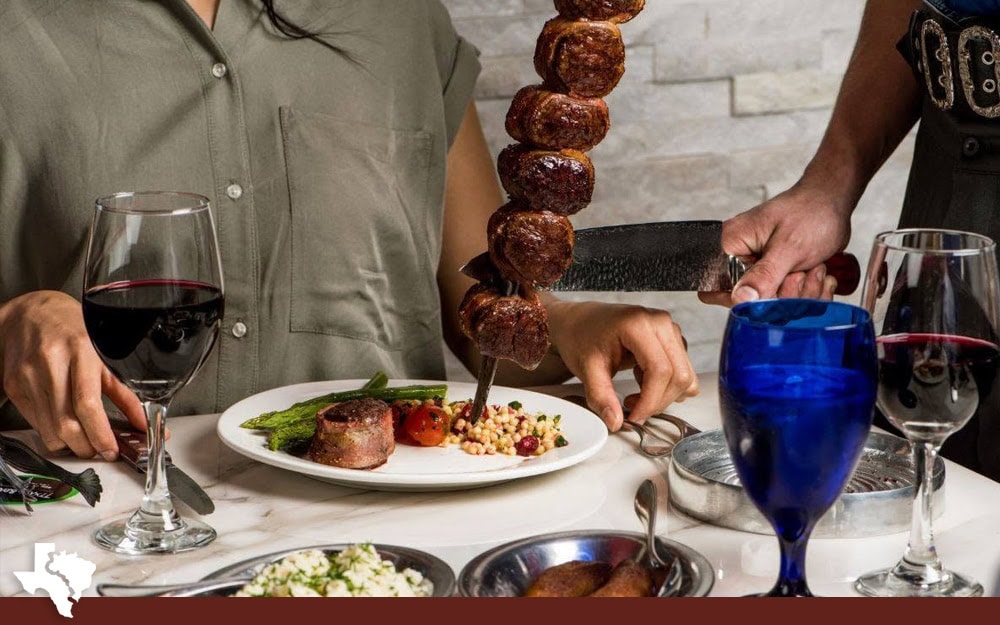
So, if they’re going around with a bunch of beef skewers and you don’t want any of them, you can flip your card to red, and then flip it back to green when they start bringing out chicken or lamb.
You might feel awkward or demanding asking for specific cuts or pieces of meat. But that’s just part of the experience. They’re used to it, and they’ll be happy to let you know what they’re bringing out that isn’t beef.
Also make sure to use those little tongs to grab the pieces of meat off the skewers as they’re carved for you. And, if you see a bacon-wrapped skewer, that’s often a filet mignon, not chicken.
Savor the Moment at Texas de Brazil
First, start with the salad area. Before you get any skewers, get a base of hearts of palm, cheeses, and smoked salmon.
Second, talk to your server and let them know what your limits are. Ask them what is available. Is the sausage all pork? Do they have shrimp tonight?
Third, pace yourself. The non-beef skewers don’t rotate as often as the beef, so make sure you leave room for them. If you’re worried about the fixed price and getting your money’s worth with chicken, pork, lamb, and seafood, use the table sides to fill in the gaps between non-beef rounds.
And, really, that’s it! It’s entirely possible to enjoy a Brazilian steakhouse experience and walk away stuffed to the gills without having a single cut of beef on your plate.
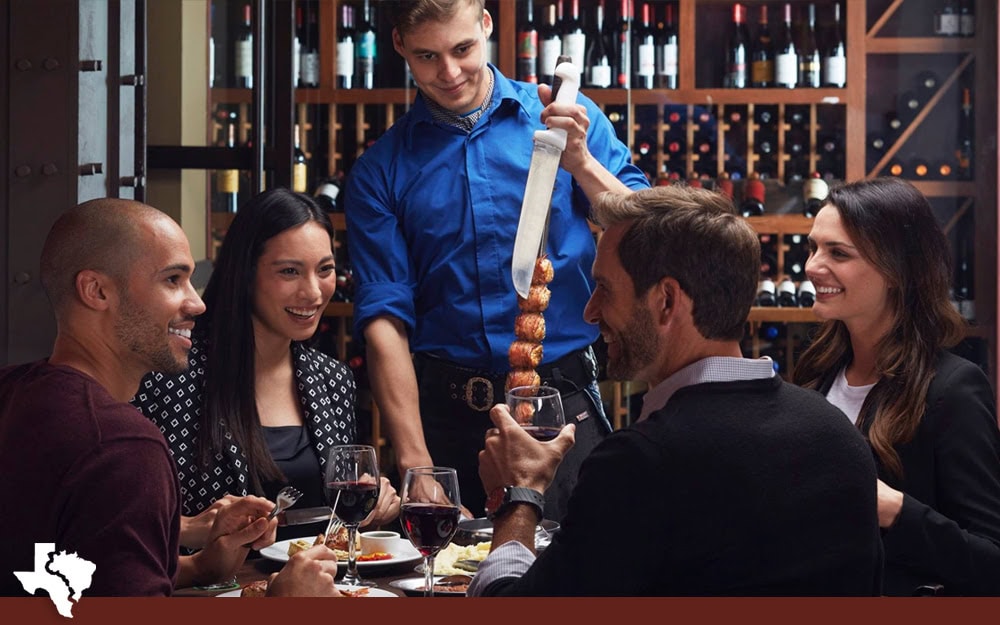
If you’re interested in checking out the experience for yourself, why not give it a try at Texas de Brazil? We’ve been serving up Brazilian steakhouse experiences since 1998 in Addison, Texas. Our non-beef skewers include parmesan pork loin, lamb chops, and sausage.
So, why not book a reservation for that birthday dinner or work gathering and give our game plan a try? Or, why not join our eClub to take advantage of our sign-up offer? Or, if you know another non-beef eater, why not give them a gift card to a Texas de Brazil location of your choice? Or, if you want to bring the Brazilian steakhouse experience home, why not order from our Butcher Shop and have it delivered to your door?
The choice is yours. All we ask is, when you visit us, which non-beef skewer will you turn your card green for the first time? The chicken thigh, the lamb, or the parmesan pork loin?