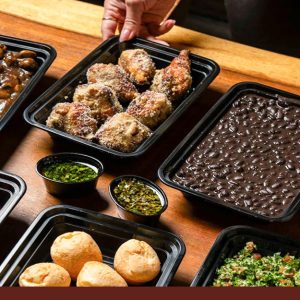

What Is Linguiça? Brazil’s Garlicky Grilled Sausage
Linguiça doesn’t get nearly enough attention in North American grocery stores. Outside of Portuguese and Brazilian communities, it tends to be a name people run into before they’ve ever actually tried it – maybe it was listed on a restaurant menu, or a recipe called for it and a trip to three different stores turned up nothing. In any case, it’s a sausage worth knowing about.
Linguiça is a Portuguese pork sausage that’s loaded with garlic and has been a staple in Brazilian cooking for centuries. It’s heavily spiced, has a very satisfying snap with every bite, and the flavor is big and smoky in a way that most sausages you’d find at an average American grocery store just can’t compete with. The garlic is very much front and center, and the whole seasoning profile goes way deeper than anything you’d get from a bratwurst or an Italian link.
At a Brazilian churrasco (the kind where the fat drips straight into an open flame and the garlic smoke hits you from way across the yard), linguiça is usually one of the first to land on the grill, and it’s very much a part of the culture. The casing gets wonderfully crispy over the heat, the fat slowly renders out, and the whole sausage ends up with this lightly charred exterior that gives every bite its own little bit of character.
Maybe you’ve tried to recreate a restaurant dish at home, or came across a recipe that kept calling for an ingredient you’d never seen before – its name probably didn’t make the hunt any easier. The spelling alone is enough to slow you down, and even once you’ve figured that out, most grocery stores don’t stock it anywhere near the normal sausage aisle. Reliable information about what it is or where to find it is also pretty hard to come by.
So let’s get started on what makes linguiça Brazil’s most flavorful grilled sausage!
Table of Contents
The History of Linguiça and How It Spread
Linguiça has a long history – Portugal has made this sausage for centuries. The Portuguese were some of history’s most wide-ranging traders and explorers, and their food managed to travel right along with them to just about everywhere they went.
Before refrigeration existed, meat preservation wasn’t just a convenience – it was a matter of life or death. Salt-cured and smoked meats could last for weeks or months at a time, which made sausage a natural fit for long sea voyages and life out in unfamiliar new territories. Settlers needed food that would last, and cured sausage delivered just that.
Linguiça arrived in Brazil in the 1500s with Portuguese colonizers, and it didn’t travel alone – it came as part of a much bigger wave of Portuguese culinary tradition that moved through trade routes across Africa, Asia and South America. Food works like language or religion in that way – it’s something settlers always brought with them, and it took hold in every new place they landed.
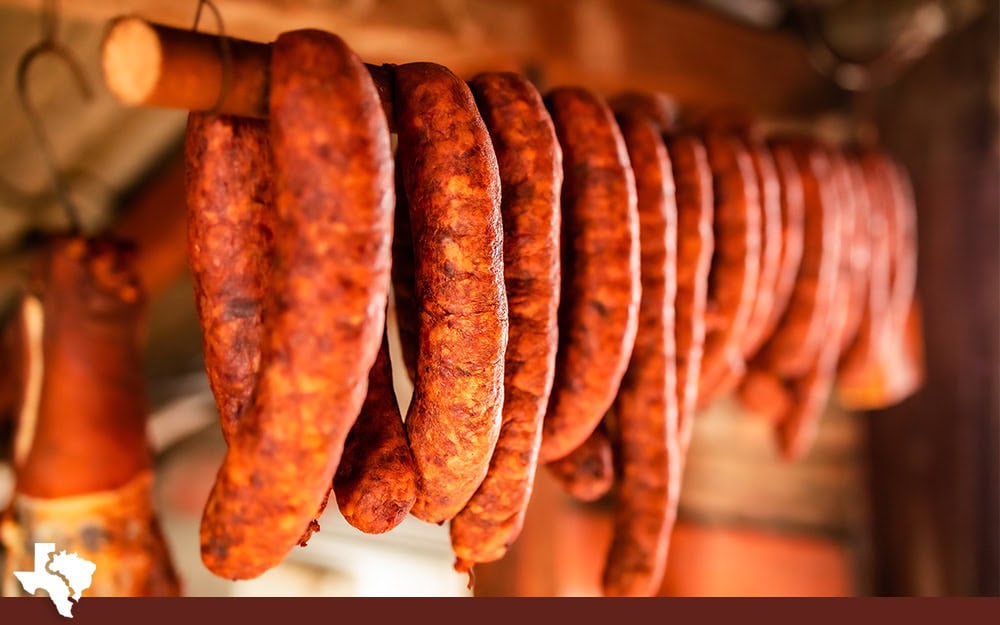
The sausage also had an edge that most other foods just didn’t have. All it took was a handful of basic tools and a short list of ingredients (pork, salt, garlic and smoke), which meant it could be made in almost any environment. For Portuguese settlers who built new lives in Brazil, that flexibility made a difference. Not every dish from back home could survive the voyage, let alone be recreated in a new world with very limited resources.
Outside of all that, linguiça was very familiar to those who carried it with them. Food holds a comfort and identity that almost nothing else can replicate – and for anyone who lived away from home, that matters more than words can capture. Linguiça gave Portuguese settlers a true taste of home in a place that was anything but. That connection ran much deeper than we usually give it credit for.
How Brazil Made Linguiça Its Own
Portugal gave Brazil linguiça, and Brazil turned it into something very much its own over time. The garlic got bolder, the paprika went deeper, and a generous splash of vinegar worked its way in and became a true signature of the flavor. None of that was accidental – it all came straight from the local ingredients and the tastes that shaped Brazilian food over the centuries.
Every cook instinctively reaches for what grows nearby and tinkers with the recipes to fit what their family actually wants to eat. Brazil had its own climate, its own agricultural history and a very particular idea of what a great sausage should be. The Portuguese original ended up as more of a loose starting point than a fixed blueprint, and so the recipe changed and grew from there.
That change in flavor was also closely tied to how linguiça found a permanent home in churrasco culture. Churrasco is Brazil’s tradition of grilling meat over an open fire, and it’s built right into family gatherings, weekend celebrations and almost every big occasion worth marking. Linguiça was a natural fit for the grill – it holds up well over direct heat, and it’s full of enough seasoning to stand its ground right alongside much bigger cuts of meat.
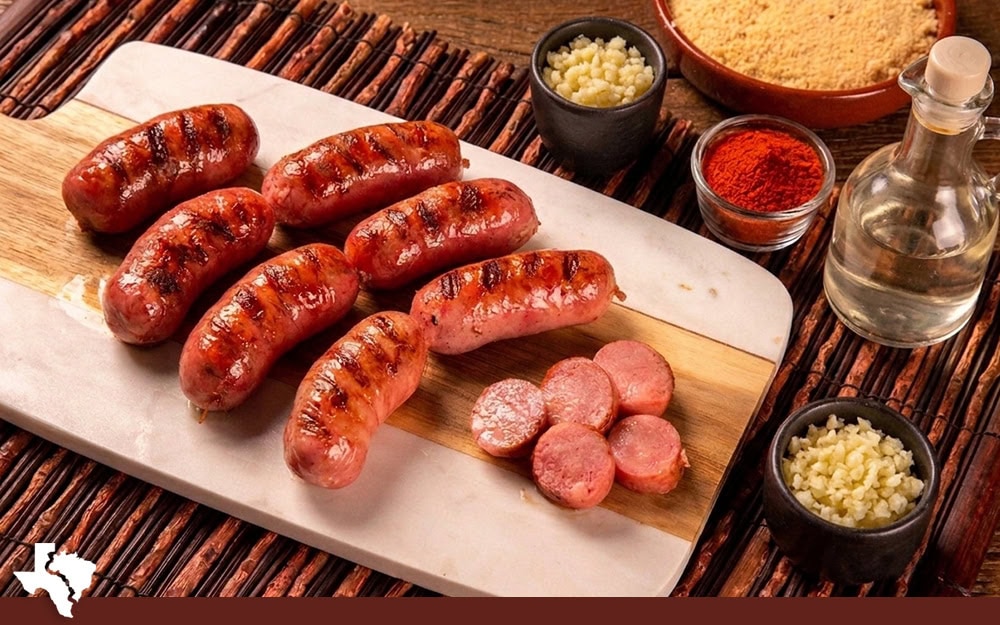
At a churrasco, linguiça is usually the first to hit the grill – it cooks fast, and the smell of it alone is enough to pull everyone toward the fire, and it gets passed around on a skewer long before the rest of the meat is anywhere close to ready. In my experience, it never quite makes it to the dinner table.
You’ll find it in backyards, at street festivals and at churrascarias all across the country. That bond with shared meals (the casual, communal, pull-it-right-off-the-skewer spirit of it) does quite a bit to explain why linguiça has held its place so well in Brazilian food culture for so long.
The Difference Between Toscana and Calabresa
Linguiça comes in two main varieties, and each one has a pretty recognizable character of its own.
Linguiça Toscana is the one that you probably have in mind when you hear the name. The grind is coarser than in other styles, and the garlic and spice blend is punchy enough to hold up well over a live fire. At Brazilian barbecues and family gatherings, Toscana goes straight onto an open flame and gets served in thick slices – it’s the anchor of the whole spread. If a grill is involved, it’s usually the right choice.
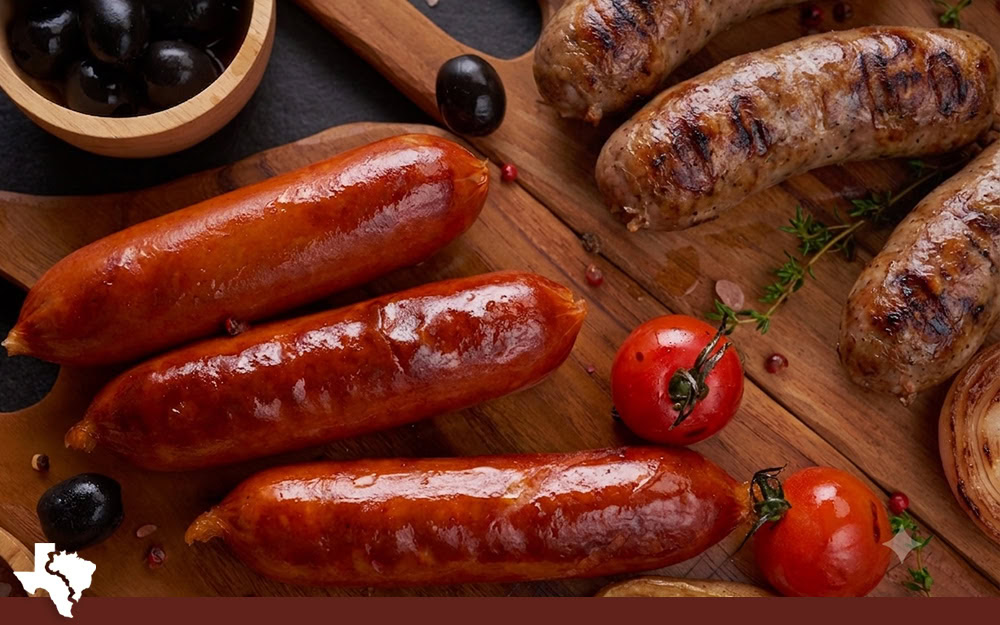
Linguiça Calabresa is pretty different (it gets smoked, and the smoking process gives it a noticeably deeper flavor with a bit more heat behind it) – the smokiness is what sets it apart. When Brazilians want something with a little more kick, Calabresa is usually what they reach for.
It also holds a pretty legendary place in Brazilian food culture as the star ingredient of calabresa pizza. Brazilian pizzerias have been putting it on their pies for decades, and it’s earned a devoted following across the country – it’s easy to see why. Melted cheese with smoky sausage is a combination that’s hard to argue with.
These two sausages share a name and a heritage. But they aren’t interchangeable. Toscana belongs on the grill – full stop. Calabresa earns its place in cooked dishes and especially on top of a hot pizza. The right choice can legitimately make or break a dish. Whether you’re planning a backyard cookout or a homemade pizza night, the right linguiça matters.
How to Grill Linguiça the Right Way
Linguiça on the grill is pretty easy. But heat management is what makes or breaks the outcome. Medium heat is the right call – high heat will char the casing long before the inside has any chance to cook through. A burnt exterior with a raw center is probably the most common mistake with this sausage, and it tends to show up the first time around.
Linguiça has a pretty thin casing and a fair amount of fat inside that takes a bit to render down slowly – rush it, and you’ll be left with uneven results. Fortunately, a couple of strategies work well here. One way is to score the links lightly before they go on the grill, which lets the heat work its way inward at a steadier pace. The other is to parboil them first, then finish them over the flame to get that signature snap and some color on the outside. Both methods work great – and the one point they have in common is that neither one rushes the process.

Patience is what separates a great result from a wasted batch, and it’s probably the single biggest lesson for any new cook to take away from this. Too much heat is the wrong move – the outside darkens too fast, and you’re left with something that looks done but isn’t.
A slower cook also protects what makes linguiça worth eating – those flavorful juices sealed up inside the casing. The second that casing splits from too much heat, all that juice drips straight down onto the grates, and it’s gone. And the texture goes right along with it. Flip the links gently, make sure each one has enough room around it for even heat on all sides, and don’t press down on them.
Linguiça is the sausage that rewards patience on the grill. Nail the heat, and it takes care of itself from there.
The Best Sausage Swaps for Linguiça
Linguiça isn’t always easy to find at a standard grocery store, and in some parts of the country it can be nearly impossible. A handful of substitutes are worth keeping in mind, though none of them are a perfect match – and some will get you quite a bit closer than others.
Portuguese chouriço is probably the closest match. The two sausages share a pretty similar history, and garlic and paprika are at the heart of each one’s flavor. Chouriço does lean a bit smokier and stronger than linguiça, though, so just keep that in mind when you use it.
Spanish chorizo is another option. It carries a paprika-forward smokiness and the flavor runs a bit bolder than linguiça. But it holds up on the grill in more or less the same way and gets a great char over an open flame.
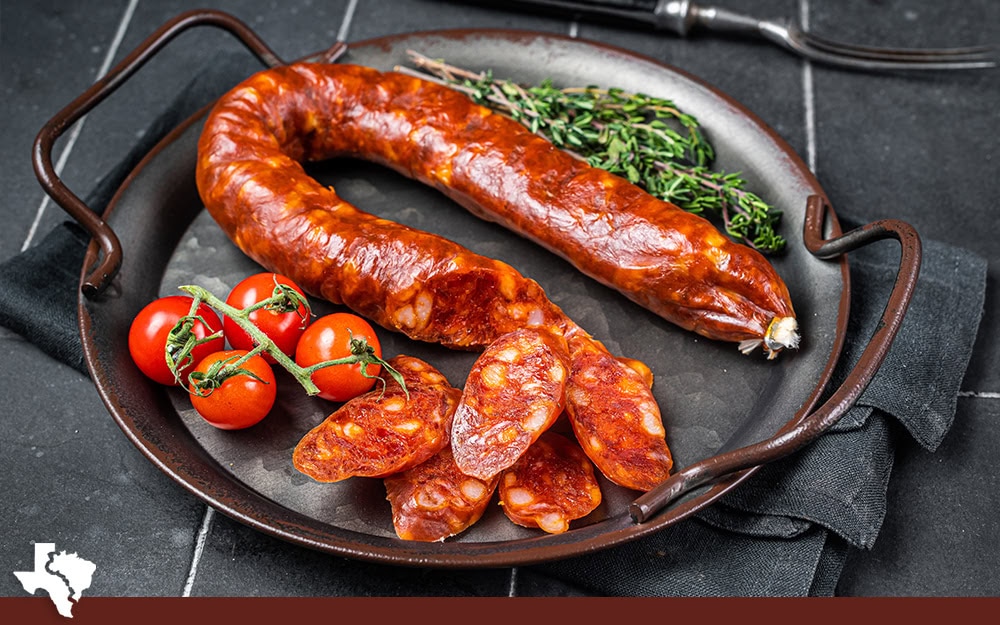
Kielbasa is a bit of a different story. The texture is pretty close to what you want – the actual issue is with the flavor. Kielbasa runs a bit more savory and herbal, and it doesn’t have any of that paprika warmth that gives linguiça its character. In a dish where the sausage is the main event, that flavor gap will be hard to work around. In a stew or a rice dish, though, kielbasa can still hold its own.
Between flavor and texture, flavor is the one that actually makes or breaks a dish. A sausage with the wrong seasoning will pull the whole recipe in a very different direction – even if it looks identical to what you were going for. At the store, go with whichever option gets the flavor profile as close as possible to the original – a slight difference in texture is a fair bit easier to work around.
Beyond the Grill and Into the Kitchen
Linguiça shows up just about everywhere in Brazilian cooking. Its most famous role is probably in feijoada (Brazil’s national black bean stew), where it goes in alongside all kinds of other smoked and cured meats, and the end result is a dish that tastes like it’s been on the stove for days.
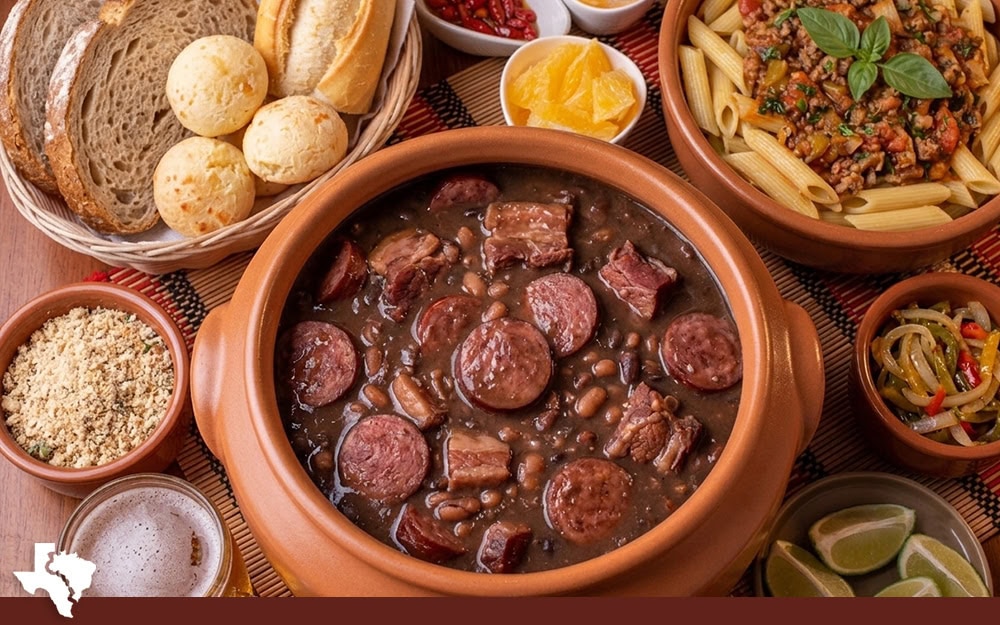
Outside of feijoada, linguiça shows up in all kinds of places in Brazilian cooking – stuffed into breads, mixed into pasta sauces and laid out next to a couple of eggs for a quick breakfast plate. Even a small amount brings flavor, which is what makes it such a helpful and flexible ingredient to have around.
For anyone who is new to linguiça, a whole recipe doesn’t need to revolve around it to get quite a bit out of it. A few slices in a pot of beans or in a tomato-based sauce is all it takes – just drop them in and let the sausage build flavor in the background. The garlic, the smoke and the fat will seep into whatever surrounds it.
The leftover grilled sausage from the night before almost never gets thrown out – a few slices find their way into the next day’s meal and give a whole new dish depth before anything else even hits the pan. One ingredient, stretched across two different meals, and it works with almost no extra effort.
That type of range is hard to find in a pantry staple. Most single ingredients have one job (it’s where they stay). Linguiça is different, and it moves comfortably between roles. Whether it anchors an entire weekend stew or just adds depth to a fast weeknight sauce, it always earns its place on the plate.
Savor the Moment at Texas de Brazil
Linguiça has traveled a long way to get to your grill, from the Portuguese coastline to Brazilian backyards, with bolder garlic, deeper paprika and an entire culture of communal cooking that was picked up along the way. What started as an easy way to preserve meat on long sea voyages eventually became one of the most well-loved communal foods in Brazilian tradition, which is something for a sausage. With a feel for the difference between Toscana and Calabresa, a sense of grill temperature and a few substitutes on hand, you have everything it takes to cook with it confidently.
For starters, keep it easy – get the grill going at medium heat, give the links enough time and let the fat do what it does best. Once that feels comfortable, a pot of beans or a pasta sauce made with linguiça will come together almost on its own. The more you work with it, the more sense it makes that Brazilian home cooks are just as likely to pull it out on a random Tuesday night as they are for a big weekend cookout.
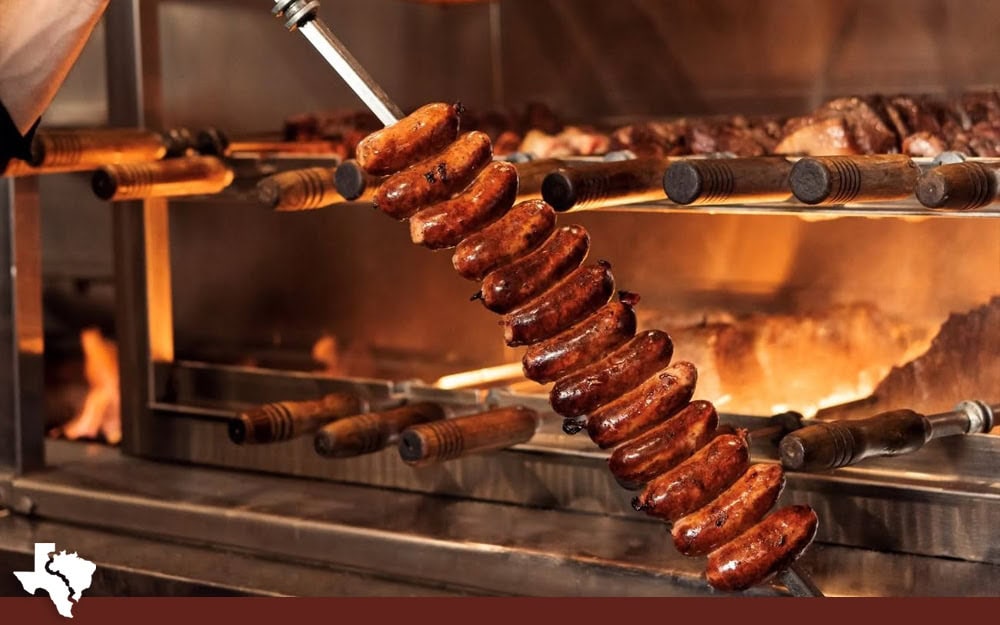
Brazilian cooking done right is something we’ve had figured out at Texas de Brazil for a long time – and the full churrascaria experience is proof of it. It’s fire-roasted meats, a 50-item gourmet salad area and a meal that turns an evening into an occasion worth planning around. Make a reservation at your nearest location to experience it all for yourself.
Bringing a little of that home is easy too – the Texas de Brazil Butcher Shop ships premium cuts straight to your door. The eClub is worth a look as well – new members get $20 off their next visit. Or grab a gift card for anyone in your life who appreciates a great meal.
The grill is always burning – come and find a seat at the table.