

How to Pronounce Common Brazilian Menu Words
A Brazilian restaurant menu can make even the most well-traveled diners pause. Words like feijoada, coxinha and pão de queijo look nothing like the way they sound – and with no point of reference to go on, you either point quietly at the page or take a guess at a pronunciation that ends up nowhere near right.
Brazilian Portuguese has sounds that just don’t show up in English. Nasal vowels, consonant clusters that can work like very different letters altogether and an “r” that sounds almost nothing like its English counterpart all come together in a language that rewards effort but has very little patience for assumptions. Spanish and Brazilian Portuguese share loads of vocabulary on the page, so plenty of Spanish speakers walk in feeling comfortable. Spoken out loud, the two languages can sound worlds apart – and that tends to cause some uncertainty at the table. It’s actually one of the most common problems I see with first-time visitors to Brazilian restaurants.
A mispronounced dish order is at most a minor blip – most servers have seen it all before, and it’s not going to ruin anything. The great news is that a pretty small set of sound patterns will carry you through most words on any menu. Once those start to click for you, what used to look like an unreadable wall of letters will start to make more sense. A little practice is all it takes, and soon you’ll have fun reading it out loud!
Let’s run through these Brazilian menu words so you can order with confidence!
Table of Contents
The Sounds That Give English Speakers Trouble
Brazilian Portuguese has a few sounds that just don’t show up in English. That gap is where the early frustration tends to come from.
The vowels are usually the first wall that you hit – some of them are nasal, so the sound travels partly through your nose instead of straight out of your mouth, and it gives words a soft humming quality that takes a little time for your ear to adjust to.
Then come the letter combinations. Letters like “lh” and “nh” don’t do much on their own in English – they don’t have a sound to speak of. Each pairing has its own dedicated sound in Portuguese. Coming across them for the first time on a restaurant menu can make a word that looked familiar just a second ago feel like it belongs to a whole other language.
A few letters cause the most issues, though. The letter “r,” as another example, can sound much closer to an “h” in Brazilian Portuguese, and it moves around depending on where it falls in a word. The letter “x” is even harder to pin down – it can make a few very different sounds depending on the context. And with a background in Spanish or French, your existing instincts about what a letter should sound like can quietly work against you.
That said, it comes together fairly quickly. Once you get a feel for a few of the main patterns (and actually feel confident with them), most of the uncertainty starts to go away on its own. You’ll run into a wall pretty early on with something that seems almost too basic to matter – it’s a frustrating place to get stuck. I’ll get you past that exact point and help make the whole process feel quite a bit more manageable.
How to Get the Nasal ão Sound Right
A bit of background on why Portuguese trips up English speakers goes a long way, and the best place to start is with one of the most helpful sounds that you’ll ever need once you sit down to order.
The “ão” ending is one of the sounds that come up all over a Brazilian menu (in the main dishes, the drinks and the side items), almost everywhere you look. A few minutes with this sound early on will give you a base to work from, and from what I’ve seen, it pays off fast once you actually have a menu in front of you.
The sound is roughly like “owng” pushed through your nose – a nasal version of the “-ong” in “song” but rounder and a bit softer. The air should not stop at your lips – it needs to move through your nose in a gentle hum at the end. That nasal hum is what makes the whole sound work.

Two words make for great starting points. The first is feijão – the classic black bean dish at the heart of Brazilian cooking. Pronounce it “fay-ZHOWNG” and spend a bit on that “ZHOWNG” at the end, because that’s the exact sound that you should get right. The second is pão, the word for bread, which is said like “powng.” It’s short and easy to remember, and a great little word to get a feel for that nasal finish.
A quick heads-up – these two words alone will come up on almost every Brazilian menu that you’ll ever look at, so the practice pays off almost from day one. Once “ão” starts to register as a familiar sound, it’ll pop up everywhere on a menu. Those random-looking letter combinations will start to feel familiar, and you’ll have a sense of just what word you’re looking at. That alone can make a Brazilian menu feel much easier to follow.
Why the Letter X Sounds Like SH
The letter “x” is one of the harder parts of Brazilian Portuguese for English speakers to get right – it’s also the case at a restaurant when you’re trying to order. Brazilian Portuguese “x” usually makes a “sh” sound – not the hard “ks” sound that most English speakers just want to default to.
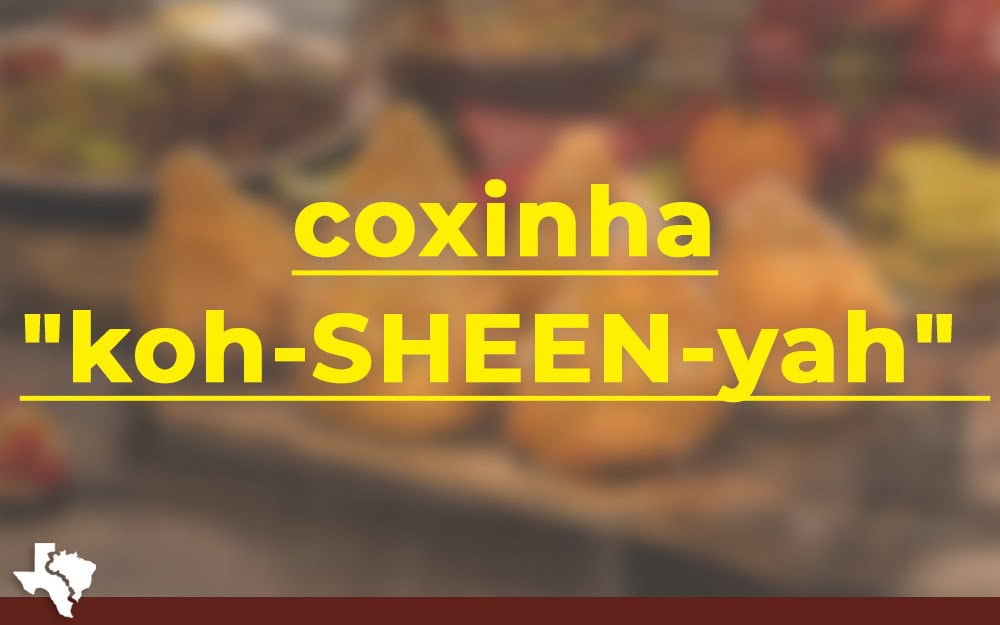
Coxinha is an example of this. It’s one of the most popular street foods in Brazil and also one of the most frequently mispronounced items that you’ll find on a Brazilian menu. Most English speakers default to something like “kok-SEE-nah,” but the pronunciation is “koh-SHEEN-yah.” That “x” in the middle of the word is doing more work than it looks. Pick up on that, and you’ll start to see it all over the menu.
Once you lock in on that “x equals sh” idea, a whole category of menu words starts to make more sense. It’s a small adjustment to make, but it does matter when you’re looking at a menu and trying to order something without mangling it in front of your server. It’s also one of the first shifts that tends to make Brazilian Portuguese start to feel a bit more familiar.
That said, “x” doesn’t always follow this pattern in Portuguese. Where a word comes from (and where the “x” sits within it) does sometimes change how it’s pronounced. Words with Latin roots will sometimes lean toward that harder “ks” sound instead. It’s not a perfect pattern by any means, and it’s not meant to be one – just a decent starting point to work from.
Of the sounds that you’ll come across on a Brazilian menu, the “sh” sound is by far the most common. Get comfortable with it early on, and that second-guessing at the ordering counter will just disappear.
A Brazilian R That Sounds Like an H
The letter “r” in Brazilian Portuguese has a sound that most English speakers have never come across before, and it’s one of the first sounds worth learning about if you’re looking to walk into a Brazilian restaurant and try to order.
At the start of a word or when it’s written as a double “r,” the sound lands much closer to the English “h” than to anything else. A great word to practice with is arroz, which is the Portuguese word for rice – it’s two r’s right in the middle of it, so instead of a rolling or hard “r” sound, what you’re actually saying sounds more like “ah-HOHZ.” That double “r” in the spelling is your first hint that something different is going on.
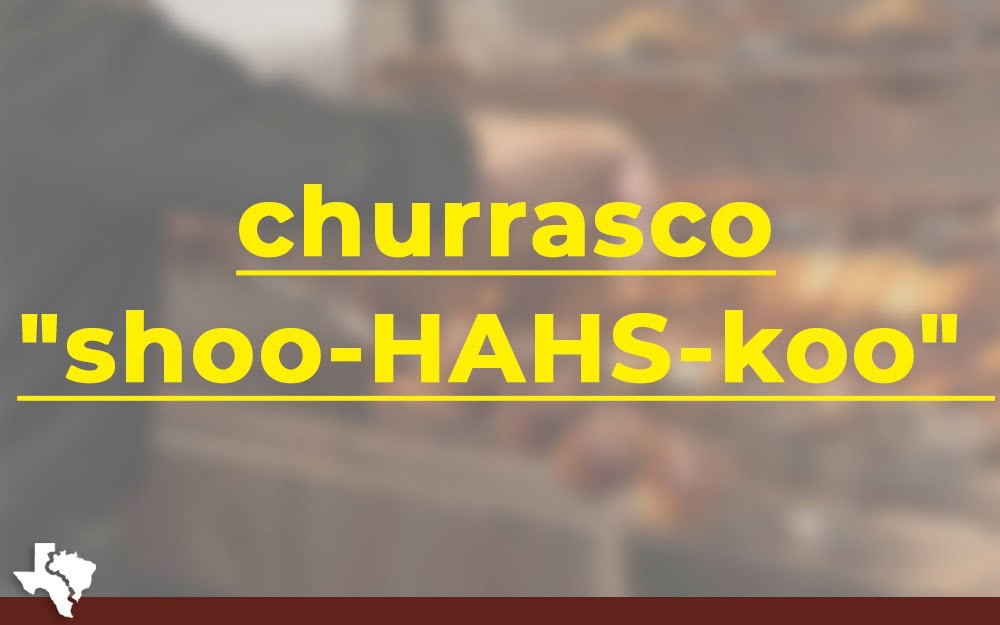
The same principle applies to churrasco, which is Brazil’s most famous grilled meat dish. That double “r” in the middle changes everything, so it comes out more like “shoo-HAHS-koo,” with no hard “r” sound in it at all. These two words show up on just about every Brazilian menu, which makes them a perfect place to start. Once you’re comfortable with them, the rest of the pattern tends to fall into place on its own.
It’s also worth knowing that this sound can appear even when there’s only one “r” at the very beginning of a word. So a word like rodízio, which refers to the all-you-can-eat style of service at Brazilian steakhouses, starts with that same soft “h” sound instead of a hard “r.” The spelling doesn’t always give you a signal the way a double “r” does. But once you’ve heard the sound a few times, it’s much easier to place.
How the LH Pair Makes a LY Sound
The letter pair “lh” is one of the combinations that deserve a little extra attention – it produces a sound close to “ly” or a soft “y,” and once you’ve heard it a couple of times in actual words, it tends to click pretty fast.
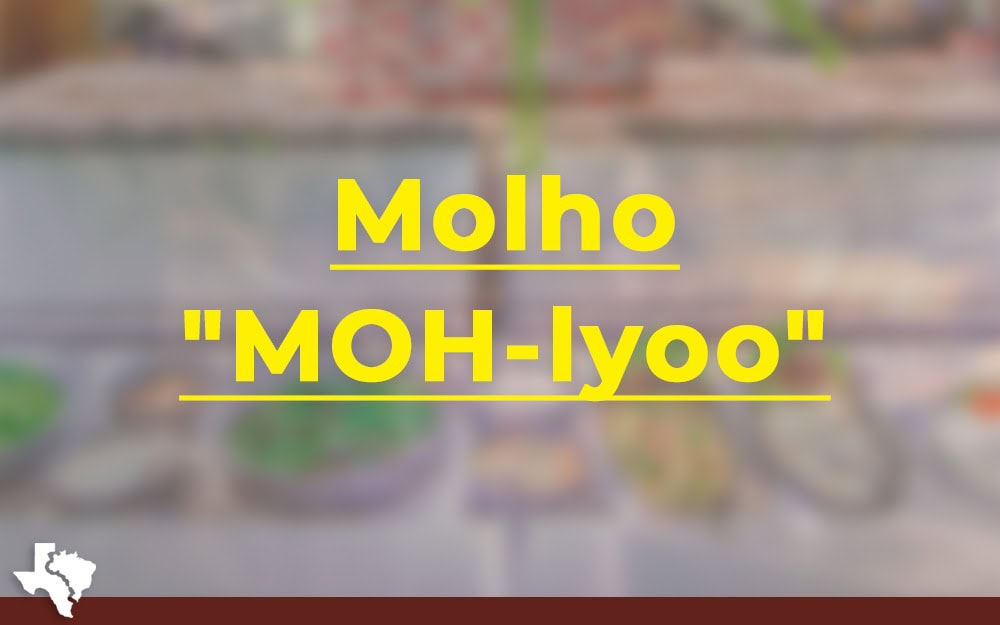
Molho (which just means sauce) is a great word to get comfortable with – it pops up on almost every Brazilian menu in some form or another, whether as a standalone word or as part of a bigger dish name. The pronunciation is “MOH-lyoo” – the middle “lh” sound gives it a soft and almost musical quality that most other languages just don’t have. For a pretty short word, it carries personality. The pronunciation also matters more – if you walk into a restaurant and try to order with any confidence, you want to have it down.
Alho follows the exact same pattern – it means garlic, and if you’ve spent any time cooking with Brazilian recipes at home, there’s a decent chance you’ve already spotted it on a recipe card or two. The pronunciation is “AH-lyoo” – same logic, same sound. On their own, each word is a small win. But a couple of them stacked together is a decent start.
What makes “lh” especially helpful is that it doesn’t change depending on where it shows up in a word. The sound holds steady in whatever surrounds it – it’s actually one of the more forgiving aspects of Portuguese pronunciation.
Once that “ly” sound clicks for you, new words with “lh” start to feel more manageable – even ones that you’ve never come across before. Over time, I find that these small pronunciation anchors are the ones that quietly do the most work. They give you a foothold, and from there the rest of the menu starts to open up.
Five Brazilian Foods That You Should Know
Armed with those pronunciation basics, let’s go ahead and put them to use on a few menu words.
A great word to have is feijoada – Brazil’s famous black bean stew. Pronounce it as “fay-ZHWA-dah” and listen for that soft “ZH” sound right in the middle. It’s the same sound from the letter J that we went over earlier, and a perfect chance to hear it in a word. Açaí works the same way. The accent on that final “í” tells you right where the stress lands and makes it come out as “ah-sah-EE.” The accent mark is doing just the job that we talked about.
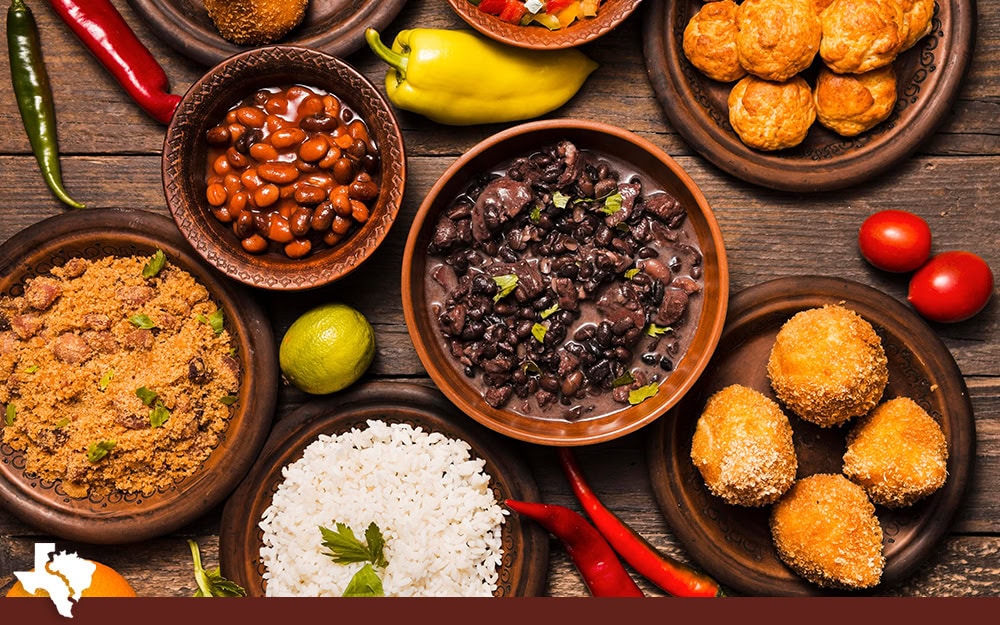
Slow Pão de queijo down a little and it comes together. Pronounce it as “powng-jee-KAY-zhoo.” The nasal “owng” sound is what that tilde over the “ã” is doing, and that same soft “ZH” makes another appearance at the end of queijo. Master just those two sounds, and a big part of any Brazilian menu will start to feel way less foreign.
For drinks, caipirinha is the one to learn (it’s pronounced “kai-pee-REE-nyah”) and the stress lands on that third syllable. The “nyah” at the end comes from the letter pair “nh,” which works just like the Spanish “ñ,” so if you’ve spent any time with Spanish, that part will feel natural straight away. Another word to keep in mind is brigadeiro, Brazil’s famous chocolate truffle – it reads as “bree-gah-DAY-roo,” and the stress follows the same pattern as most Portuguese words that end in a vowel.
Once your mouth has had a little practice, the sounds start to feel quite a bit more natural.
Brazilians Will Love You for the Effort
Brazilians are legitimately warm toward visitors who make an effort with the language – and perfect pronunciation is nowhere near necessary. Walk to a bakery counter and place an order in Portuguese, and the person behind the counter will usually meet you with patience and a generous smile. A stumbled order still gets the job done, and nine times out of ten, you get a little goodwill from each side of the counter.
Context already does most of the work. Point at a pastry and say something close to “powng-jee-KAY-zhoo.” The person behind the counter already knows what you want – they can see what you’re pointing at. Your pronunciation doesn’t have to be perfect to get the point across – it just has to be close enough. The bar for that is pretty low.

Hesitation is usually the bigger obstacle. A small mispronunciation is almost never going to be a problem for anybody. Brazilians have a well-earned reputation for patience and genuine warmth with visitors who make an effort with the language – and in my experience, that reputation holds up every time.
The best way to get ready is to get those words out of your head and into your mouth before you ever reach the door. Read the menu out loud at home – or at least on the sidewalk right outside. A few run-throughs is usually all it takes for the words to start feeling a little more natural. From there, you can step to the counter and place your order with actual confidence behind it. That combination (a little effort and a little nerve) is all it takes.
Savor the Moment at Texas de Brazil
Language learning has a way of opening doors that go far beyond the words themselves. On paper, it’s a small detail. At the table, it matters.
A table at Texas de Brazil is probably the best place to actually put any of what you’ve learned to use. The menu reads like a living version of everything I’ve covered here – fire-roasted meats carved right at your table, rich and satisfying Brazilian flavors and a warm atmosphere that makes the whole meal feel memorable. The food alone would be worth the visit – and then there’s the whole culture that comes with it.

The eClub gets you $20 off your first visit – a deal before you’ve even sat down for the first time. It takes less than a minute to sign up, and it’s worth it just for the visit alone. A Texas de Brazil gift card is also a great option if you want to treat a friend or family member to a meal worth remembering. It’s the experience that stays with you.
Our site has a Butcher Shop as well, and you can order some of the same premium cuts from the restaurant and bring a little of that experience home. Whether you want to recreate a favorite dish or just keep the food going between visits, it’s a great way to extend the experience past the restaurant itself.