
Can You Take Leftovers Home From A Brazilian Steakhouse?
The belts loosen as the plates pile up fast, and somewhere around the third round of picanha, a pretty familiar question tends to come up – whether any of this can go home with you. That makes total sense. The food is very rich, the portions are almost aggressively generous, and a full plate at the end of the night feels like a waste to leave behind. Even so, many guests are reluctant to even ask for a box at a place like this.
The reluctance tends to come from one of two places. Either the guest assumes the answer is no and doesn’t bother to ask, or the format itself (a flat price, all-you-can-eat, servers on a steady loop with skewers) makes the whole subject feel a little awkward to bring up. But neither assumption holds up. Policies can vary from one restaurant to the next, from one dish to another and sometimes even based on how you phrase it.
A little research before that card flips to red can save you unnecessary awkwardness at the end of your meal. Some chains won’t let the carved meats leave but will gladly let desserts go. Others are perfectly fine with à la carte leftovers, but the rodízio items are off-limits. And a few restaurants are very gracious about the whole process – no questions asked.
The price structure of rodízio dining is the main reason these policies are out there. A flat rate for unlimited food sounds easy enough from the guest’s side of it. But the math gets much messier for the restaurant once plates start to leave the building.
None of that makes the policy fair or unfair – it just explains why the policies at a rodízio are a little more layered than at a normal sit-down restaurant. With that in mind, the whole conversation is much easier and a polite question is usually all that it takes.
Table of Contents
How a Brazilian Steakhouse Meal Works
Brazilian steakhouses are built around a dining format called rodízio, and the whole setup works quite a bit differently from a normal restaurant. A single flat price covers your entire meal – and once you’re seated, the food just arrives at your table for as long as you want it.
The whole concept traces back to southern Brazil. Gaúcho cowboys there slow-roasted large cuts of meat over open fires – it was always a communal affair. That spirit of plenty at the table eventually made its way into the restaurant world, and the rodízio format grew straight out of it.
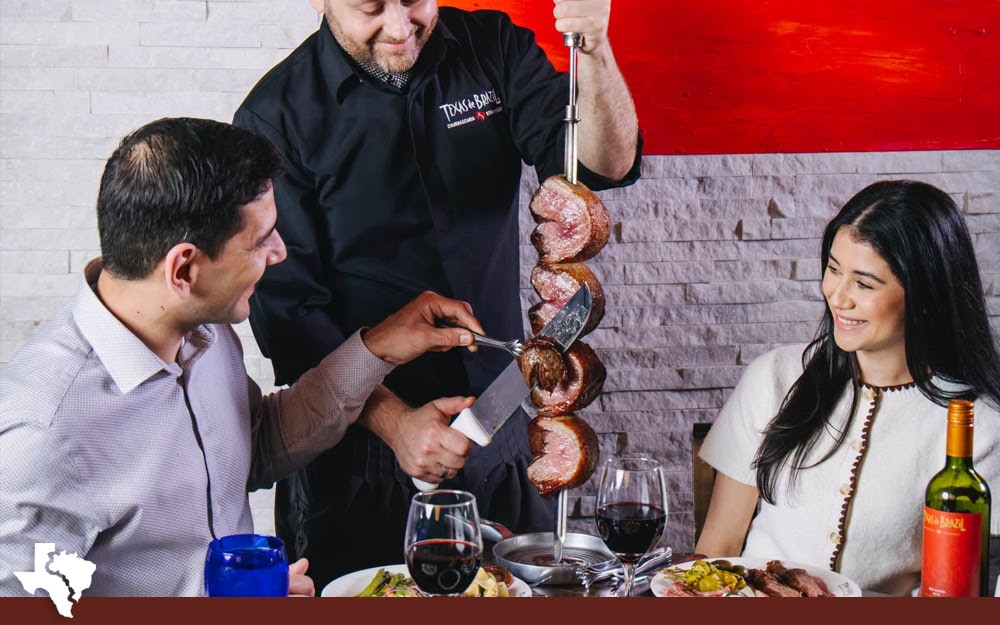
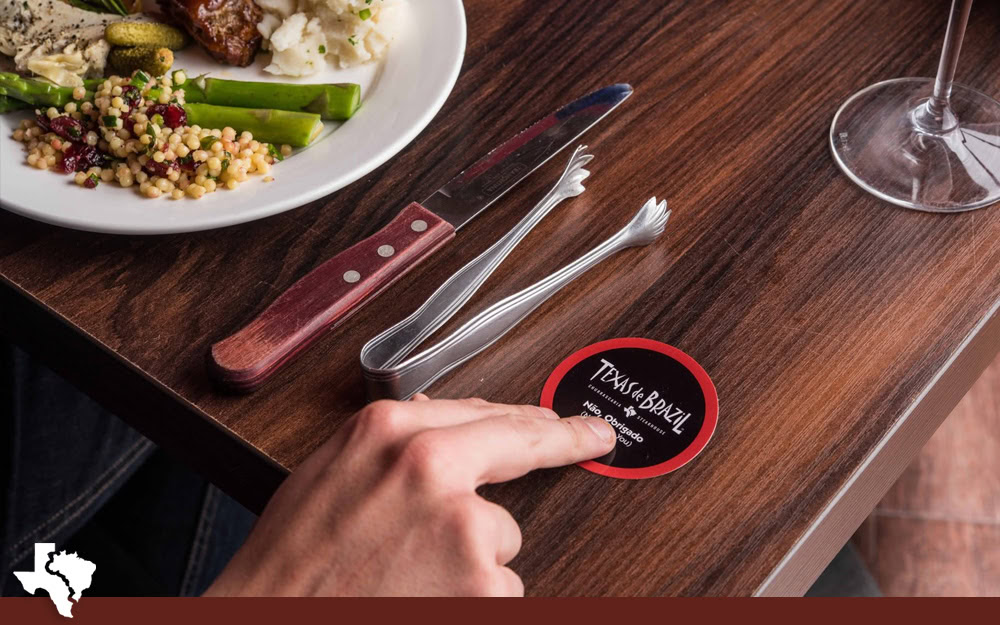
The meal itself works like this – servers make their way through the dining room with large skewers of meat and carve the portions right onto your plate tableside. Each table also gets a small two-sided card that you’ll use to manage the flow of food. One side is green, and the other is red. Flip it to green, and the servers will continue their rounds to your table. Flip it to red, and they’ll give you a few minutes to work through what’s already in front of you.
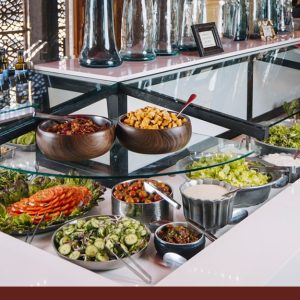
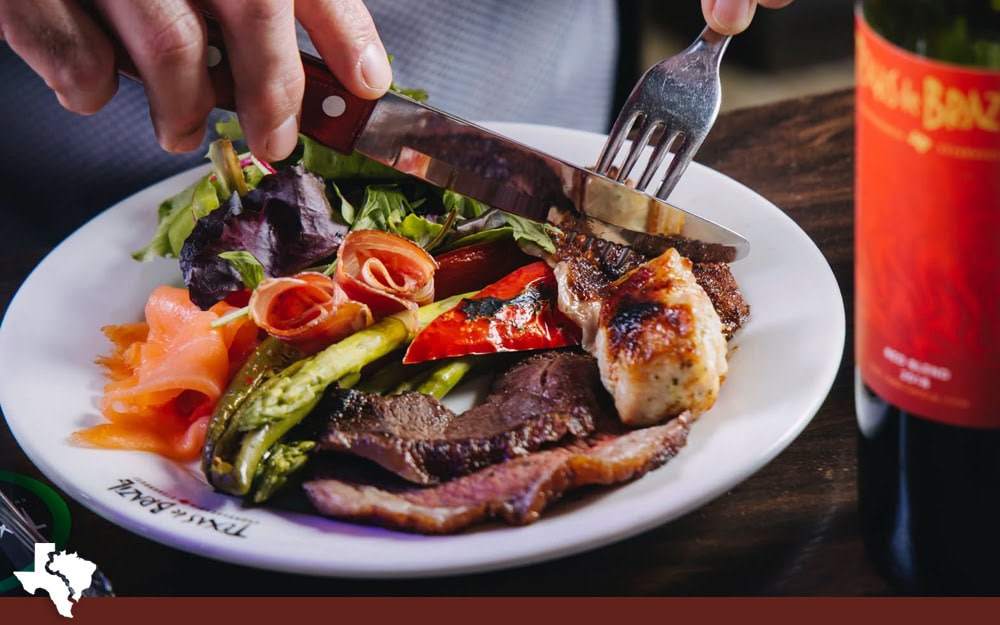
Most tables also have access to a salad bar loaded with sides, breads and hot dishes – and it’s right where first-timers go wrong. It’s hard to walk past without piling your plate. But the best cuts of meat usually come out later in the meal, and you don’t want to be full by then. Pace matters quite a bit at a place like this. At a normal restaurant it barely matters – but a Brazilian steakhouse works differently.
The card system exists for a fairly obvious reason. With servers always on the move and a rotating lineup of cuts that come out of the kitchen, guests needed a way to pause without physically stopping a server mid-lap. A quick wave works in theory. But in a busy dining room, it doesn’t always work. The card takes care of all that on its own without a word.
Where the All-You-Can-Eat Deal Ends
The price that you pay at a flat-rate restaurant covers the meal that you eat right there – and that’s where plenty of places draw a hard line around takeout boxes. The deal was for dinner, and a free lunch for the next day was never part of it.
Food waste at all-you-can-eat restaurants is a big conversation in the industry. A handful of restaurants across parts of Asia now charge customers an extra fee for any food left uneaten at the end of a meal. The reasoning behind it is pretty simple – a bottomless meal is a privilege and with that privilege comes a genuine sense of responsibility.
Most diners who ask for a box have no intention of cheating anyone – that’s worth saying first. The instinct to cut down on waste is understandable, and it makes plenty of sense. A fair question does come up though – if you flagged down your server and asked for ten more slices on an already-full stomach, it starts to feel a bit one-sided to then box it all up and head out. The restaurant has already held up its end of the deal and kept the food coming.
That tension is what sits at the heart of the whole takeout box debate at Brazilian steakhouses. It’s less about strictness and more about where the all-you-can-eat agreement is supposed to end. Different restaurants land in very different places on this, and their policies usually reflect that internal tension more than anything else.
My advice would be to just ask your server instead of assuming a box is an option. Some restaurants are more than happy to hand one over, and others will politely pass. A quick word before the meal winds down can save everyone at the table a bit of awkwardness either way.
Sides Go Home and Meat May Not
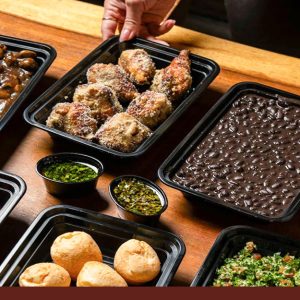
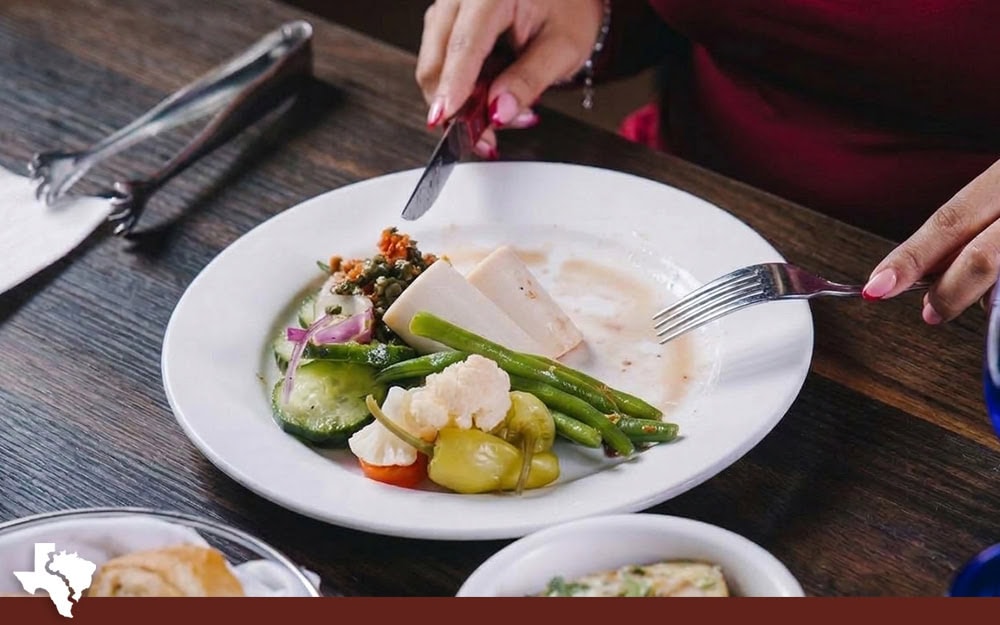
Not everything on your plate gets the same treatment when it’s time to box up your leftovers. Sides like rice, beans and roasted vegetables are pretty easy – whatever is left on your plate is yours with no gray area to sort out. Anything that you grabbed from the salad bar before your meal even started falls right into that same category.
Carved meats are a bit of a different story. Gaucho service is built to be continuous and open-ended, and plenty of restaurants will flat-out refuse to box up extra portions. It’s not hard to see why – the entire concept revolves around unlimited tableside service, and once you try to package meat for the road, it starts to work against that model pretty fast. It’s a smart idea to check on this before you make any plans around it.
Policies like these can vary quite a bit (some locations are pretty laid-back about it and others are stricter) and they can even change from one restaurant to the next within the same chain. A quick word with your server at the start of your meal is the easiest way to get a straight answer.
One trap to stay away from is the temptation to load up on meat near the end of your meal with a plan to take it home. Restaurant staff have seen that move a thousand times before, and plenty of places actually have policies in place specifically to put a stop to it. A much better move is to eat what you want and then just ask your server directly about what can be packaged up – most places will like the honesty.
Sides are a much easier deal – they don’t have that tableside service element that carved meats do, and there’s nothing tough about it. Leftover potatoes, farofa or rice still on your plate at the end of the meal are all fair game to box up and take home with you, and most places won’t give you any grief about it.
Ask for a Box at the Right Time
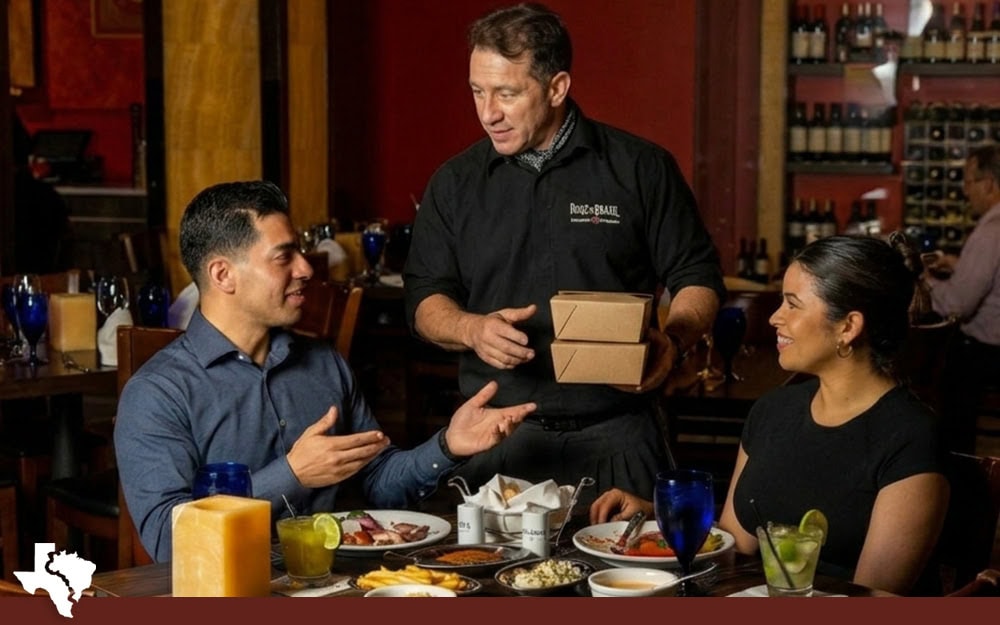
Timing matters a lot here. Let your server know early on in the meal if you already know that you want to take some food home with you – not at the very last minute when the plates are already being taken away. The kitchen reads it as its cue to redirect and move on once your card flips to red. A last-minute request at that point puts your server in a pretty awkward position with the back-of-house team – it’s a situation no one wants to create.
A direct request is all you need here. Something like “Would it be possible to box some of this up?” gives your server a chance to go and check what the restaurant will and won’t allow and then come back to you with an answer – no pressure on either side.
A decent server will always welcome the heads-up – it gives them enough time to get your leftovers ready instead of having to pull something extra together on the fly. On a packed night that’s a big ask.
France actually put a law into effect in 2021 that requires restaurants to give diners the option to take their leftovers home. The logic behind it was twofold – it cuts down on food waste, and it puts the choice with the diner where it belongs. Not every country has gone in that direction yet. But the fact that it made it into legislation says quite a bit about how much weight it carries at an international level.
The upside of all this is pretty easy to see. Speak up early, and the restaurant has time to get a proper container ready, your server doesn’t have to scramble at the last minute, and you get to leave at a decent hour – instead of sitting around at a table full of food with no exit plan.
Cut Food Waste Right at the Table
The USDA puts annual food waste at anywhere from 30% to 40% of the entire U.S. food supply – it’s a pretty staggering figure. A Brazilian steakhouse is one of the easiest places to add to that number without even realizing it.
Most guests accept every cut that comes around the table, and it’s usually done out of politeness. That said, there’s no obligation to take a cut that you don’t actually want.
The simplest trick is to just flip your card to red any time you need a breather – that’s just what it’s for, and the gauchos know it well. No one will pressure you or rush you. Flip it back to green when you’re ready to get back into it, and feel free to be selective about what you accept. Go ahead and ask for a particular cut by name if it caught your attention earlier in the meal. The gauchos will happily come back around with just that one, and they do it without any unnecessary delays.
Portion size is worth planning around, and it’s not hard to forget until you’re already halfway through your second full serving. You’ll have the freedom to work through a much wider variety of cuts without accidentally filling up on the first few when you ask for a smaller slice from each skewer. It’s a more laid-back way to eat, and the meal does get better when you’re not rushing through everything just to feel like you made the most of it. A little pacing at the table can make quite a difference – you’ll finish feeling satisfied instead of stuffed, and you might even have just enough room left for dessert.
The Right Way to Reheat Your Leftovers
The clock starts before your leftovers are even packed. Perishable food needs to make it into the fridge within 2 hours after it’s served, per the USDA. That window drops to just 1 hour once it’s above 90°F outside. It’s worth a thought before you grab a to-go box if you have a long drive home on a hot summer day.
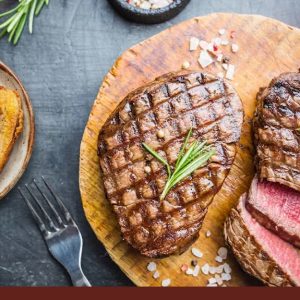
The microwave is always tempting with leftovers. But it’s probably the fastest way to ruin a beautiful cut of picanha – you’ll get something chewy and dry. A skillet over medium heat is a much better move. Give each side a minute or two and then pull it off the heat before it goes too far. The USDA recommends that leftovers reach an internal temperature of 165°F. A meat thermometer is the only reliable way to hit that mark.
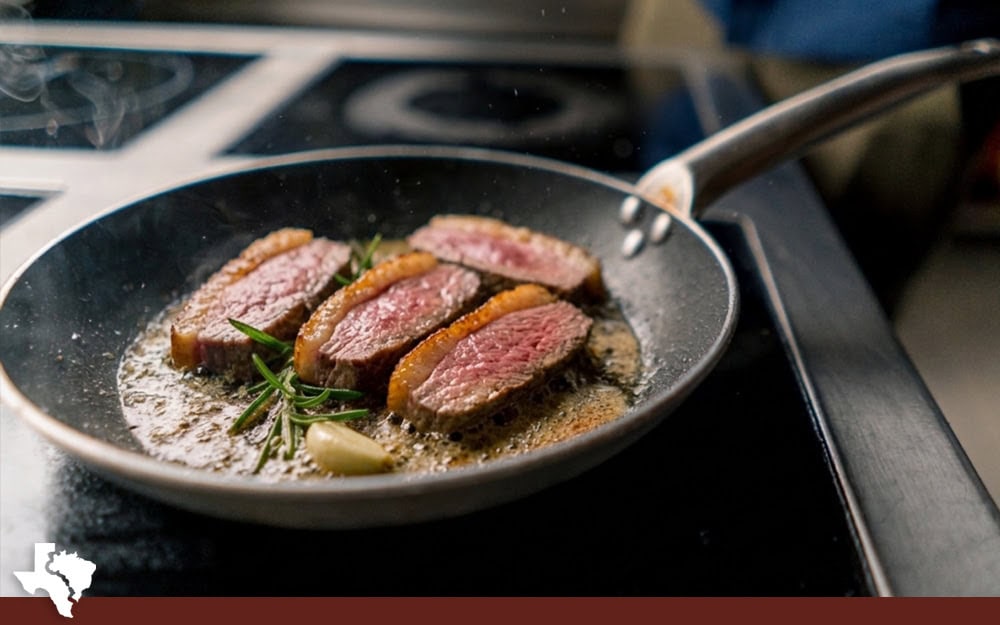
Leftover Brazilian steakhouse meat is also one of the most flexible ingredients to have in your fridge the next day. There’s no need to eat it the same way twice – not even close. Slice it thin for steak tacos wrapped in warm tortillas or chop it up and fold it into fried rice with eggs and vegetables. That savory churrasco flavor holds up well in either dish.
Leftovers from a place like this are worth the trip home and worth a little extra care. That second meal can be just as satisfying as the first with the right storage and a decent reheat.
Savor the Moment at Texas de Brazil
The best meals deserve a send-off that covers everything that happens after the last skewer makes its round. A little bit of prep goes a long way – get familiar with the restaurant’s policies ahead of time, give your server a heads-up early on and have a loose plan for the drive home and for whatever you’re looking to take back for tomorrow. None of that’s too much – it just helps the whole experience stay strong from start to finish.
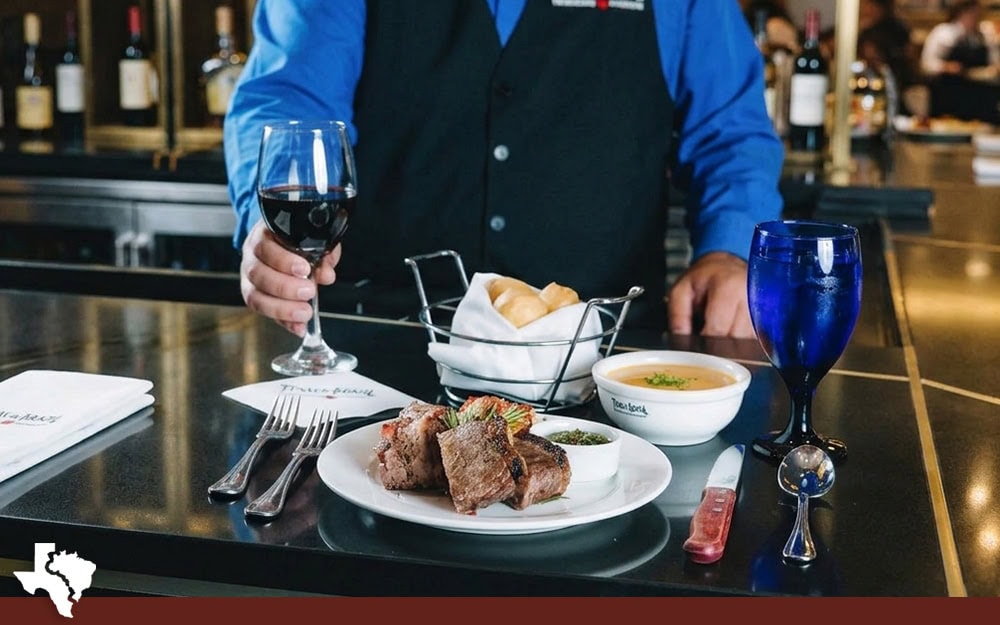
At this point, Texas de Brazil is the right place to put this into practice. From the first gaucho who stops at your table to the leftover picanha that you’ll reheat in a skillet the next morning, the quality legitimately holds up at every step. The gauchos carve right there at your table from a rotating lineup of fire-roasted meats, and the 50-item gourmet salad area gives you plenty of chef-prepared dishes to round out your plate. Everything at Texas de Brazil is built around generosity – with quality and with quantity.
Whether you’re ready to book your next visit or haven’t quite decided yet, a reservation at Texas de Brazil is well worth it. The Texas de Brazil eClub is a great place to start if you want $20 off your next meal and access to exclusive deals along the way. Gift cards are another great choice for anyone who deserves a memorable night out. The Texas de Brazil Butcher Shop is also worth a look – with premium cuts delivered right to your door. Whatever direction you go, it all leads back to a great meal.