
Pão de Queijo – The Cheese Bread of Minas Gerais
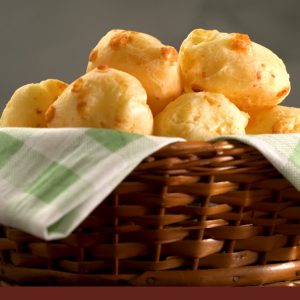
A warm pão de queijo has a way of stopping everyone mid-sentence the first time they eat one. That thin, golden-brown shell gives way to a soft and chewy pull on the inside – and for many, that texture is all it takes to make them want to track down where it came from and learn how to make it at home. The tough part is that reliable answers are hard to find. Recipes usually contradict each other on which type of starch to use and which cheese to put inside it.
The mix-up around polvilho azedo and polvilho doce is understandable. The two starches sit side by side on store shelves, look nearly identical, and yet they produce very different results in your final product. And Queijo Minas (the traditional cheese at the heart of any authentic recipe) almost never shows up outside of Brazil, which means home bakers have to work with substitutions and very little input on what works. Pair that with the scalding step that most beginner recipes casually mention but never actually explain, and the whole process ends up feeling overwhelming.
It’s worth it, though! Pão de queijo has deep roots in the 18th-century dairy farms of Minas Gerais; it’s gluten-free by nature, and the unbaked dough freezes better than just about any other bread dough out there. Every part of this recipe (the starch science, the history, the cheese options, the technique and even how to serve the finished product) has a logic behind it, and once it all makes sense, the whole process gets much easier to follow.
Let’s get started on the delicious story behind Brazil’s much-loved cheesy bread together!
Table of Contents
The Starch That Makes It Chewy
Pão de queijo gets its chewy interior from a very particular starch called polvilho – and nothing else will get you there. Wheat flour is off the table because it’s full of gluten, which takes the texture in a whole different direction. Polvilho is made from cassava, so it’s gluten-free by nature, and when it meets heat, it reacts in its own way – that reaction is what gives these little rolls their signature chew and pull.
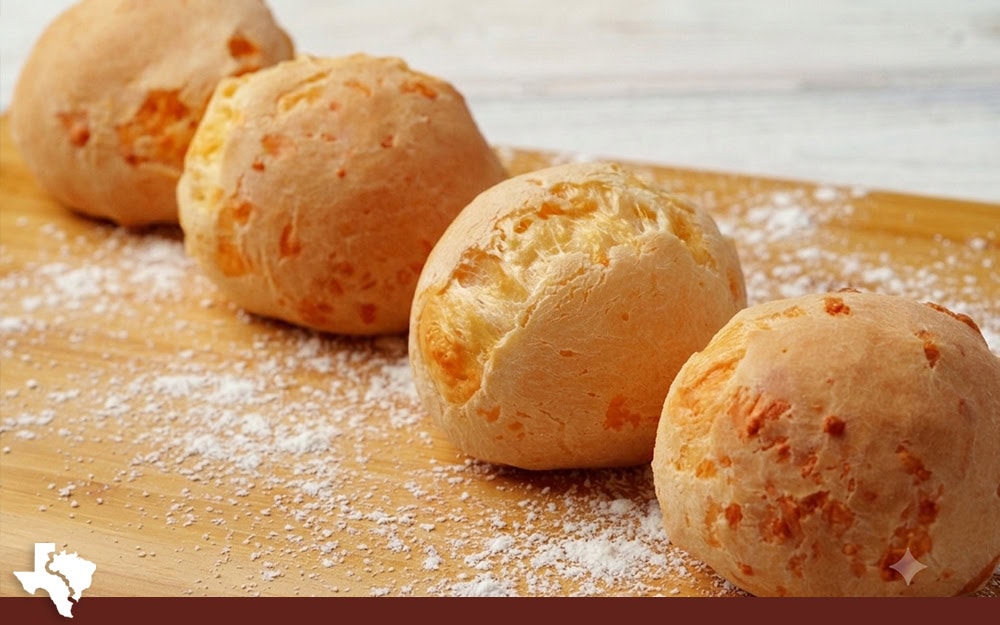
There are two types – polvilho doce, which is the sweet one, and polvilho azedo, which is the sour one. Most traditional recipes call for polvilho azedo, or at least a combination of the two. The sour kind rises better, and it’s responsible for that golden-brown crust that makes pão de queijo so satisfying to bite into. On its own, the sweet version tends to give you something softer and denser.
These two products look nearly identical on store shelves, and the packaging doesn’t make it any easier – home bakers grab the wrong one without ever realizing it. It’s worth a few extra seconds to read the label before you buy it. “Azedo” means sour, and “doce” means sweet in Portuguese, so those are the two words to look for. Mixing them up by accident won’t ruin your bread. But it will change the texture and flavor in ways that are pretty hard to correct once you’re already partway through the process. When the sweet kind is all that you can find, your best option is to use it on its own and just expect a slightly different result.
The Slave Roots of This Brazilian Bread
Pão de queijo actually has an interesting backstory, and it’s one to know before you take your first bite. The recipe traces back to 18th-century Minas Gerais, a region in southeastern Brazil that had grown into one of the country’s biggest centers for dairy farming during the colonial era. Enslaved Africans who worked on those farms were among the first to come up with it, and they made it from the scraps left over once the cheese-making was done.
Cassava starch and cheese whey weren’t worth much to anyone back then. No one wanted them – they were the leftovers, the parts that got discarded once everything else had been used up.
The origin story of pão de queijo does matter because it shapes what this bread is (it didn’t come out of a well-stocked kitchen or a time of plenty) – it came from those who had very little and cooked with whatever they could find. That level of resourcefulness is very much part of this bread’s identity, and it’s a big part of why the recipe has managed to stay so remarkably unfussy for all these years.
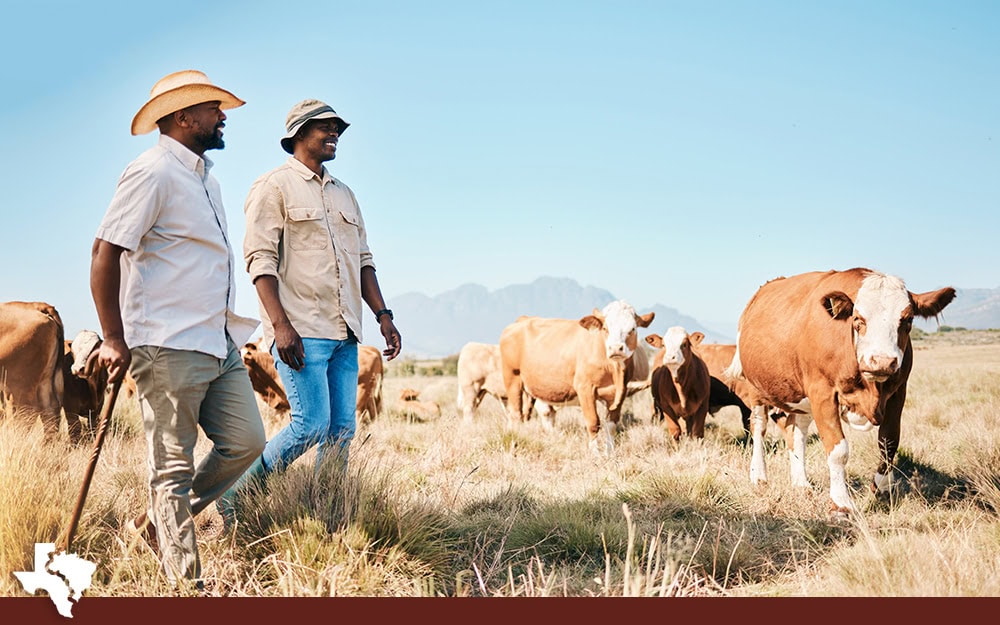
Minas Gerais has a dairy tradition that stretches back centuries, and the full story behind this bread runs remarkably deep. The region’s farms, its cheese culture and the generations of workers who shaped that land all had a big part to play in what pão de queijo eventually became. What started out as a sensible response to extraordinarily tough circumstances went on to become one of the most loved and popular foods to have ever come out of Brazilian cuisine. In my experience, that staying power almost never happens without a strong story driving it.
Why Queijo Minas Is the Right Cheese
Queijo minas is the cheese that gives pão de queijo its signature flavor. It’s a fresh white cheese (mild, with just a slight tang to it). That little bit of sourness is what pulls everything together – it cuts through the richness of the dough and can add a layer of depth to every bite.
Queijo minas isn’t the easiest cheese to track down outside of Brazil. Latin American and international grocery stores carry it on occasion (especially in cities with a strong Brazilian community). But it’s not something you can count on everywhere. Fortunately, a few common cheeses can get you pretty close.
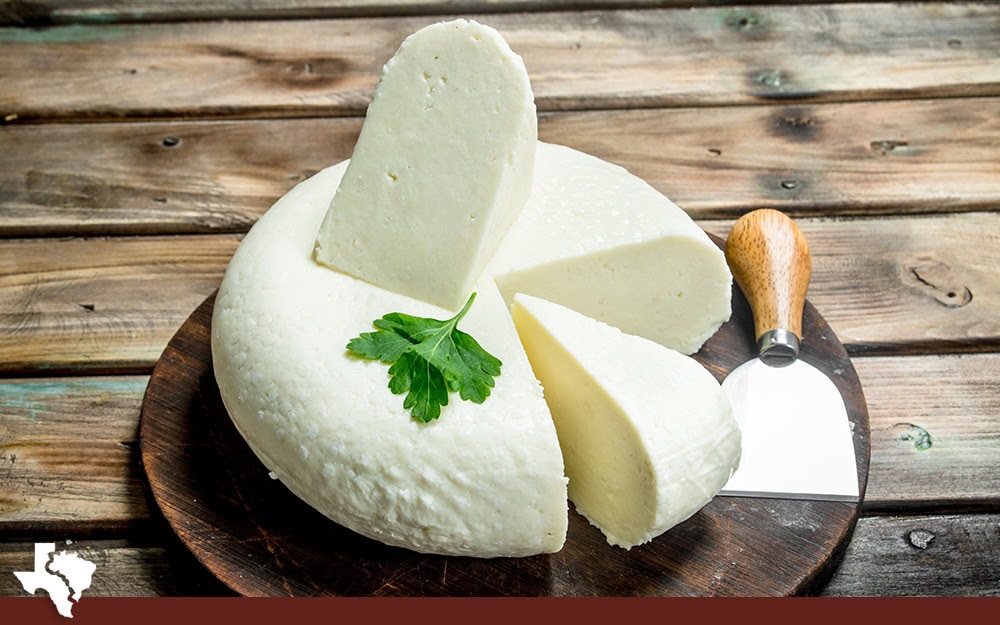
For any substitute, the texture and salt level are the two factors that matter most. What you’re after is a fresh cheese that’s firm enough to grate but still has a little moisture to it – and one that isn’t too salty. A young, mild cheese with a slightly sour or milky flavor will work well in the dough. The saltier or sharper it gets, the more it starts pulling the whole flavor in a direction that you don’t want.
The cheese that you pick also has a big effect on how the dough comes together and how well the rolls actually rise. A drier cheese will pull moisture from the dough and leave you with something noticeably heavier and denser. A wetter cheese can add extra moisture that the tapioca starch ratio has to account for. That balance is what separates a roll that puffs up light and fluffy from one that comes out flat and heavy – and in my experience, it’s the step where most home bakers go wrong.
A Gluten-Free Bread That the World Loves
Pão de queijo uses cassava starch in place of wheat flour, which means it’s gluten-free (and not because anybody decided to make it that way). It’s just how this bread has always been made, a recipe that has been passed down through generations in Minas Gerais, Brazil.
For anyone living with celiac disease or gluten sensitivity, this distinction actually matters quite a bit. Gluten-free products are usually trying to copy something they were never designed to be, and they often turn into some sort of compromise – too dense, dry, weirdly gummy or just not very satisfying to eat. Pão de queijo avoids that, because it was never a wheat-based product to begin with. Cassava starch is its natural foundation, and it gives the bread that chewy texture all on its own – no substitutions or workarounds needed.
That’s one of my favorite parts about it – it’s not trying to pass itself off as a dinner roll or a baguette. It’s its own creation, and that creation happens to be legitimately delicious.
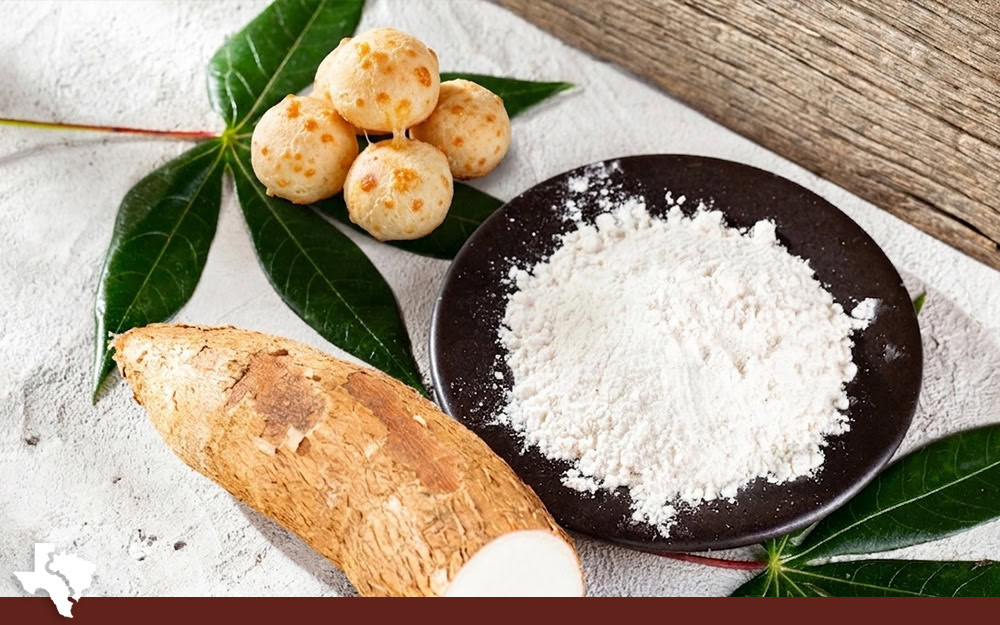
The reason pão de queijo has earned a loyal following outside of Brazil is pretty easy to explain – it’s just that it tastes like something real. It’s been popping up on menus at health-conscious cafes and Brazilian restaurants across North America, Europe and around the world – and not as a novelty or a dietary workaround. Anyone who tries it once tends to come back for more.
Not many foods manage to appeal across different cultures, dietary backgrounds and culinary traditions all at once – that’s pretty rare for any single dish. Whether it comes from a Brazilian steakhouse or a neighborhood health cafe, it always seems to hit in the same way, no matter where you find it. It’s just genuinely delicious food that also happens to be gluten-free, and a combination like that doesn’t come along every day.
How to Make Pão de Queijo at Home
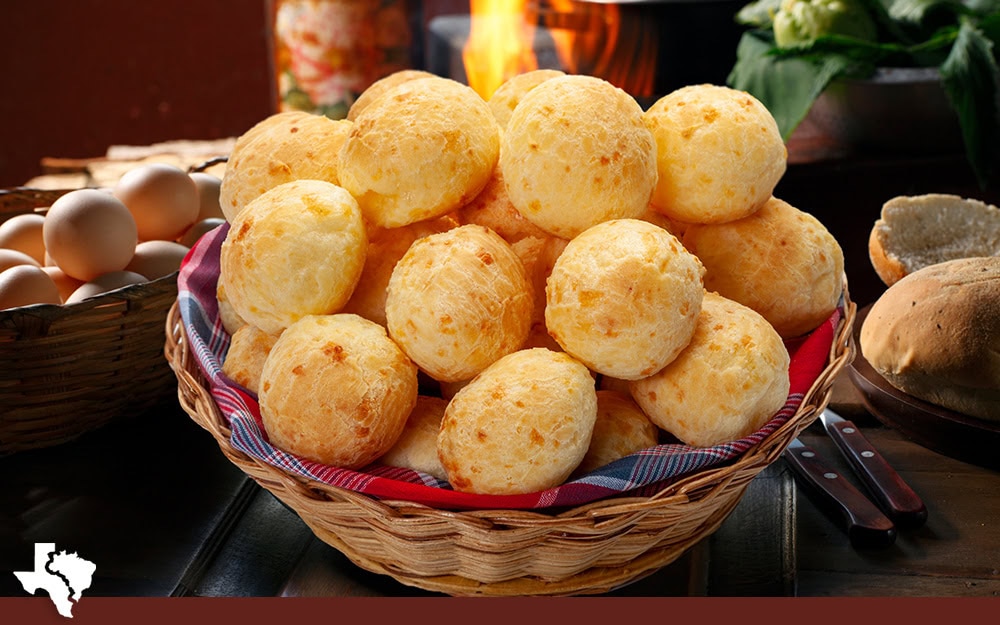
Pão de queijo is pretty easy to make at home. The whole process starts by pouring hot milk and oil directly over the polvilho (that’s the tapioca starch), then everything gets mixed together before the eggs and cheese go in. From there, you roll the dough into small balls, slide them into the oven, and wait for them to puff up and turn golden brown.
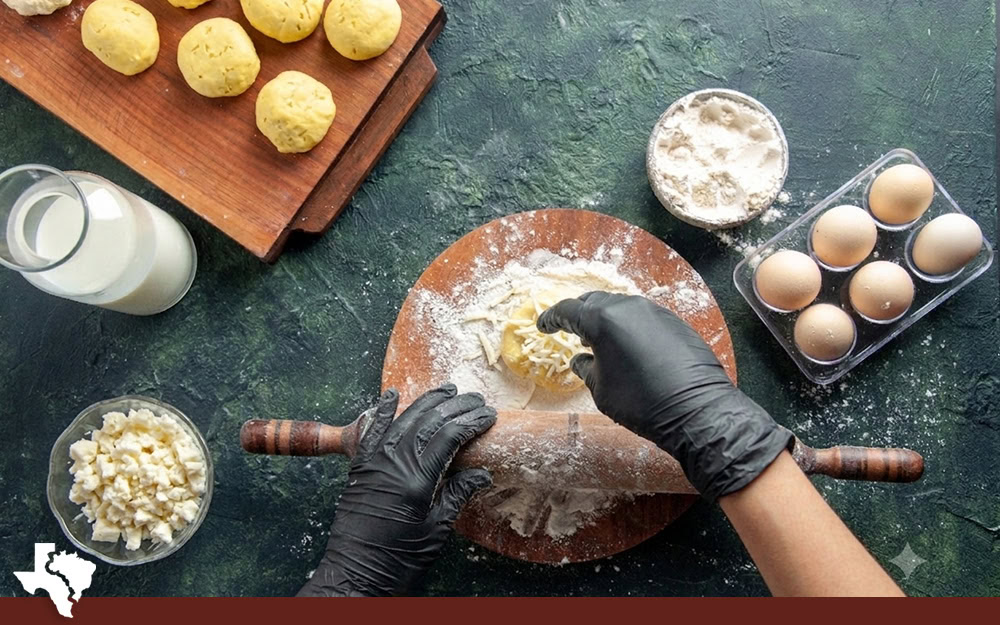
When the hot liquid hits the starch directly, it partially cooks it right on contact – it’s what gives the dough its stretchy pull. If the liquid cools off too much before it reaches the starch, the bread ends up dense instead of soft and chewy on the inside.
First-timers run into a couple of the same problems every time. One of the biggest ones is the dough – it starts out very wet and sticky, and every instinct tells you to add more starch to firm it up. Resist that urge. Pão de queijo dough is meant to feel soft and almost tacky in your hands, and the extra starch will throw off the texture in ways that are hard to reverse. A great way to get a feel for it is to run through a well-tested recipe at least once before anything else, just so you can see what the dough is actually supposed to look and feel like before it goes in the oven. I always recommend doing that before changing the ratios.
The cheese matters a great deal. An aged one like queijo minas curado is what gives the bread its traditional sharpness and depth. If Brazilian cheese is hard to find in your area, Parmesan is a decent substitute that can get you close to the original.
Freeze the Raw Dough and Bake Later
Unbaked dough balls actually freeze just fine, which opens up flexibility with an already pretty easy recipe. After you’ve shaped your portions, spread them out on a lined tray with a little space between each one and let them freeze, then move them into a bag or container for longer storage.
From there, they can go straight from the freezer into a preheated oven – no thaw needed, and there’s no need to plan ahead. All you do is add a few extra minutes to the bake time to make up for the cold start, and they’ll turn out just as well.
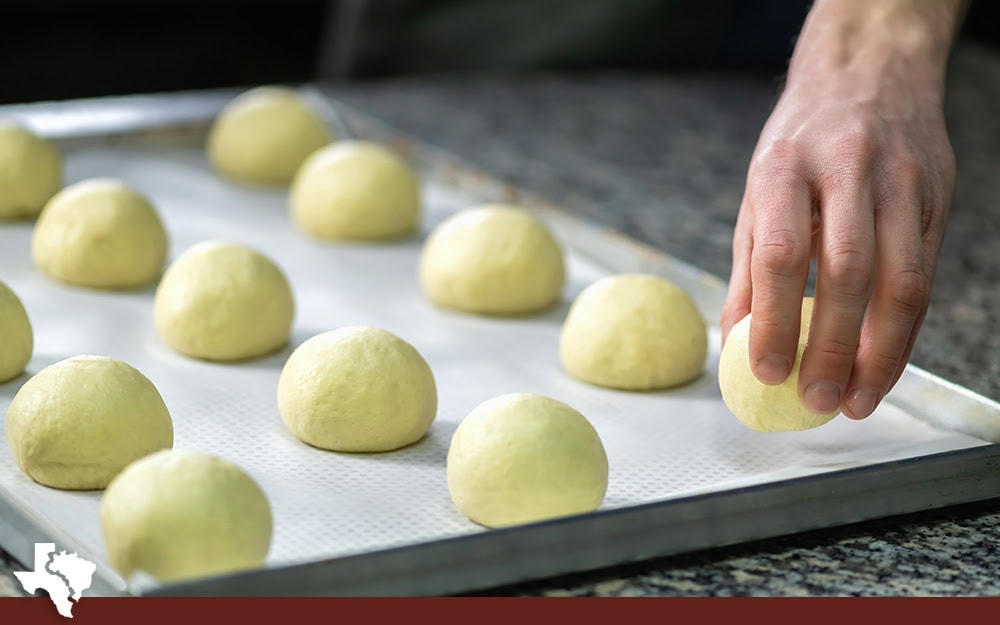
That’s probably the best part of the whole recipe if you tend to have guests over. A frozen batch in your freezer means warm bread on the table in under half an hour – it’s not something most homemade recipes can even come close to. Grab what you need, drop them in the oven and walk away. It’s almost hard to believe how little effort it takes to get fresh bread on the table at the last minute.
The one point to remember is that this only works with unbaked dough. Pão de queijo that’s already been baked doesn’t do well in the freezer at all – the texture takes a hit, and you lose that chewy pull that makes this bread worth it. Raw dough freezes beautifully, and the baked bread just doesn’t come close to the same result. Any leftovers from a fresh batch are best eaten the same day that they come out of the oven.
What Goes Well With Pão de Queijo
Pão de queijo is as much a morning habit in Brazil as the coffee it’s served alongside. The two go together almost every time – and it’s hard to argue with a warm and chewy cheese bread paired with a strong cup of coffee. It’s hard to think of a better way to start a morning. Take any chance that you get to spend some time in Brazilian cafe culture. The bread shows up everywhere you go, and after a few days, you’ll start to see just how much it’s a part of life there.
And no occasion is off-limits for it. It’s the food that just works at almost any point in the day.
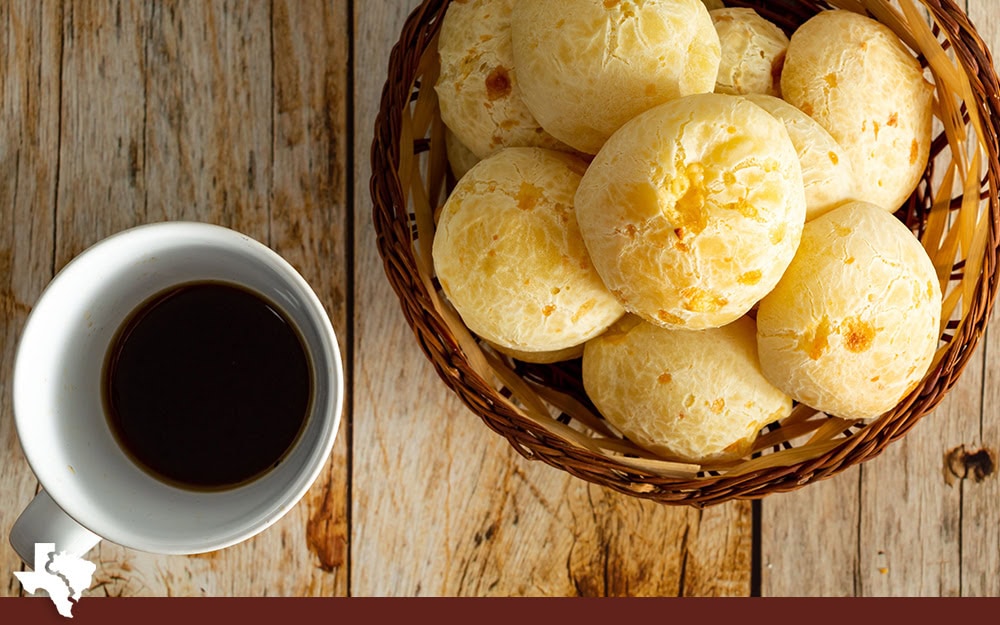
As for pairing options, a strong black coffee is the classic choice – and it earned that reputation for a reason. A cold glass of fruit juice is another great option, and a savory dip is a good choice if you want a little contrast against the soft and chewy texture. The bread itself has a mild flavor with just a bit of tang, so it pairs nicely with quite a few options.
For an even better result (and it’s worth doing), tuck a little extra cheese right into the center of each ball before baking. When they come out of the oven, the middle is warm, rich and melty in a way that makes every bite feel a little more indulgent. Pão de queijo is also a great party food. A big batch gets passed around without any fuss, needs no presentation whatsoever and will be gone well before the night is over.
Savor the Moment at Texas de Brazil
Few recipes carry this much history and are still this simple, and that detail alone matters. A handful of pantry staples, a little technique, and what you get has been made in nearly the same way for centuries. Born from very little and now loved by millions around the world, pão de queijo has that rare quality that most foods never quite achieve. That staying power doesn’t happen by accident.
Part of what makes pão de queijo so rewarding to bake at home is that the more you learn about it (where it comes from, why each step works the way it does), the better your results get. The starch matters, the cheese has to match your palate, and the scalding step does need to go right – each little win stacks up, and when they all come together, the final batch is well worth the effort. A bag of unbaked dough in your freezer means the next batch is never far off.
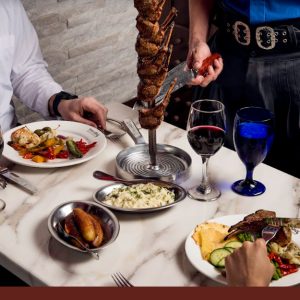
At Texas de Brazil, we’ve been bringing the generous spirit of Brazilian cuisine to tables across the country for years, and it’s well worth the trip. At the heart of the meal are the gauchos – trained carvers who come right to your table with cuts of premium meat like picanha, filet mignon, lamb chops and plenty more. A 50-item gourmet salad area rounds everything out with chef-prepared dishes that are hard to pass up. From start to finish, it’s a whole experience, and it’s one of the best ways to get a genuine taste of Brazilian flavors without a passport.
First-time visitors can sign up for the eClub and get $20 off – not a bad way to kick off the experience. Gift cards are also worth a look for birthdays, anniversaries or any occasion that deserves something a little extra. And if you can’t make it in, the online Butcher Shop can ship premium cuts right to your door. In either case, make a reservation and come find out what Brazilian hospitality actually feels like.