
Maminha vs Tri Tip: Is It The Same Thing in Brazil?
When you’re exploring the various cuts of beef you can find in Brazilian steakhouses like Texas de Brazil, you’ll often run into some of the variances between American and Brazilian preparations. Some are the same, of course, but others are cut differently and result in a different kind of meat.
One such example is maminha. Often compared to the cut we know in America as tri-tip, they’re actually not quite the same, and those small differences can have a huge impact on the finished meat. So, what is the difference, what do you need to know, and how can you best enjoy maminha?
Table of Contents
Is Maminha the Same Cut as Tri-Tip?
When you start to research the different kinds of Brazilian meat and how they compare to American cuts, you will often find that a lot of similar cuts are given the same name. It’s rare that you have something as distinct as picanha, which doesn’t have an easy American equivalent (at least, other than the Americanized import of picanha).
Maminha is very similar to tri-tip, but they aren’t actually quite identical.
One particular area of the back of the cow has a bunch of different names, depending on where in the world you are when the cow is being butchered. British traditional butchers call it the rump area. American cuts divide it into sirloin, tenderloin, top sirloin, and bottom sirloin.
At the bottom of the bottom sirloin, one particular chunk of it sticks out, down towards the rear leg of the cow. This section, when cut naturally along lines of connective tissue, forms a triangular piece of meat. This meat is the tip of the bottom sirloin. Hence, tri(angular) tip.
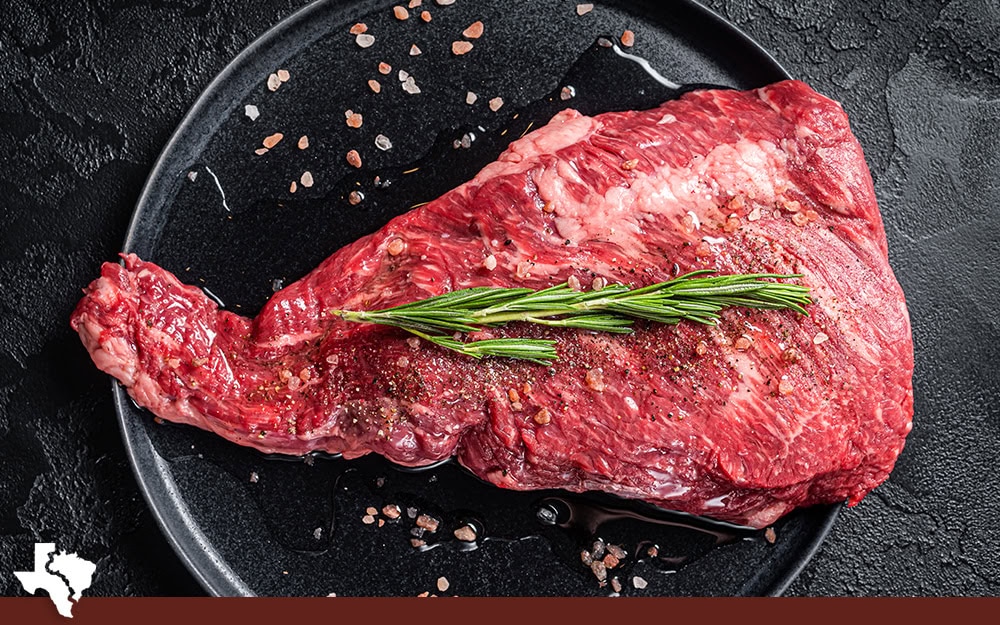
Why these differences? A couple of reasons. One is really just tradition. Butchers learn to cut up an animal from the butchers who came before them. The gauchos butchering cattle on the prairies of southern Brazil and the butchers cutting up a cow in the pastures of Texas come from entirely different lines of tradition, and will have learned different dividing lines, different techniques, and different skills.
Another is the cows themselves. While we tend to think of “a cow” as one animal, there are actually dozens of breeds of cows around the world. The species used for beef in America is different from the species most commonly found in Brazil. And, while the differences are relatively small, there are some on the physiological level that can make different cuts slightly more preferable.
Interestingly, tri-tip isn’t all that common in America; it’s really more of a regional favorite. It’s very popular on the West Coast and especially in Southern California, but it’s pretty low down on the list of sought-after cuts when you’re in cattle country like Texas. Why is that? Quirks of geography, probably.
You might see some references calling picanha the “Brazilian tri-tip” instead of maminha. These are, frankly, just wrong. Picanha is part of the sirloin, the same as tri-tip, but from opposite ends, and they have very different textures, flavors, and compositions. Where that confusion stems from, we don’t know for sure, but it’s likely uninformed sources simply taking the “popular” cuts from different areas and calling them the same thing.
Just know that if you’re a fan of tri-tip in America and you go to Brazil and ask for picanha, you’ll get a delicious but very different piece of meat. Similarly, if you’re a fan of picanha in America and ask for tri-tip, you’re bound to be disappointed (what you actually want is sirloin cap.)
What is Maminha, Specifically?
Maminha (which is Portuguese for beef rump) is sort of like an extension of the tri-tip. It includes the tri-tip, but stretches back longer, further up and further in, corresponding somewhat to elements of the bottom sirloin or round. It could be roughly considered a cut from the hip of the cow. The section called the tri-tip is there, but it’s just a part of it, and not considered its own distinct piece of meat.
For comparison, a tri-tip is a roast-sized piece of meat around 1.5 to 2.5 pounds. Maminha, in contrast, starts around 2.2 pounds and can be up to 3.5 pounds. Some larger cuts can be nearly four!
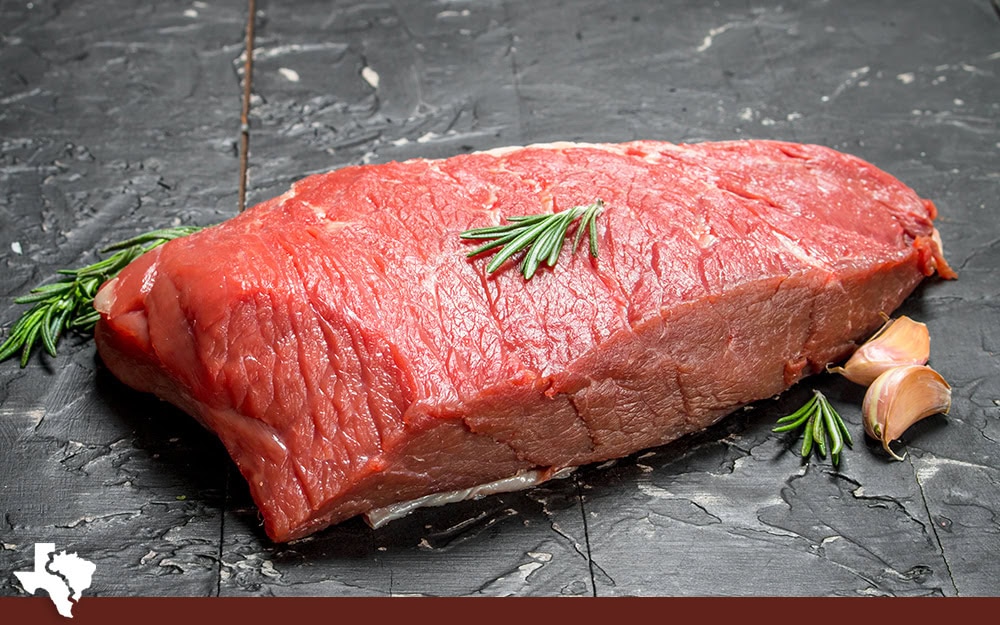
It’s a very popular and, frankly, beloved cut of beef down in Brazil. It’s very flavorful with a decent marbling of fat, but without too much of a large fat cap like what picanha has. It’s versatile and goes great in a lot of different ways, which we’ll get to later.
Some Brazilians call it “the filet mignon of the grill” because of how prized it can be. If that doesn’t sell you on it, what will?
How Do Americans Typically Serve Tri-Tip?
To start, let’s talk a little about the tri-tip, which you might be a little more familiar with.
To start with, tri-tip is a fairly lean cut, which means several things for the resulting meat.
- It’s very, very easy to overcook and leave it tough. The connective tissue in the tri-tip is essential for flavor and tenderness, and when you overcook the meat, it removes all that juiciness. Fans of rare and medium-rare steaks will feel right at home, but fans of well-done steaks should look for different cuts. No, really; if you over-cook tri-tip or maminha, you’re in for a tough, unpleasant time. It’s one of the most sensitive cuts of beef when it comes to cooking temperature.
- It’s made of long, lengthwise muscle fibers. That means when it’s cut to serve, it really needs to be cut contrafile, or against the grain. This makes it a lot more tender and easy to enjoy. To add a wrench into the works, tri-tip changes grain direction, so it needs to be cut in different ways for different parts of it, as this diagram shows.
- It can work well when smoked or barbecued American-style with sauce, as the slow and low cooking of a smoker will infuse it with more flavor, and an added sauce makes it delectable.
While we’ve mentioned that maminha is a larger cut than tri-tip, tri-tip is still fairly large. It’s not a one-person steak meal, that’s for sure. This means the way it’s cut and prepared is versatile; it’s not just a steak the way something like picanha or filet mignon tends to be.
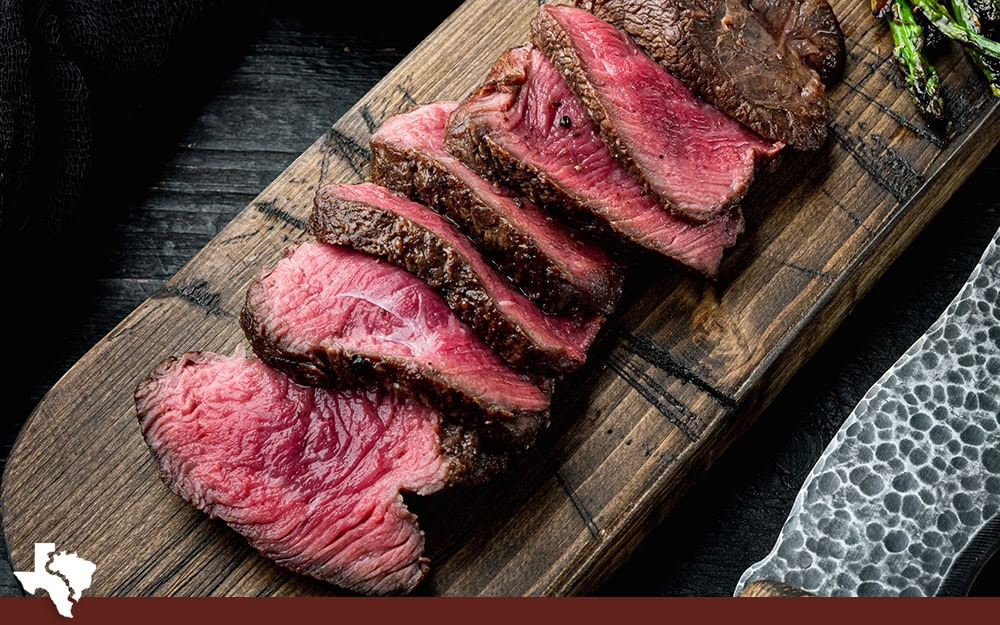
In America, you generally see three kinds of preparation for tri-tip.
The first is as a whole roast. This is usually smoked or slow-cooked in some fashion, for maximum rendering of the connective tissues to separate and leave the remaining meat tender.
The second is sliced into steaks (against the grain, of course!) and cooked like many other kinds of steaks are cooked. Most people tend to prefer a reverse sear method, where the meat is cooked low in the oven until it’s about ten degrees off of the intended final temperature, and then seared on the outside to give it a delicious crust (and often a butter basting) before setting it aside to rest and be served.
The third is to cook it roast-style, and then slice it extra thin. The thin-sliced meat can then be used for sandwiches, tacos, and other similar purposes. The rich beefiness of the cut comes through when other strong ingredients are part of the finished product, so it works well as an ingredient meat.
How Do Brazilians Typically Serve Maminha?
If you know anything about how Brazilians enjoy beef, it’s that we tend to avoid the smokers and the dry rubs, and cook the meat right over an open flame. We love the taste of the meat itself, rather than using it as just one part of a more complex flavor profile.
That’s not to say we don’t use spice rubs or sauces at all, of course. Even here at Texas de Brazil, we have spicy picanha on the menu, and we even sell that spice rub in our store. We also love our sauces, though they tend to be green sauces like chimichurri rather than the barbecue sauces you’d be used to in the northern hemisphere.
Grilling isn’t the only way we serve maminha, but it’s one of several.
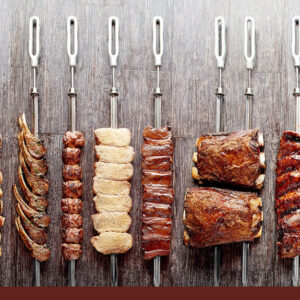
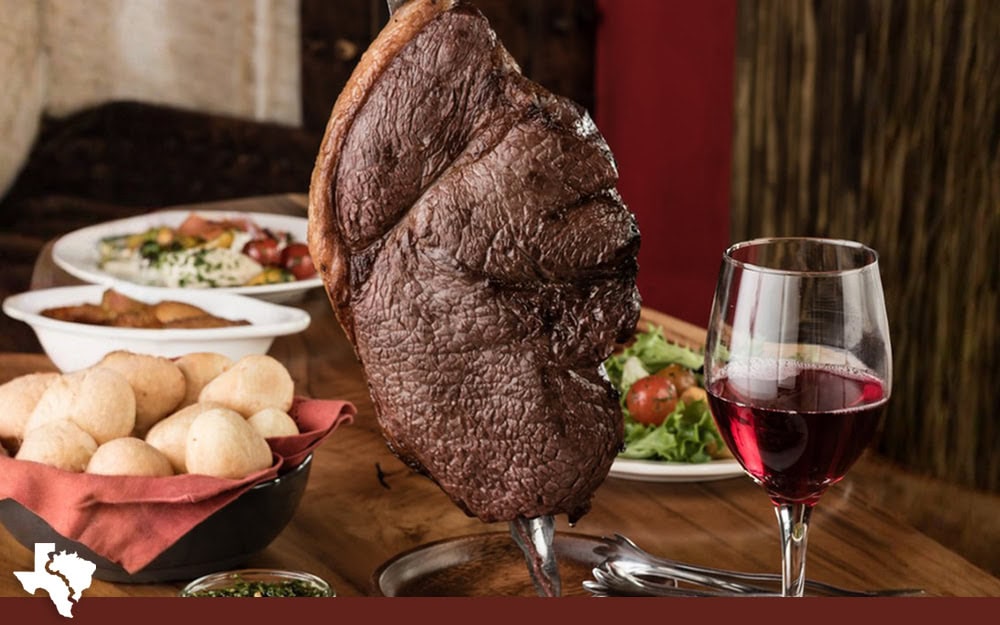
When we grill maminha, it’s usually whole, skewered, and over an open flame. While this is a core part of the rodizio experience we offer at our churrascaria, it’s also commonly done for beach barbecues, parties, and gatherings, any time where a fire can be built, and a bunch of people want some beef.
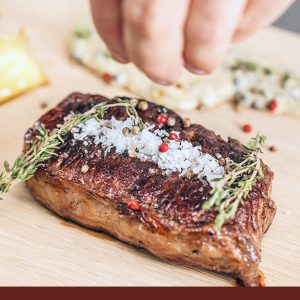
As with just about every other kind of beef we cook in a churrascaria, the spice we use (if you can call it that) is just salt. Salt, as you likely know, is a flavor enhancer. We use sal grosso, a large kind of salt that is smaller than rock salt but larger than flake or kosher salt. This draws moisture out of the meat, which dissolves the salt, and is absorbed back into the meat, all during the process of cooking.
When it’s ready to serve, the skewered meat is shaved down into slices and enjoyed more or less as they are. Sometimes those slices are thicker and more steak-like. Other times, they’re thinner and can be part of some other dish. When you enjoy maminha at a churrascaria, a skilled gaucho will do the slicing for you, and anything that isn’t claimed by someone in the dining area will be returned to the fire for a fresh salt crust.
That’s one way. What about the others?
Another popular way to use maminha is in a stew. Maminha isn’t usually the meat component in our favorite stew, feijoada (we use smoked meats like sausage and bacon for that one), but it’s great for other kinds of stews.
The key to maminha in a stew is cutting it properly before it goes in. Stew meat is cubed and relatively large, but it still needs to be cut across the grain; otherwise, it’s going to be tough and unpleasant when you get a lump of it in your otherwise excellent stew.
Of course, we’re also happy to cut the maminha into steaks and pan-fry them just like you would in America. Look, we love our beef down here, and if there’s a way to cook it, you can be sure we love it. There’s no wrong way to enjoy beef.
As always, the key to cutting maminha is the same as cutting tri-tip: cutting it contrafile, so the muscle fibers are short and stacked instead of long and stringy. That, and making sure not to overcook the meat.
Enjoying Brazilian Beef Favorites
Despite the differences, the fact is, if you want to enjoy maminha here in the States, buying tri-tip will get you there. It’s “close enough” in that it’s basically the same thing, just a little smaller. So, if you want to try out this favorite cut Brazilian-style, all you need to do is find your local butcher and pick up a tri-tip roast.
Normally, this is where we’d tell you that the best way to have some authentic Brazilian maminha is to visit your nearest Texas de Brazil location. Unfortunately, though, as much as it’s a favorite in Brazil, it hasn’t caught on nearly as much throughout America. More importantly, though, it’s not as uniquely Brazilian as something like picanha, so we haven’t found it worth it to add it to our menu.
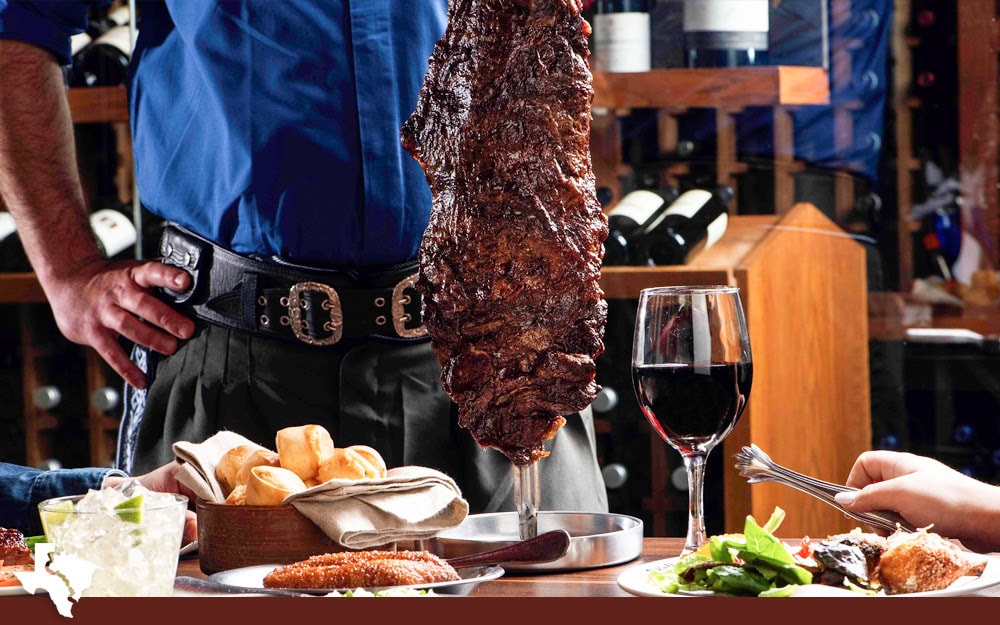
That said, if you want authentic Brazilian meats, the picanha is ready and waiting. While you’re at it, you can enjoy plenty of other Brazilian favorites, like farofa, feijoada, pao de queijo, and more. Or, if you want to throw your own backyard barbecue Brazilian-style, you can read our blog for more tips, buy some incredible cuts directly from our butcher shop, or even order catering for the meats and sides you don’t have space or time to make on your own.
Whichever choice you make, as long as you’re enjoying some delicious beef, you’ll know you made the right one.