
Why Brazilian Steakhouses Serve Fried Bananas With Steak
Most first-timers at a Brazilian steakhouse spend their entire visit zeroed in on the meat – the picanha, the ribeye, the lamb chops that come out on long skewers in what can only be called a grand parade. And then a plate of crispy fried bananas lands on the table and the whole mood changes just a little. There’s a pause, a slightly puzzled look and then that quiet, almost universal question of whether something this sweet-looking actually has any business sitting right there next to that beef.
That hesitation makes plenty of sense. There has always been a hard line between savory courses and sweet ones in Western dining, and because of that, a caramelized banana sitting next to a salted cut of beef is probably going to register as a mistake – not a deliberate choice. The natural reaction for plenty of diners is to push it to the side and get back to the protein.
What those diners are missing is genuinely interesting. That fried banana on the plate has cultural history behind it, its own flavor logic and its own place in the rhythm of a long churrasco meal. Churrasco in Brazil has never been about one single dish – it’s a long, social, almost ceremonial way of eating together, and the sides on the table are anything but an afterthought. They’re a big part of what makes the whole meal feel the way it’s supposed to.
Every layer in that little banana dish has its own origin and its own reason – and once you know where it came from and what it does for the plate, it makes quite a bit more sense why it belongs right there next to the meat. Nothing on that table got there by accident.
Here’s why this unlikely combo became a Brazilian steakhouse staple!
Table of Contents
The Southern Roots Of This Pairing
Rio Grande do Sul is a grassy state at the far southern tip of Brazil, tucked right along the borders of Argentina and Uruguay – it’s actually where this whole story starts. Cattle have been at the heart of this region for centuries, and those who worked that land (the gaúchos) built an entire way of life around open-fire cooking. Meat was at the center of just about everything they did, and their long-running tradition of roasting large cuts over an open flame is what eventually gave us the word churrasco.
Gaúcho culture was built around long days on horseback, and big communal meals were always waiting at the end of each one. Fire-roasted meat made plenty of sense out there – it got the job done, it kept you full, and it wasn’t hard to pull together in large quantities when a crowd showed up. Ranch events and rural festivals nearly always came down to the same three elements – a fire, a spit and a whole lot of beef.
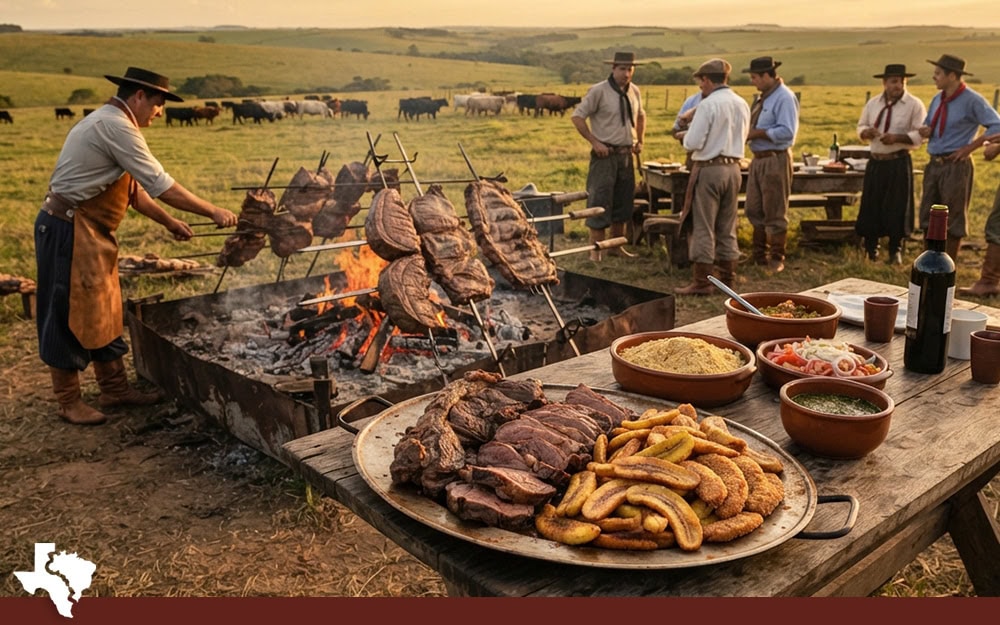
Rio Grande do Sul has always grown and eaten bananas, and the local cooks brought them to the table as a natural complement to all that slow-cooked meat. Bananas à milanesa (slices dipped in egg and breadcrumbs before a quick fry) along with the plain pan-fried versions eventually became staples at the churrasco table.
None of this came from a restaurant menu or a chef who suddenly came up with an idea – it came from home kitchens and ranch meals, and the cooks just used what was local, plentiful and worth eating. Fried bananas alongside grilled meat had already become a well-loved tradition in the south of Brazil well before Brazilian steakhouses ever brought it to the rest of the world.
How Sweetness Balances Salty Grilled Meat
Fried bananas and heavily spiced meat are one of the pairings that just make sense the first time that you have them together. A cut like picanha or lamb chops is rich, punchy and satisfying – but that level of intensity tends to add up fast on your palate. After a few bites, those big savory flavors start to pile up, and it all goes a bit flat. A sweet bite of fried banana is what your taste buds need to reset before the next cut comes around.
When a meal leans heavily into rich, salty, fatty flavors from start to finish, your palate can only take so much before everything starts to blend together. A caramelized banana slice gives your taste buds a chance to reset – something light and sweet to cut through that heaviness and pull the whole meal back into balance.
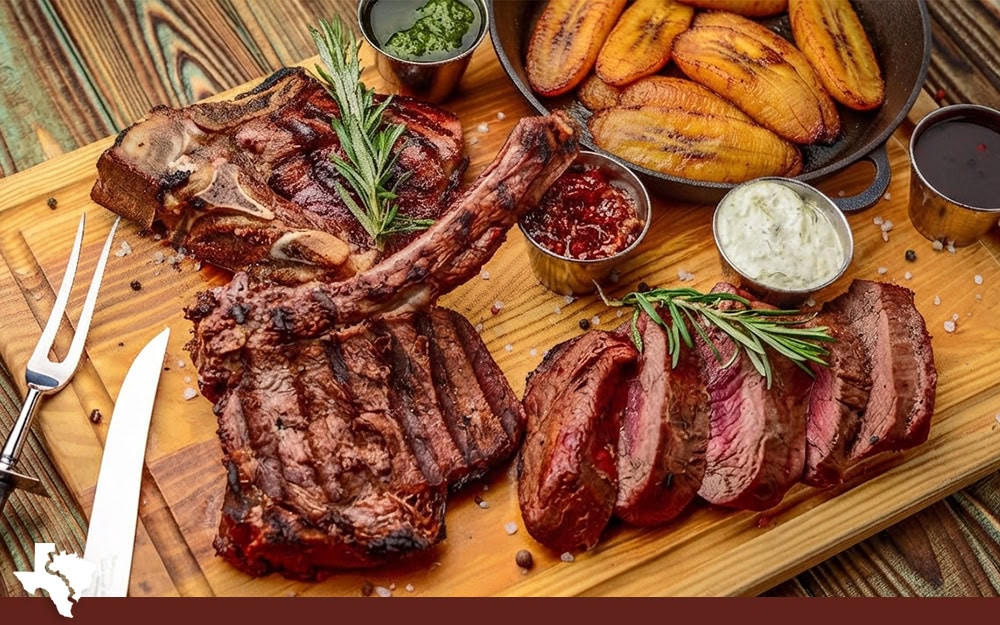
Sweet flavors soften the sharp bite of salt and fat, and salty foods return the favor and make sweetness feel deeper and more satisfying. Put them together, and each one lifts the other in a way that neither of them could quite manage alone.
At a churrascaria, the contrast between the fried bananas and the rotating cuts of meat is one of the best parts of the whole meal. Without a palate cleanser in the rotation, the tenth bite of well-seasoned picanha just won’t land the same way the first one did. The bananas reset your palate between each cut, and getting that right takes real skill.
Why Brazilian Meals Mix Sweet And Savory
Sweet and savory on the same plate has been a staple of Brazilian cooking for a very long time – it’s one of the most defining features of the cuisine as a whole. Fried bananas are just one small part of that much bigger picture.
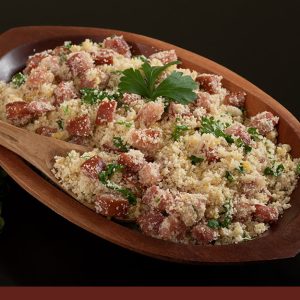
Farofa is a great example of this. It’s a toasted cassava flour dish that turns up at just about every Brazilian table, and it’s usually made with dried fruit or a banana mixed right in – a savory base with sweet notes all the way through. That particular combination of flavors is one of the most recurring themes all across the country.
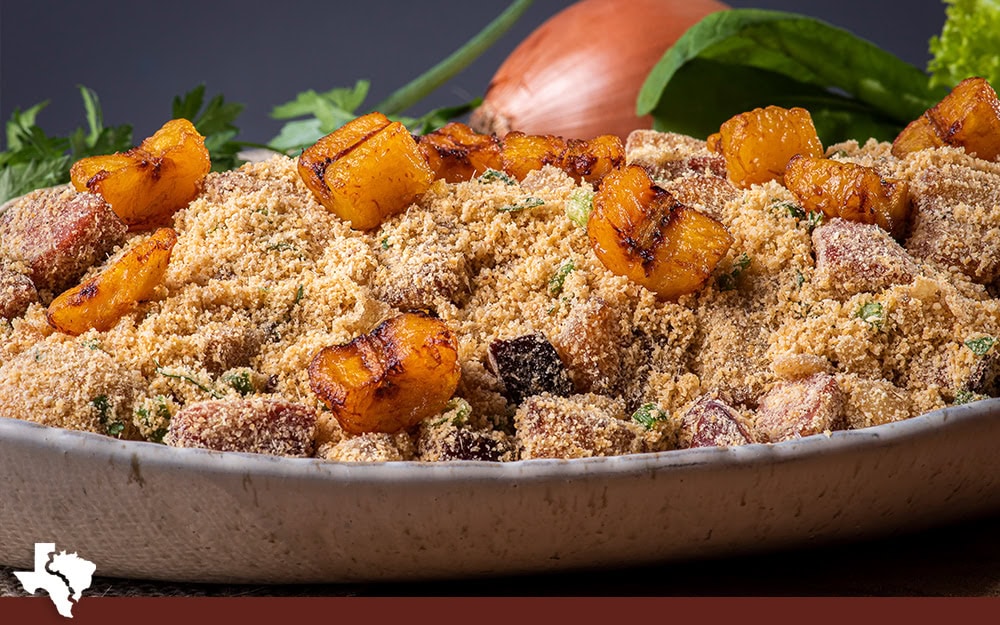
Across most of Latin America, sweetness is a natural part of the meal itself – it shows up in sauces, side dishes and slow-cooked meats, and no one thinks twice about it.
It’s a fair question – why do some food cultures treat dessert as its own dedicated category, separate from everything else on the table, while other cultures fold sweetness into nearly every course along the way? There’s no single answer that covers it all. Most of it traces back to what families were raised eating and which ingredients happened to be cheap, local and easy to come by. In places where fresh fruit was everywhere, and sugar cane was a big crop, it was only natural to use those ingredients at every stage of a meal.
Fried bananas at a Brazilian steakhouse aren’t some random quirky addition that somebody just added to the menu one day. Sweet flavors have always had a place at the Brazilian table, and the bananas are a perfect reflection of that long-standing tradition – right from the first bite.
The Right Banana Makes The Difference
Not every banana will work for this dish – and if your fried bananas have ever come out mushy or fallen apart in the pan, ripeness is usually the culprit. Brazilian steakhouses go with plantains or slightly underripe bananas – it’s a very deliberate choice. The extra firmness is what holds everything together once it hits the heat.
A ripe banana has already converted most of its starch into sugar by the time you pick it up – which makes it extra sweet and very fragile. Toss one into a hot oiled pan, and it’ll start to fall apart much faster, long before the outside gets a chance to brown. What you’re left with is a mushy mess instead of the caramelized side dish that you were going for.
A firmer banana holds its shape much better when it hits the heat. The outside gets a brown color and holds together on the plate, as the flavor lands noticeably less sweet – it’s the whole idea. At a steakhouse, a banana is there to work alongside the meat instead of competing with it.
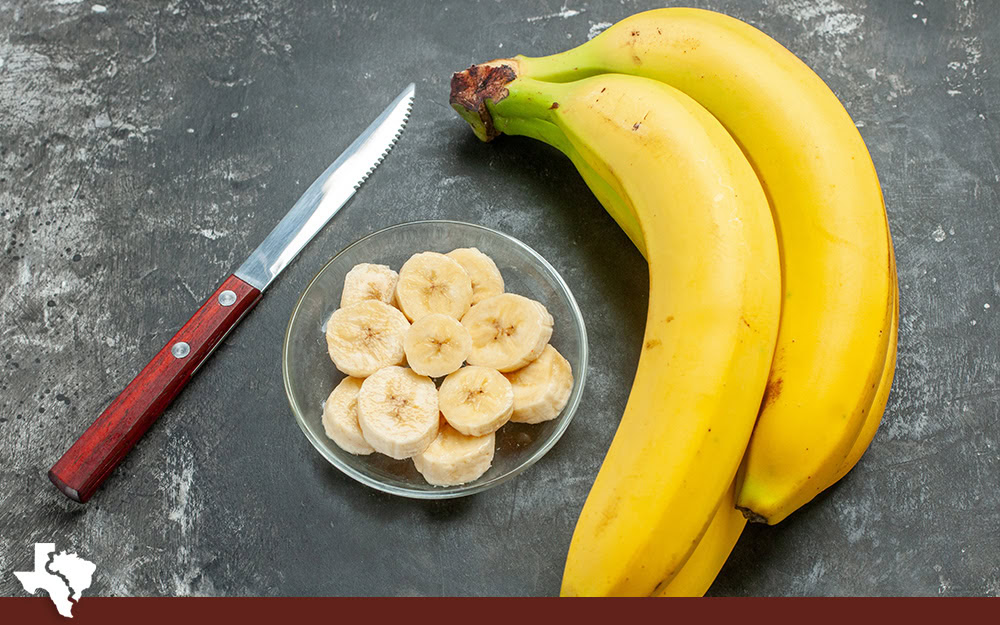
Here’s something worth knowing. A ripe banana is the natural default – it’s what you would reach for in smoothies, breads or any baked dessert. That same banana will fall apart when you fry it. What you want is something firm, with skin that’s mostly green and only just beginning to turn yellow. You want to feel a little resistance as you press on it – that firmness is what holds everything together once the heat gets to it.
On your next grocery run, walk right past the ripe ones and grab the firmest bunch on the shelf. Your final dish will be much better for it.
Fried Bananas As A Pacing Tool
A Brazilian steakhouse operates on a whole different philosophy than a common dinner out. The whole experience is built around one idea – plenty. Servers circle the room in a steady rotation with skewers loaded with beef, pork, lamb and chicken, and they don’t stop until you flip your card to red. It’s a format that’s hard not to love. But the tab at the end of the night can get expensive fast if you’re not paying close attention.
The fried banana earns its place on the table for a reason. A few bites of something light in between rounds of meat go a long way – every time. Guests who make a point of grabbing a slice or two between servings usually feel a fair bit less bogged down as the meal goes on and the later rounds taste noticeably better for it.
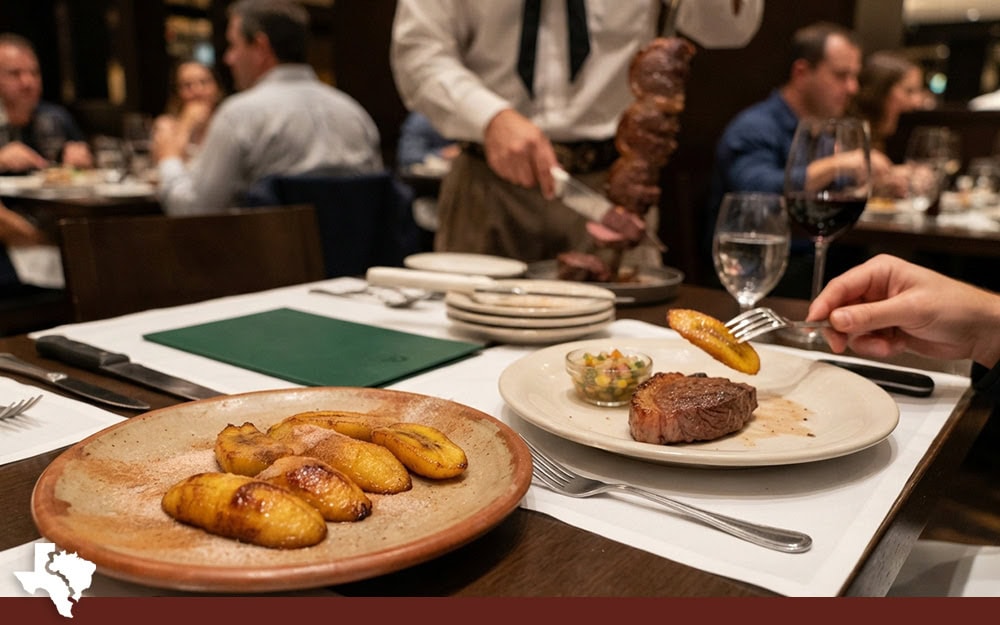
None of this happens by accident, at least not on our end. We have a genuine interest in keeping you comfortable long enough to actually work through everything that we bring out. Eat too much too fast, and the rest of the meal is dead weight – you didn’t get the full experience out of it and neither did we.
The banana does a fair bit of quiet work at a meal like this. A little sweetness scattered in between savory bites gives your palate a second to reset – and you won’t even see it’s doing that until it’s gone and the meal starts to feel like too much. It’s a small detail on paper. But it’s the sort of touch that holds the whole experience together without ever asking for credit.
A guest who makes it through the full rotation without needing to be rolled out the door is usually a happier one. And a big part of that credit goes to the banana.
This Combo At Your Table
To recreate this at home, what matters most is choosing the right banana or plantain. Firm is what you want – not overripe. A soft banana will fall apart in the pan and turn the whole dish into mush, so give it a little squeeze at the store and make sure that there’s some resistance to it.
Fry your slices until each side is a deep golden brown and the pieces can hold their shape on a fork. It’s a savory dish, so resist the urge to add too much sugar. The meat already brings plenty of salt and fat on its own – it’s all the dish needs.
The trick is in the rhythm of it. Take a bite of the beef, then follow it with a slice of banana – and repeat. That contrast is what the whole experience is built around, and after just a bite or two, you can see why these two work together.
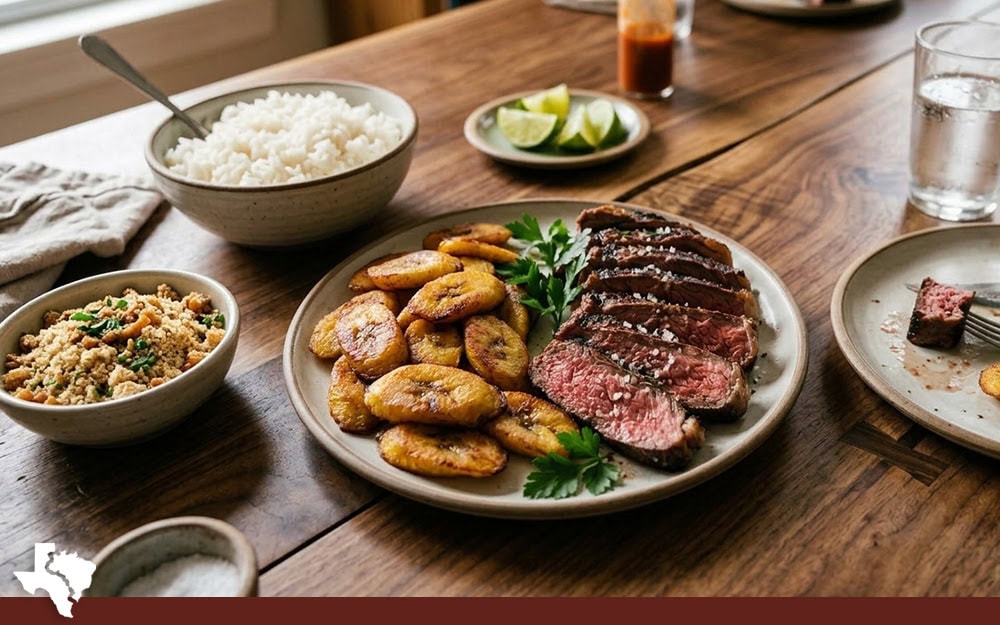
It also fits right in alongside the other staples at a traditional Brazilian table. Rice gives your mouth a little break between bites (something neutral to cut through the heavier flavors), and farofa brings this dry, toasted crunch that works nicely against whatever’s soft on the plate. Put all three together, and you have a full, satisfying spread.
The cut of meat is worth playing around with. Picanha is the classic choice for this dish. But a ribeye or a skirt steak pairs just as beautifully with the sweetness of the banana. A place to start is with whatever cut you already like to cook, and you can adjust from there. Get that balance right, and this tends to be a pairing that you come back to again and again.
Savor the Moment at Texas de Brazil
A fried banana next to your steak is a strange combination, and it raises an eyebrow or two. The reasoning behind it runs pretty deep though – centuries of southern Brazilian cooking tradition, a genuine intuition for how flavors work together and a very smart way of pacing a long meal through to the end. None of it was an accident, and once you see it for what it is, it’s hard to call it anything other than intentional.
Food traditions like this are worth a little extra attention. The little details on a plate usually mean something – even when they look a little out of place. The next time churrasco is on the table (at a restaurant or right in your own kitchen), do yourself a favor and actually give that banana an honest try.
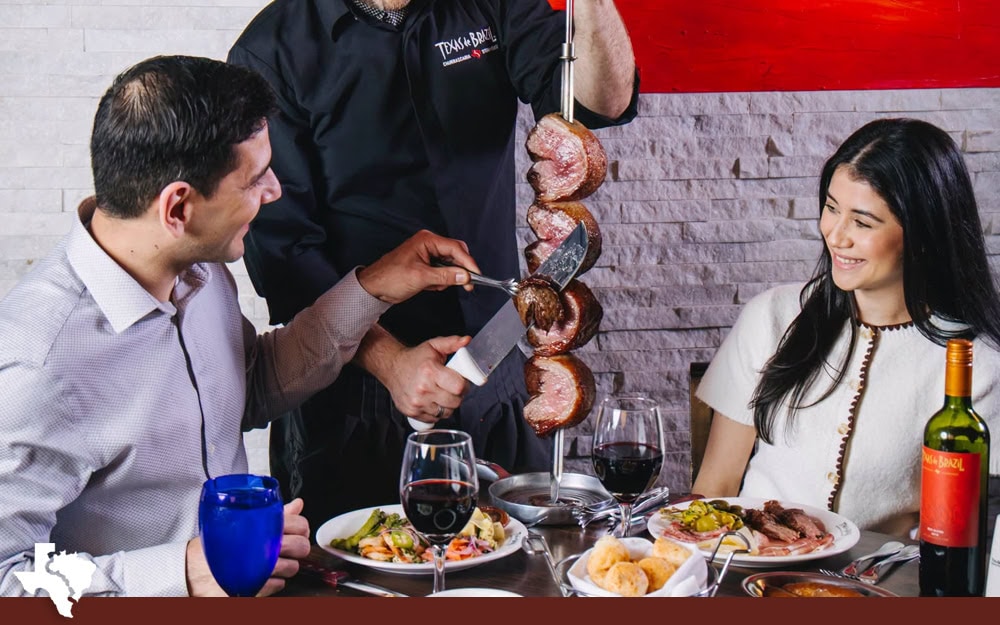
With that said, if you’re ready to experience this tradition the way it was meant to be enjoyed, Texas de Brazil is a great place to start. A team ofgaúchoswill carve tableside cuts of picanha, lamb chops, filet mignon and plenty more right at your table and our 50-item gourmet salad area has chef-prepared sides to go along with it – fried bananas included. The Texas de Brazil eClub gets you $20 off your next visit, or you can grab a gift card for anyone who deserves a night out. Our Butcher Shop also carries premium cuts if you want to bring the experience home.
A reservation is a first step – go and see what this tradition is all about.