
What Is a Churrasqueiro and What Do They Actually Do?
The person who makes a Brazilian steakhouse dinner work carries the title “churrasqueiro.” The word almost never shows up on menus or signage, and yet the entire feel of a churrascaria dinner does rest on that one person’s skill. A title that’s that invisible deserves at least an introduction.
Type the word into any search engine, and you’ll mostly land on vague definitions or on results that boil the whole role down to “somebody who grills meat.” Not quite. A churrasqueiro is rooted in a culinary tradition that stretches back centuries, and it carries genuine cultural weight throughout Brazil and South America. The work pulls together fire management, an intimate knowledge of meat, precise timing and a tableside presence that a one-sentence definition just can’t do justice to.
This matters – if a guest wants to eat more intentionally, if an event host needs to hire the right talent or if a curious diner just wants to take in what they’re watching at the table. A churrasqueiro is not a line cook with a skewer. It’s a skill that combines technique, cultural identity and physical endurance – and it does deserve its own category.
Once you have a sense of what a churrasqueiro actually does, the whole dining experience reads quite differently. The meat selections, the pacing, the carving angles, the way some cuts spend hours over an open fire before they ever reach your table – none of that’s accidental, and I’d argue it’s one of the most deliberately put-together meals that you can have anywhere. When that finally makes sense, a meal at a churrascaria is no longer just a novelty – it can become what it’s always been, a genuine part of one of South America’s most longstanding culinary traditions.
Let’s get started on what a churrasqueiro is and what they do.
Table of Contents
Where the Word Actually Comes From
The word “churrasqueiro” comes straight from Portuguese – it’s built right on top of “churrasco,” which is the Brazilian word for barbecue. Tack on a suffix, and you get the person who’s running the grill. Easy enough, as far as the word origins go. The translation itself only gets you so far.
We’d probably just call that person a “griller” in English – it’s where the two of them start to pull apart. A griller is anyone with a backyard and a free Saturday afternoon. A churrasqueiro is a whole different matter – it’s a title that you earn over years of practice and not one that gets handed out lightly.
So the weight comes from how deep churrasco runs in Brazilian life. It’s not a warm-weather hobby or a casual weekend activity – it’s something that runs through the way families come together, the way big milestones get marked and the way whole communities pull together around a fire.
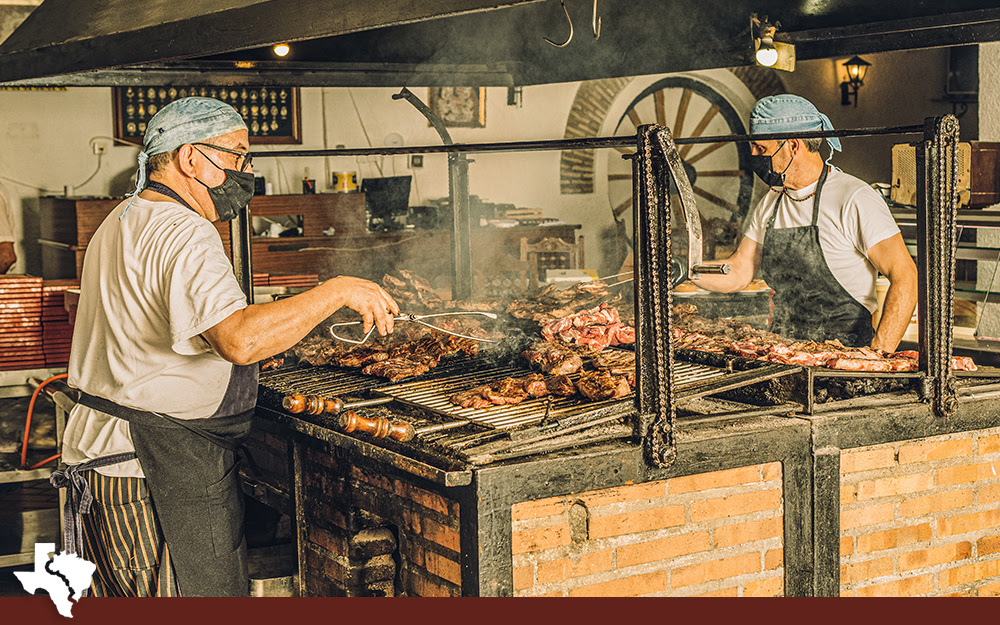
American backyard grilling and Brazilian churrasco share the same basic setup (fire, meat and a person running the show), but the cultural weight they carry is a very different story. U.S. grilling is relaxed and informal by nature. Grab some tongs, put something on the grate, and congratulations, you’re a griller. The churrasqueiro carries quite a bit more than that in Brazil. It’s a title that comes with earned respect – the kind that gets passed down through families and local traditions over the generations. No one just walks up and claims it for themselves.
A title like that comes to you over years of doing it right – and those around you are the ones who get to say when that day arrives. No single English word comes close to capturing any of that.
Move the Meat to Control the Heat
It all comes back to fire – and not in some romantic sense of the word. A gas grill is easy enough – you turn a dial and walk away. A charcoal fire doesn’t give you that option. A churrasqueiro reads the fire the whole time and adjusts how close or far the meat sits from the coals to get just the right heat at just the right point. That distance (how far the meat is from the coals at any given point) is actually what drives the whole process.
Most of us at home set a temperature, maybe check in once or twice and then call it done. A churrasqueiro doesn’t have that option – the fire never sits still, and the meat always has to move right along with it. It’s more of an involved way to work the grill.
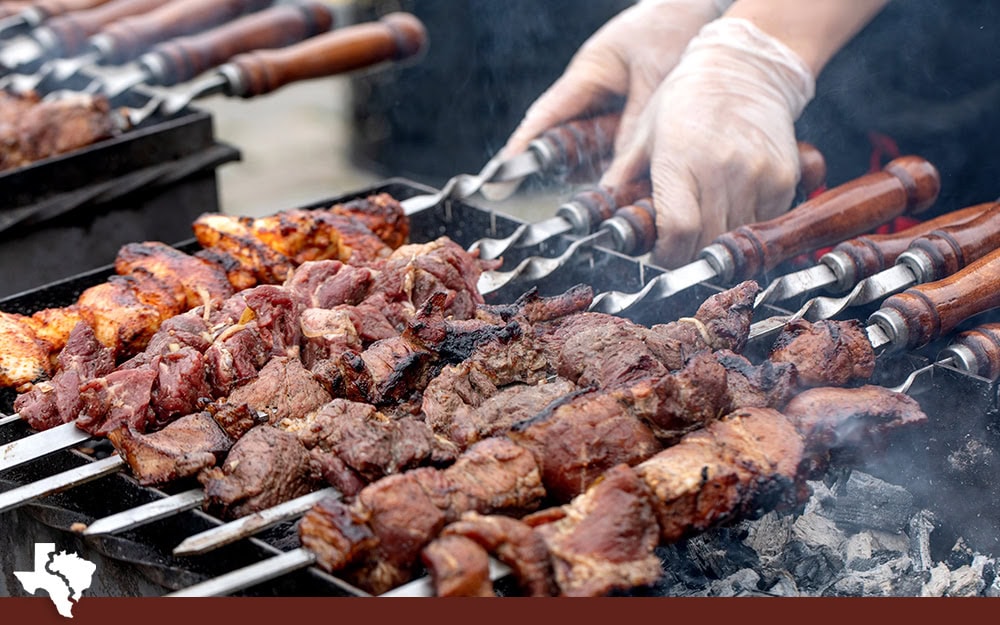
The charcoal is what the whole approach is built around. A skilled churrasqueiro wants a steady bed of glowing coals that puts out even heat across the grill. A large flame hurts more than it helps because it chars the outside of the meat well before the inside has had any chance to cook through. That fire management (how you get it to just the right state and keep it there for the entire cook) is a skill that takes years of practice to develop. From what I’ve seen, that’s the part that gets underestimated more than anything else.
That’s why experienced churrasqueiros spend most of their attention on the fire instead of on the meat. Once the coals are in shape, the meat takes care of itself from there. The fire is the hard part – get that right and the rest of it tends to come together on its own.
Let the Salt Do All the Work
Just salt – no rubs, no marinades and no sauce on the side.
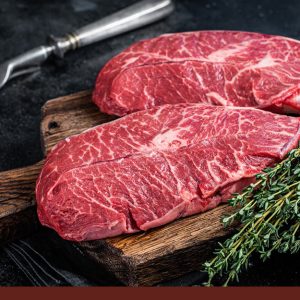
Quality beef already carries plenty of depth of flavor all on its own, and any churrasqueiro knows to let the meat do most of the work. The salt is mainly there to pull out a little moisture and to build a light crust on the outside – it’s not competing with the flavor that’s already in the meat. Most of it gets shaken or brushed off right before it’s served anyway, so what you’re actually left with at the end is the beef, at its absolute best.
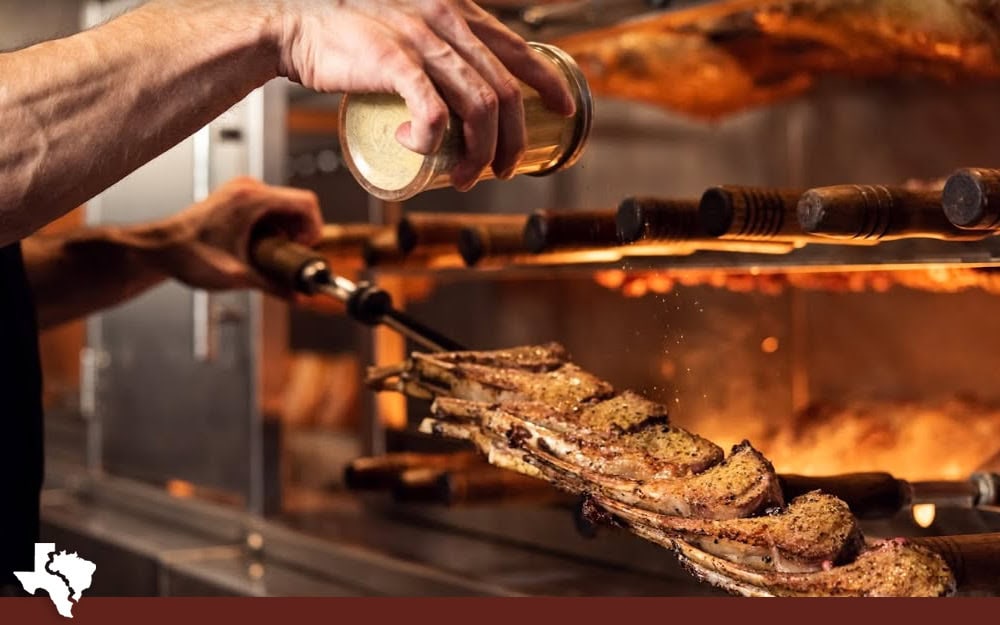
American BBQ has a well-established tradition built around dry rubs, slow marinades and thick sauces that all get layered on over hours of low-and-slow cooking. Churrasco goes the other way – and it does this by design.
At the heart of churrasco is a philosophy built around restraint. A churrasqueiro who skips the sauce is making a purposeful choice to let the quality of the cut speak for itself. The hardest part of this style, at least in my experience, is the discipline to not reach for something extra – and not everyone finds it that easy. That commitment to simplicity means that you need enough confidence in what’s already on the grill to just leave it alone. When it all comes together (and it can), a single bite of well-prepared beef ends up so clean and so full of flavor that you’ll wonder why anyone ever needed a sauce at all.
Picanha and the Cuts That Matter Most
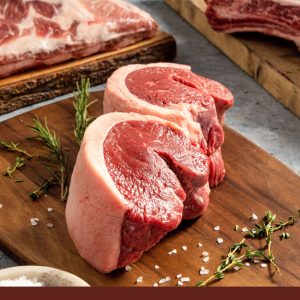
Picanha is the cut that defines a churrasqueiro – and if you’ve ever had the chance to watch a skilled one work, you’d see why. The cut comes from the rump cap of the cow and has a generous fat cap on one side. That fat cap is literally the whole point. As it cooks, that fat slowly renders and bastes everything underneath it, which is what gives picanha its famously juicy character. Get that fat cap wrong (either by trimming too far or by placing it at the wrong angle over the fire), and the whole piece just doesn’t deliver.
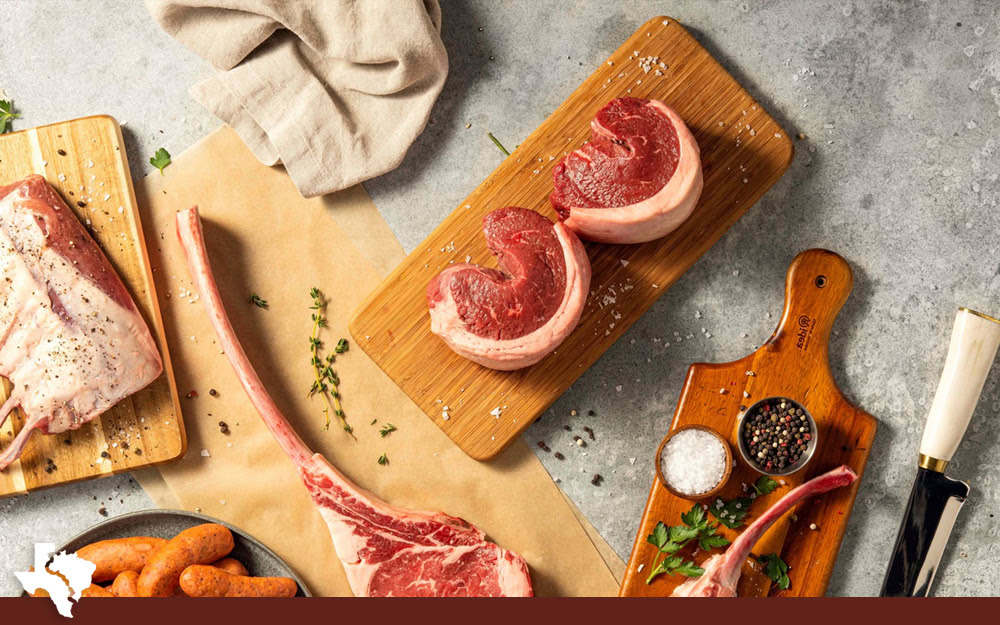
What separates a skilled churrasqueiro from a novice is something as basic as how they load the picanha onto the skewer. The meat gets folded into a C-shape, with the fat-side turned outward toward the heat. From that position, the fat renders slowly and evenly, and the interior stays moist and flavorful all the way through. It’s easy to dismiss this as a minor detail. But the difference it makes in the finished product is very real.
Other cuts like fraldinha, costela and linguiça all have their place on a churrasco fire, and each one has built up a pretty devoted following. Picanha is still the one that gets the most attention – and the most debate. It’s the cut that the whole table is quietly waiting for and the one that any self-respecting churrasqueiro takes the most personal pride in doing just right.
A great churrasqueiro also knows when to leave picanha alone, because it doesn’t need any elaborate marinades or much extra prep to taste great. The fire and the fat do most of the work on their own. The skill is in learning when to trust the cut. That restraint is actually one of the harder skills to develop, and it’s what separates a decent churrasco from a great one.
The Work That Goes Beyond the Grill
At a churrascaria, a churrasqueiro’s work doesn’t stop at the grill (what gets cooked and how it’s served are closely tied together), and it’s what sets this position apart from just about any other job in a restaurant.
Rodízio-style service is a bit different from a common restaurant setup. Churrasqueiros walk the dining room floor with large skewers of freshly grilled meat and carve directly onto each guest’s plate, right at the table. No counter to duck behind and no kitchen pass to set dishes on – presentation and a clean cut matter just as much as how well the meat was cooked, since each and every slice is made in full view of the guest.
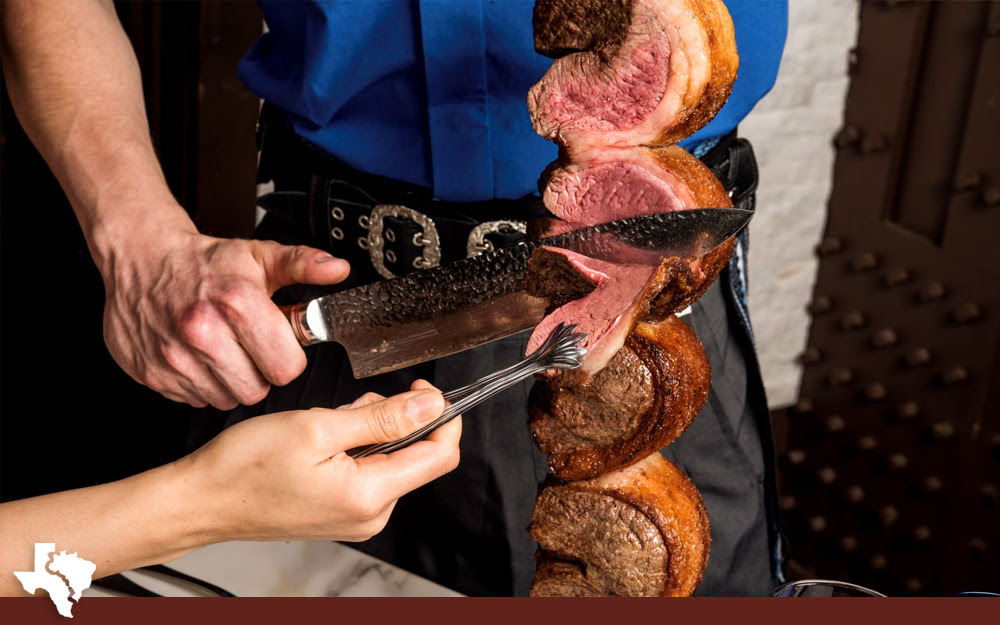
Across a full dinner service, that adds up very fast. A churrasqueiro can visit dozens of tables in a single night, and every stop calls for confident cuts – with the skewer held at the right temperature and angle the entire time. The meat needs to be rested enough to slice well. But it still needs to be hot enough to put in front of a guest. To hit that balance table after table for hours on end takes a level of focus that doesn’t get nearly enough credit. It’s actually one of the harder parts of the job, in my experience.
Guest interaction is a large part of the whole experience. A skilled churrasqueiro reads each table well, knows when to slow down and connect for a minute versus when to move on and somehow holds that same energy for the entire night. It’s physical work, it’s a performance, and it’s hospitality – all at once and all night long.
From the Backyard to a Real Career
For most churrasqueiros, none of this started in a professional kitchen – it started at home, around a backyard fire, at a family cookout, on one of the slow weekend afternoons where time just moves differently. A younger family member would stand close by, pay close attention and eventually get their turn with the tongs.
Informal education like this carries more weight than we give it credit for. The ability to read a fire, feel when a cut is ready without ever slicing into it and manage multiple pieces of meat at the same time – none of that happens overnight. It takes years to build those instincts, and the bulk of that time will have passed long before anyone has ever called it job training.
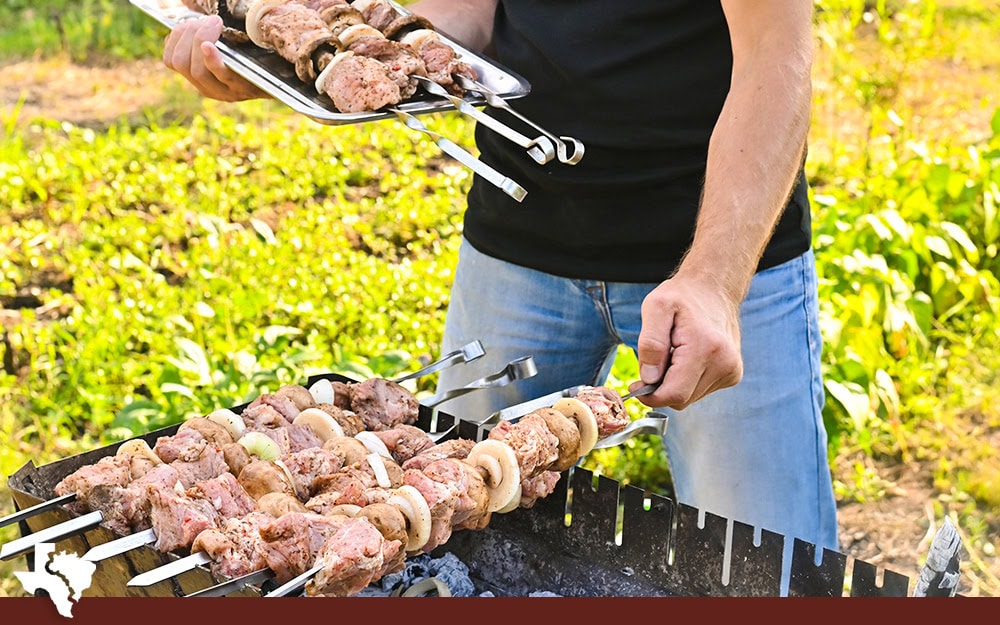
The jump from backyard cook to professional churrasqueiro usually happens in one of two ways. Some just take what they already know and carry it straight into a more structured kitchen environment. Others go through formal training first or spend time as an apprentice under a more experienced churrasqueiro. Both paths usually wind up at the same foundation.
What’s changed over the last few years is where that knowledge is needed most. Churrascarias have been opening up all across the United States, Europe and well beyond. That growth has created a strong demand for churrasqueiros who actually know their trade. Restaurants a long way from São Paulo or Porto Alegre are actively looking for churrasqueiros with the same depth of knowledge that not too long ago was mostly passed between families over generations. What was once a very personal tradition has turned into a very portable skill set that has found a home in kitchens all over the world.
The Skill That Sets a Churrasqueiro Apart
Real expertise almost never announces itself. A skilled churrasqueiro won’t check a timer or reach for a thermometer – they’ll press the meat once with one finger, feel the resistance and know right then where it stands. That one finger is the whole instrument.
There’s a bit to read in the coals. The color, the heat level and the way that fat drips and causes a flare-up – it all carries information, and after enough time at the grill, you start to read it without much effort. Even a few minutes in either direction can change the final result – the texture, the crust and the juiciness. The margin is pretty narrow, and the entire goal is to get it right every time.
The scale of what a churrasqueiro manages is what actually makes this so hard. At a busy churrascaria, there could be dozens of skewers over the fire at the same time, and every one of them is at a different stage, each one its own call to be made at just the right time. There’s no room for error. That level of mental coordination, held across a full service, night after night, takes years to build. Most of us have no idea how much is being tracked at any given point just to get every cut where it needs to be.
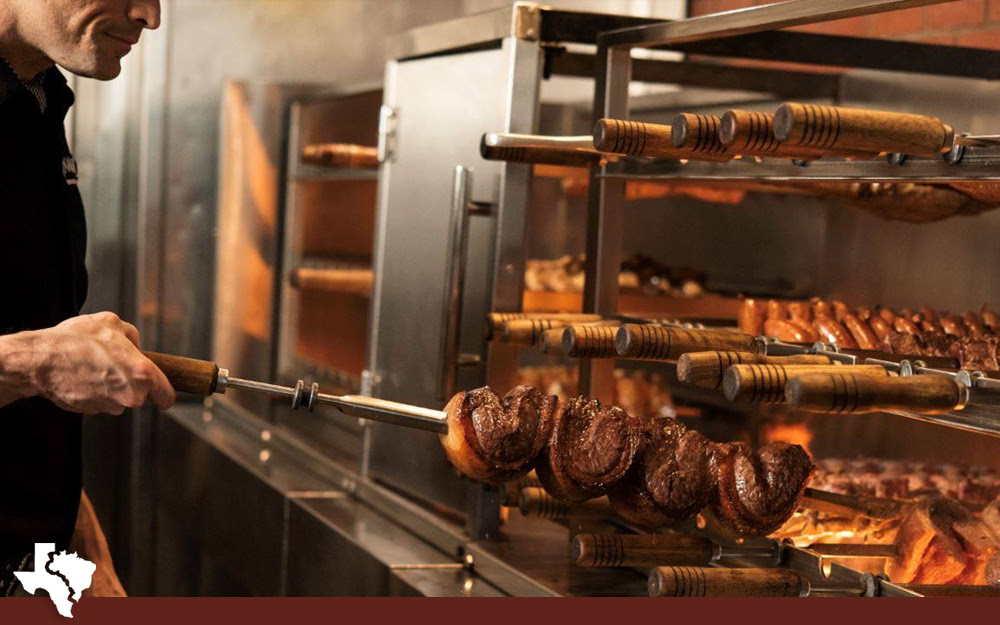
None of that’s theatrical either. A great churrasqueiro is working, and most of that work is already done long before the meat even makes it to your table. The fire has been read, the timing has been dialed in, and the fat has been watched the whole way through. Every little variable has been quietly accounted for (no drama, no announcements) as part of a process that only looks effortless because of the years it took to build.
A passador (in a Brazilian rodízio, a meat server) arrives at your table with a skewer and a blade, and it’s all meant to look effortless. Every choice (the cut, the cook and the timing) was already made long before any of it reaches your plate. The skill lives in that.
Keep this in mind the next time that you sit down at a churrascaria, and everything on the plate tastes just right.
Savor the Moment at Texas de Brazil
The more you actually know about what goes into that experience at the table (the years it takes to know a fire, the patience that goes into the seasoning and the very physical toll of a full dinner service), the harder it gets to treat any of it like it’s nothing. That careful work lives behind what you’d see as just a slice of meat, and all that work deserves far more respect than it tends to get.
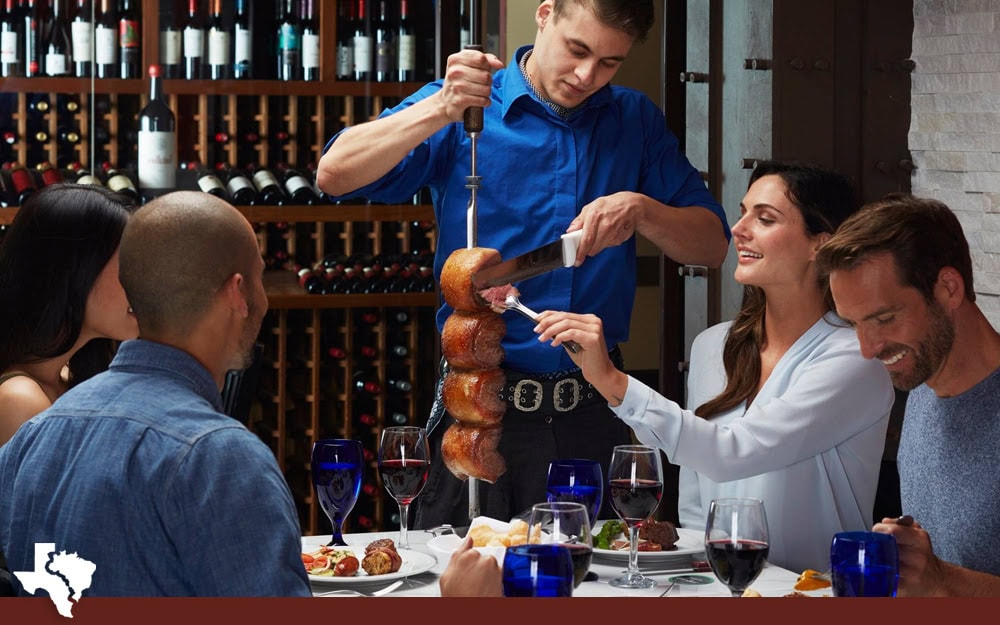
With that in mind, if you want to see all that skill up close, Texas de Brazil is a great place to watch it happen. Every churrasqueiro on the floor has put in the time to learn the trade, and it comes through in every tableside cut. A reservation will get you the full experience, and there are a few other ways to try it as well. A Texas de Brazil gift card makes a memorable gift, and our Butcher Shop lets you take premium cuts home if you want to try out the tradition on your own time. The eClub is also worth a look – new members get $20 off their next visit, and that’s a reason to come in.
The next time a churrasqueiro comes to your table with a skewer and a carving knife, you’ll see it all a bit differently. The cuts, the fire and the way that the whole meal comes together – none of it is just dinner anymore. There’s genuine skill behind it all and years of it. That knowledge makes every bite worth your time.