
Why Is There Sushi at Some Brazilian Steakhouses?
Brazilian steakhouses have a very obvious promise – fire, meat and those endless skewers that never seem to stop. Walk over to the salad bar and plenty of these places will have sushi out for you – and you might find that pairing a little unusual. The story here is an interesting one.
Brazil actually has one of the deepest Japanese immigration histories in the entire world – one that goes back to 1908 and spans multiple generations of families who made Brazil their permanent home. Did you know that Brazil is home to the largest Japanese population outside of Japan? The food came with them, and it never left! Sushi in Brazil is actually standard fare. It’s something that you pick up at a lunch counter or a mall kiosk on a random Tuesday afternoon without a second thought.
That context changes everything. When a Brazilian steakhouse puts sushi right alongside the churrasco, it’s a direct reflection of who Brazilians actually are. Brazil absorbed Japanese culinary tradition so deeply and for so long that the two don’t feel like opposites at all. The pairing makes total sense. It’s just Brazil on a plate.
Let’s talk about this cultural blend that brings sushi to steakhouse menus!
Table of Contents
Why the Sushi at a Churrascaria Makes Sense
For most diners, the sushi at a Brazilian steakhouse feels weirdly out of place, as if the restaurant was just trying to pad out the menu with something trendy. And fair enough – it’s not an unreasonable way to look at it. A churrascaria is built around fire, meat and those endless skewers of picanha. What Japanese food is doing at a place like this is a fair question.
The obvious assumption most diners make is that sushi is an American addition – something that the chain dropped in to bring in a wider audience. Plenty of guests write it off as filler and head straight to the next station, which is a fair reaction. But that explanation does leave out quite a bit, because the sushi at these restaurants isn’t there for picky eaters or whatever food trend happened to be popular at the time.
A much longer story actually sits behind all this – one that starts not in any restaurant boardroom, but deep in the history of Brazil itself. Japan and Brazil have a well-documented connection that goes back well over a century. In the early 1900s, hundreds of thousands of Japanese immigrants made Brazil their home, and over a few generations, Japanese-Brazilian culture became a genuine part of life there – especially in São Paulo, which has the largest Japanese diaspora community anywhere outside of Japan.
The sushi at your local churrascaria makes more sense. It’s rooted in something far more genuine – a culinary history that most American diners have never had a reason to look into before.
The Japanese Families Who Made Brazil Home
A ship called the Kasato Maru arrived on Brazilian shores in 1908 with the first wave of Japanese immigrants to ever make that crossing.
What followed was one of the largest migrations in Japanese history. Over the next few decades, hundreds of thousands of Japanese families packed up everything they had and made Brazil their permanent home. The scale is immense – Brazil has a bigger Japanese population than any other country outside of Japan itself, with roughly 1.5 million Japanese-Brazilians living there.
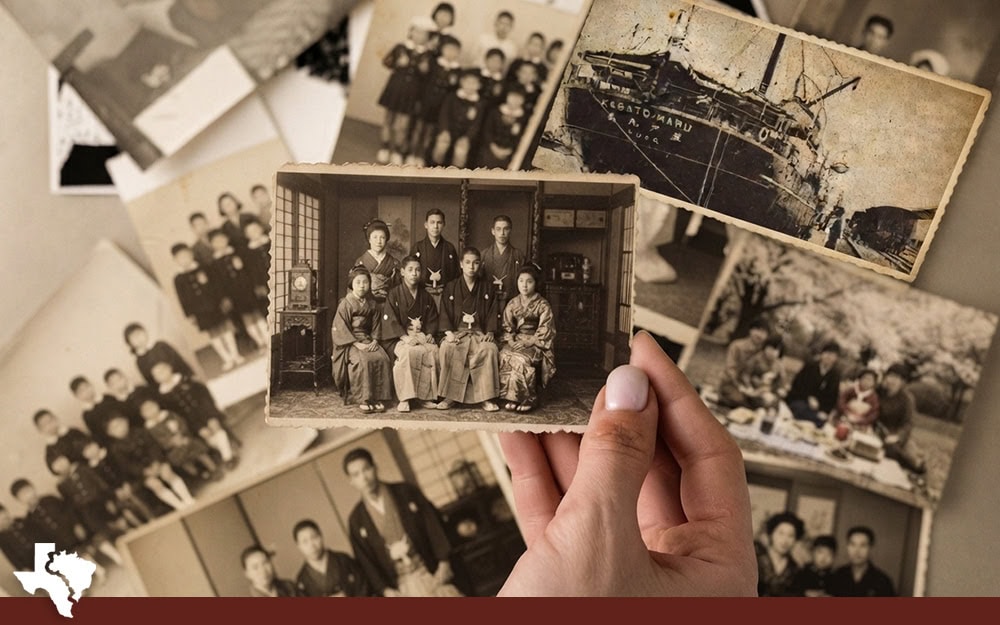
A community of that size leaves a genuine mark on a place. Food has always traveled alongside the cooks who make it, and when a culture settles somewhere new, the flavors are usually part of the package.
Which brings us to the part of this story that actually matters when you’re sitting down at a Brazilian steakhouse. Sushi on the menu at a churrascaria goes much deeper than a trendy addition or a random call made by the kitchen. It’s a direct reflection of something that started over a century ago, when Japanese families carried their culinary traditions across the ocean and made them a permanent part of Brazilian culture.
A plate of sushi at a churrascaria carries a genuine history behind it.
The Japanese Heart of São Paulo’s Liberdade
São Paulo’s Liberdade neighborhood is one of the most concentrated Japanese-Brazilian communities in the world. The streets are lined with paper lanterns and the markets and restaurants there carry generations of Japanese tradition that are embedded in day-to-day Brazilian life as a permanent part of the culture.
Sushi has never been a special-occasion food in Liberdade (it sits right alongside other street food) at open markets and neighborhood joints that have had their doors open for decades. Japanese cooking didn’t arrive as something unfamiliar or new to track down – it just became a part of day-to-day life.
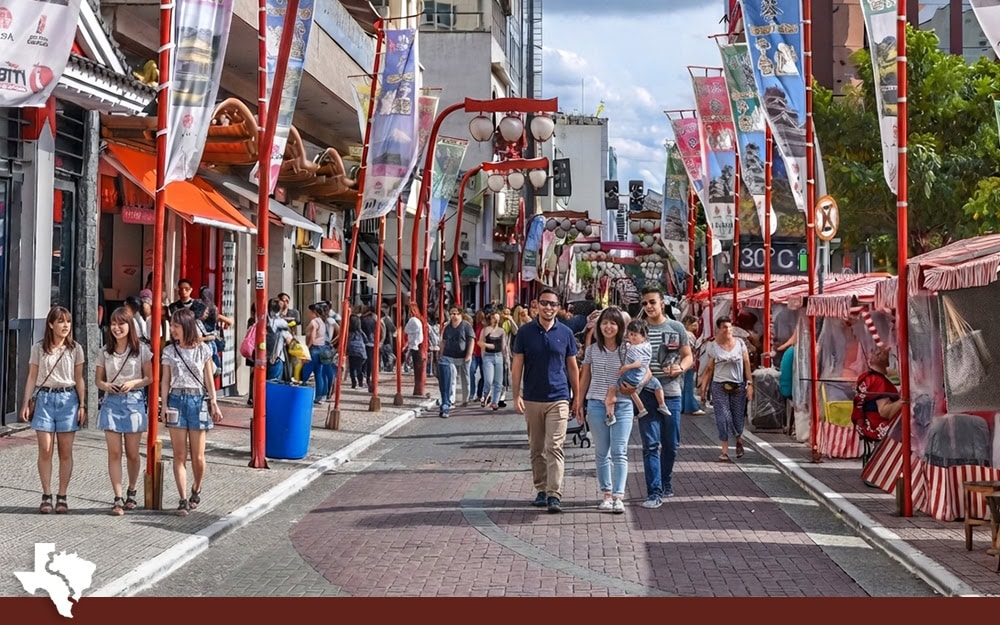
This one matters because it changes what “authentic Brazilian food” even means. For millions of Brazilians (and especially in São Paulo), a spread that includes grilled meat and sushi on the same table is normal. It’s just normal food, and it’s been that way for a long time in that part of the country.
Which brings us to the sushi station at a Brazilian steakhouse. To first-time guests, that combination feels a little out of place – a raw fish counter right next to a parade of slow-roasted meats. For a restaurant that wants to capture Brazilian culture, it makes plenty of sense. Back in the early 1900s, a large wave of Japanese immigrants came over to settle in Brazil, and over the following generations, their food, their traditions and their flavors became a true part of day-to-day Brazilian life. Brazil, in particular, is home to the largest Japanese diaspora community outside of Japan itself, with São Paulo at its center.
The sushi earned its place, and with that history behind it, the whole Brazilian steakhouse experience starts to feel like it all fits together.
How Sushi Became a Staple of Brazilian Life
Once Japanese food took root in Brazil, it slowly spread across the entire country and wove itself deep into day-to-day Brazilian life, and the scale of that integration is hard to picture without seeing it for yourself.
When a culture has that much access to something, it stops feeling like a novelty – it just turns into a part of normal life. Sushi in Brazil is a Tuesday. It’s what kids grow up eating without a second thought, right there on the table next to rice and beans and everything else.
That familiarity also shapes how sushi evolved in Brazil. Over generations, Brazilian cooks and chefs adapted Japanese techniques and ingredients to suit local tastes, and the result is a style of sushi that feels at home in Brazil. It became something of its own.
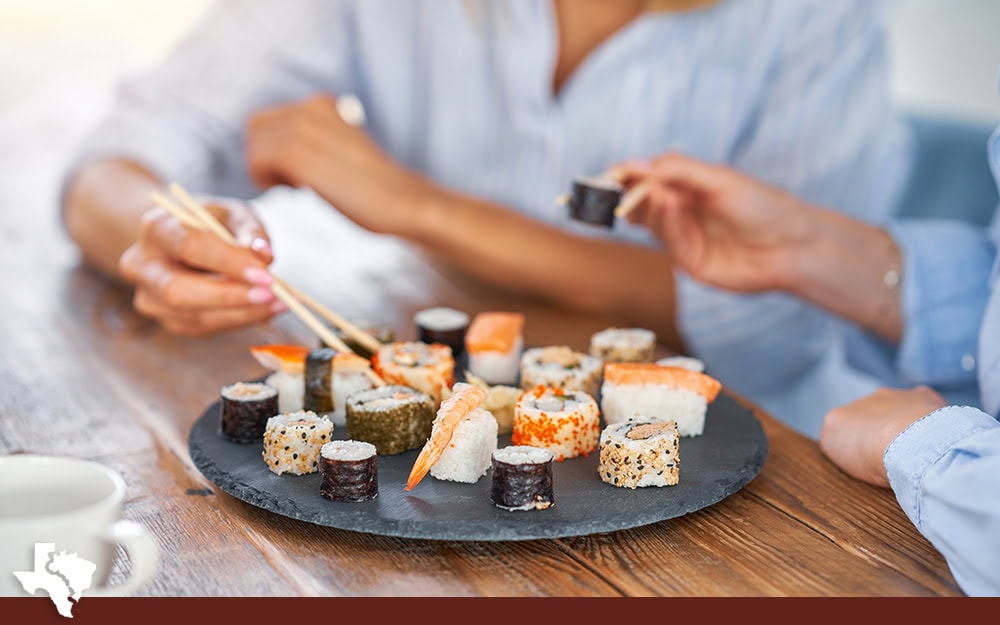
With all that context in mind, the sushi menu at a Brazilian steakhouse like Texas de Brazil is a direct reflection of how Brazilians actually eat – at home and when they go out. A great Brazilian meal brings together everything that Brazilians love, and sushi has more than earned its place at that table. It’s been that way for decades!
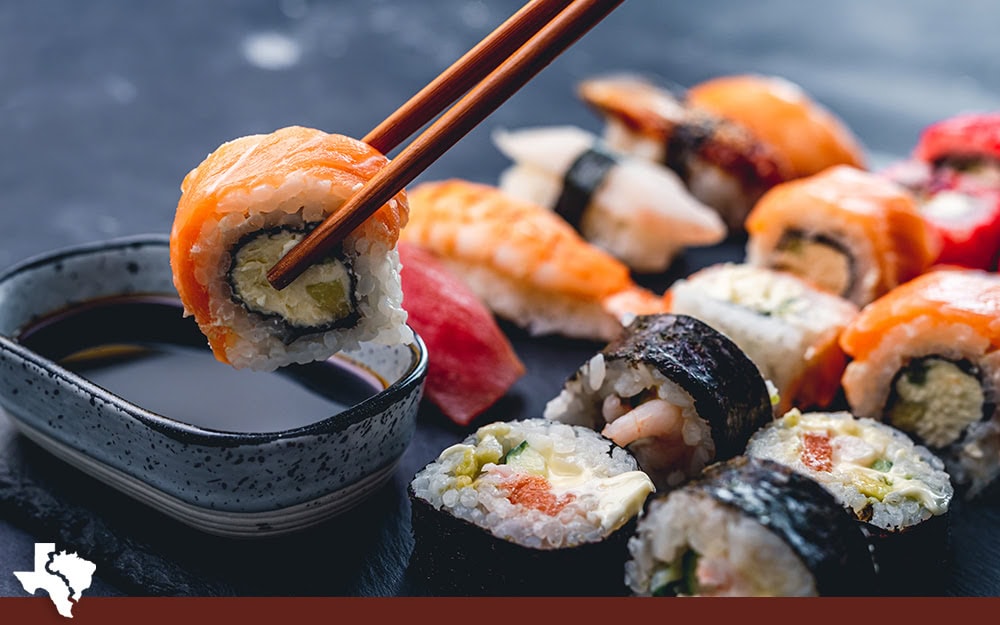
Spicy surimi pairs well with grilled meat – and there’s a reason why the two work together.
Why Sushi Fits at a Brazilian Steakhouse
Anyone who’s stood at the salad bar of a Brazilian steakhouse and seen spicy surimi sushi right next to the grilled meats has a fair reason to stop and ask what’s going on. Most first-timers at a churrascaria walk in with one set of expectations and leave with a pretty different idea of what Brazilian cuisine looks like. A little bit of Brazilian history goes a long way toward explaining it, and with that context, the sushi actually fits right in.
Brazil and Japan have one of the most interesting cultural connections that you’ll find anywhere in the world. Brazil is home to the largest Japanese community outside of Japan – we’re talking about well over a million Japanese Brazilians who are a core part of the country’s cultural identity. Over the generations, they worked their way into restaurants, local markets and the day-to-day rhythm of Brazilian life.
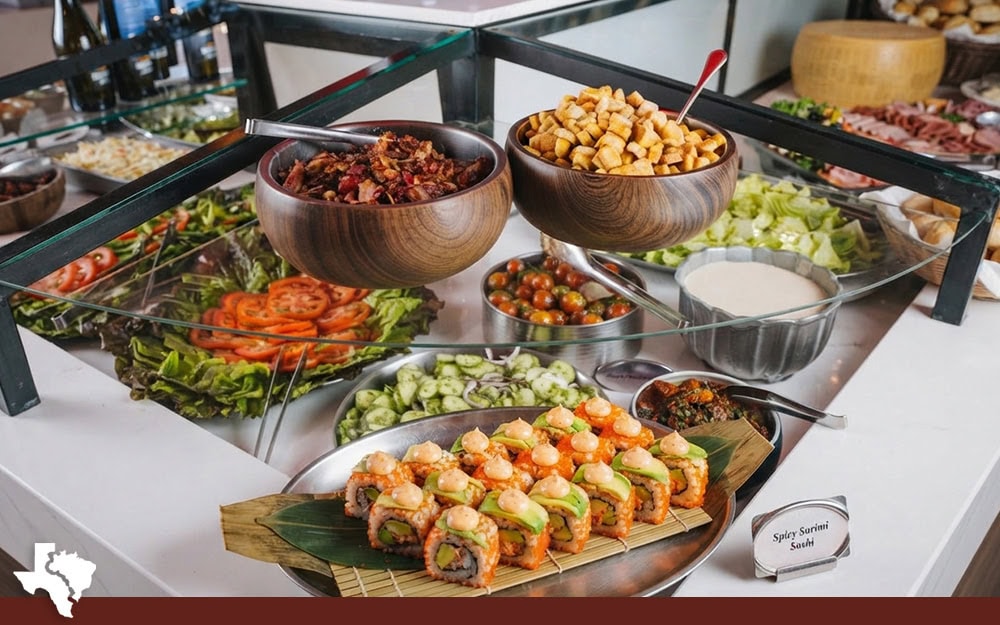
A Brazilian steakhouse with sushi on the menu is a genuine reflection of what Brazilian food culture looks like every day. For a very long time, Brazilian tables have brought together Portuguese, African, Indigenous and Japanese culinary traditions all at the same time, and none of these dishes ever feels out of place next to the others.
That spicy surimi roll is heritage. And the assumption that it doesn’t belong on that table tells us more about our own expectations than it does about the menu. Dishes get judged long before their stories are ever told, and sushi at a churrascaria is probably one of the better examples of that. With the history behind it, the pairing is an honest snapshot of a country that, for well over a century, has made different cultures part of its own identity.
The Generous Spirit of a Brazilian Feast
Brazilians have always had a deep love for plenty at the table, and the churrascaria experience was practically built around that very idea.
The salad area at Texas de Brazil deserves your time, because it’s where you start to get a sense of just how far we take our generosity. Marinated vegetables, imported cheeses, cured meats and fresh greens – and right there in the middle of it all, sushi. It’s a whole lot to take in and yet none of it comes across as an afterthought.
More to choose from doesn’t mean less focus – it’s worth keeping in mind as you look at that spread. Every item on the table has its own story behind it, one that connects directly to Brazil’s long history of absorbing outside influences and making them part of its own culture. The sushi traces back to a massive wave of Japanese immigration into Brazil, centered on São Paulo, in the early 1900s – which produced the largest Japanese community anywhere outside Japan. Those communities settled in, brought their food traditions with them and over the generations, those flavors just became part of day-to-day Brazilian life.
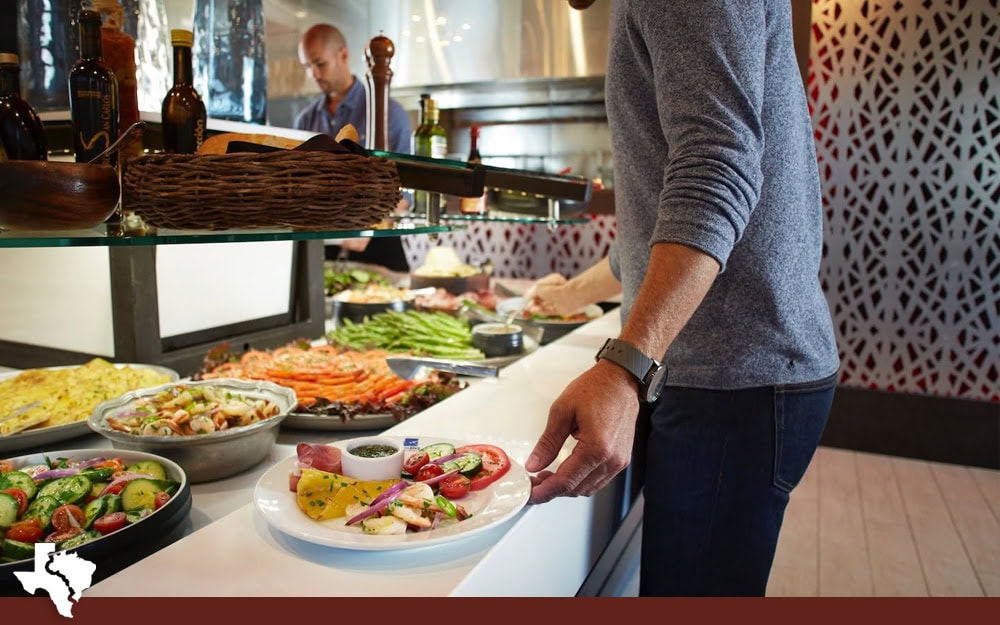
The rest of that salad bar has its own story to tell. Plenty of the heartier meat dishes trace back to Southern Brazilian ranch culture, and many of the flavors spread across the menu carry Portuguese roots that go back centuries.
On your next visit, give yourself a minute before heading straight to the meat section. Give the spicy surimi sushi a try if you haven’t yet – a little bit of background on where it comes from actually changes the way it tastes. Every dish in that salad area has a small thread of history behind it, and when the table starts to make sense that way, the whole meal comes across a little differently. The food has been telling that story the whole time.
Savor the Moment at Texas de Brazil
There’s a reason a sushi station shows up inside a Brazilian steakhouse. More than a century of Japanese immigration, a popular neighborhood in São Paulo and those casual hand-roll shops scattered on street corners all across the country are all directly connected to that spicy surimi right next to the grilled meats. None of it was random. It’s all part of a much bigger story.
Something wonderful lives in that. A dish that most diners walk right past (the one they sort of write off as filler) ends up with more cultural meaning than almost anything else on the table. Without any fanfare, it manages to reframe the whole spread. The food had a story to tell all along – it just needed a little context to get there.

Texas de Brazil is a place where the experience lives in every corner of the dining room, from tableside cuts of picanha and filet mignon that our gauchos bring straight to your seat, to chef-prepared dishes and fresh sushi set out in the salad area. Every part of it’s worth your time.
The Texas de Brazil eClub gets you $20 off your next visit, gift cards are a great option for anyone who deserves a night out, and the Butcher Shop carries premium cuts if you want to bring a little of that experience home with you. Make a reservation, arrive hungry and plan to stay for a while.