
What Is Comida Por Quilo? Brazil’s Pay-By-Weight Style
Brazilian restaurants work very differently from what most of us are used to back home, and it takes a minute to get your bearings the first time around. Walk in, and instead of a host handing you a menu, you’ll probably get a ticket pressed into your hand before you’ve even spotted where the food is. A scale sits near the food counter, a printed menu is nowhere to be found, and the whole place runs on a pay-by-weight system. It’s a whole different way to eat.
The whole setup can seem a bit disorienting if you haven’t done this before. Factor in a foreign language, and even the pricing starts to get a bit confusing pretty fast. A menu that lists prices per kilo reads very differently from one that prices items per 100 grams – and the gap does matter when you’re trying to work out how much food to actually put on your plate.
The range is one of the best parts. Most comida por quilo restaurants will refresh their lineup every day and give you a fairly wide spread – some rice, beans, grilled meats, salads, roasted vegetables and a rotating number of regional dishes that can vary depending on where in Brazil you are. Whether you’re watching your budget or just want to try a little bit of everything, it’s one of the better ways to eat in the country.
Let’s talk about Brazil’s pay-by-weight dining experience.
Table of Contents
What Made the Por Quilo Format So Popular
Cities like São Paulo and Rio de Janeiro were growing very fast during that era, and the average worker needed a lunch option that was fast, cheap and actually filling enough to power through a full afternoon.
The format managed to check all three boxes at the same time. A busy professional could walk in off the street, fill a plate with home-style Brazilian food and still get back to the office with time to spare.
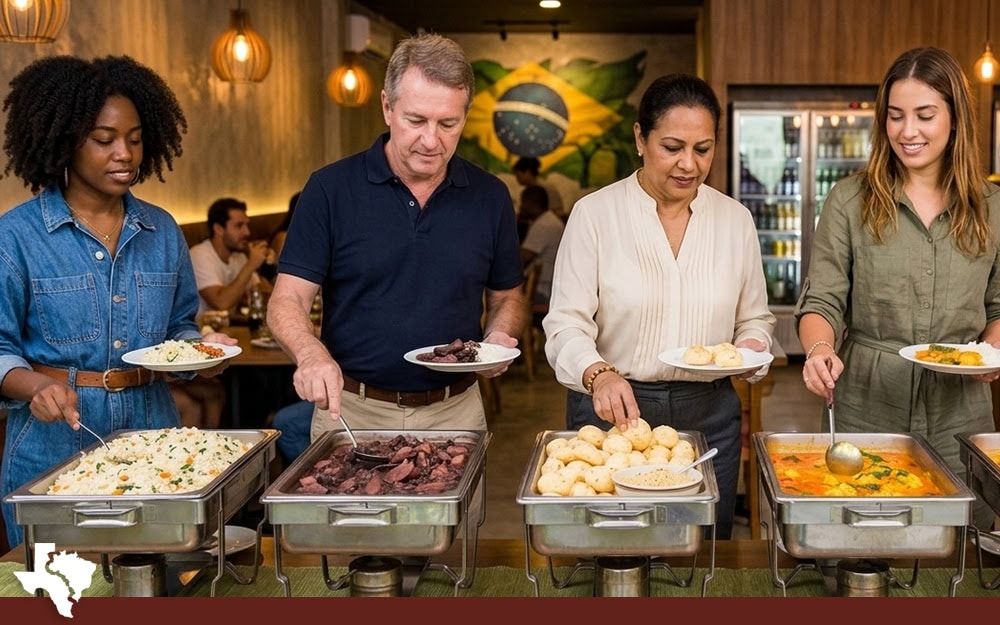
Speed alone doesn’t quite explain why it lasted, though. The deeper reason had more to do with what it gave them – a generous spread of dishes that let each person eat just what they wanted without paying for anything they didn’t. Rice, beans, grilled meats, roasted vegetables, fresh salads – it was all right there and ready, and if something on that list wasn’t for you, you just skipped it.
The social side of it mattered quite a bit. Por quilo restaurants pulled in everybody from office workers and students to whole families, mostly because the price was directly based on whatever you put on your plate. A lighter portion meant a smaller bill, and a towering plate just meant you paid a little more. That flexible pricing made it a place where almost anyone could afford to eat well. That appeal across all kinds of diners is a big part of why the format has lasted as long as it has.
What started out as an answer to a city problem has become part of Brazilian lunch culture over time. It’s not a niche trend or some passing novelty – it’s just how Brazilians eat lunch (and it’s not going to change anytime soon).
What Should You Expect at a Pay-By-Weight Place
A comida por quilo restaurant is pretty easy to get used to after your first visit. At the entrance, you can pick up a plate and walk over to the buffet. From there, you can pile it high with whatever catches your eye. Most places have a number of options, so there’s usually something for everyone, whether you’re in the mood for something light or a full meal.
Once your plate is ready, you bring it over to the scale – most restaurants have one near the serving line or right by the register. An attendant will weigh it and hand you a small printed ticket with your total on it. From there, that ticket goes with you to your table, and you can pay either at the end of your meal or up at the register before you sit down.
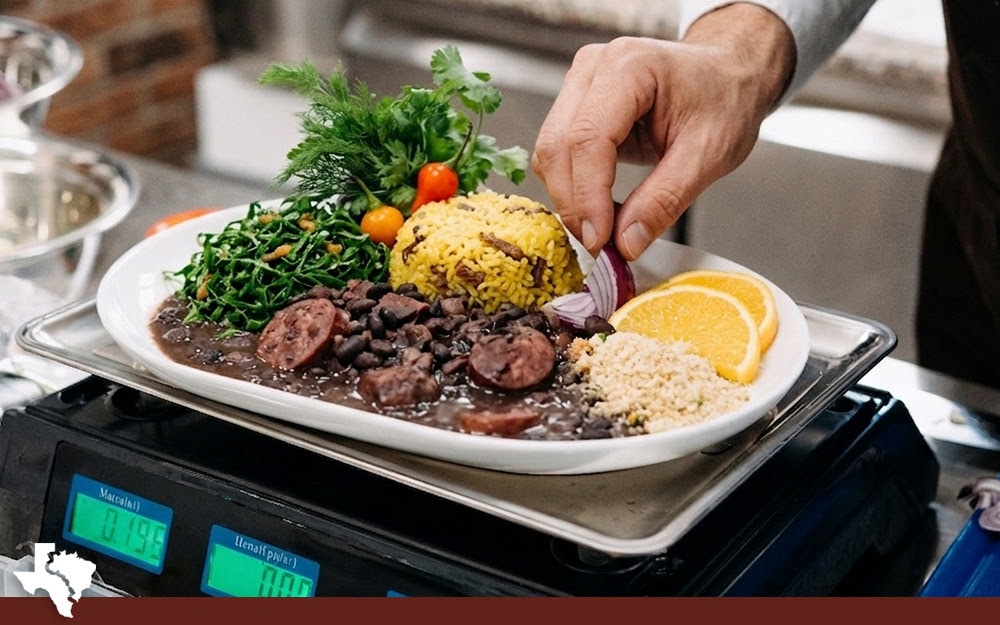
The price at these places is listed either by the full kilogram or by 100 grams, so it’s worth a quick look at the board before you get in line. A per-kilogram price will look way higher than a per-100-gram price on the menu board – even though they work out to the exact same amount. Just be sure you know which unit they use before you start to fill your plate.
One of the best parts about eating this way is that you’re never locked into a fixed portion size. A lighter plate is perfectly fine, and in my experience, it’s one of the more underrated upsides (especially if you want to taste a little bit of everything without going overboard). It also means you can go back for more if something works and you only pay for what you actually take.
What You Can Find on the Buffet
Walk up to the counter at a comida por quilo restaurant, and you’re looking at what Brazilian home cooking is actually all about. Rice and black beans are always there at the center, and from there the spread opens up into farofa, stewed vegetables, grilled meats, fresh salads and more. Most restaurants will have anywhere from 40 to 80 different dishes laid out at any given time.
That number is worth a second look. At a single meal, you can pile feijoada right next to a fresh hearts of palm salad, add a serving of farofa on the side and still have room for a slice of grilled chicken – it’s just one plate. A spread like that at a single sitting is pretty rare, and you’d be hard-pressed to find it anywhere else in the world.
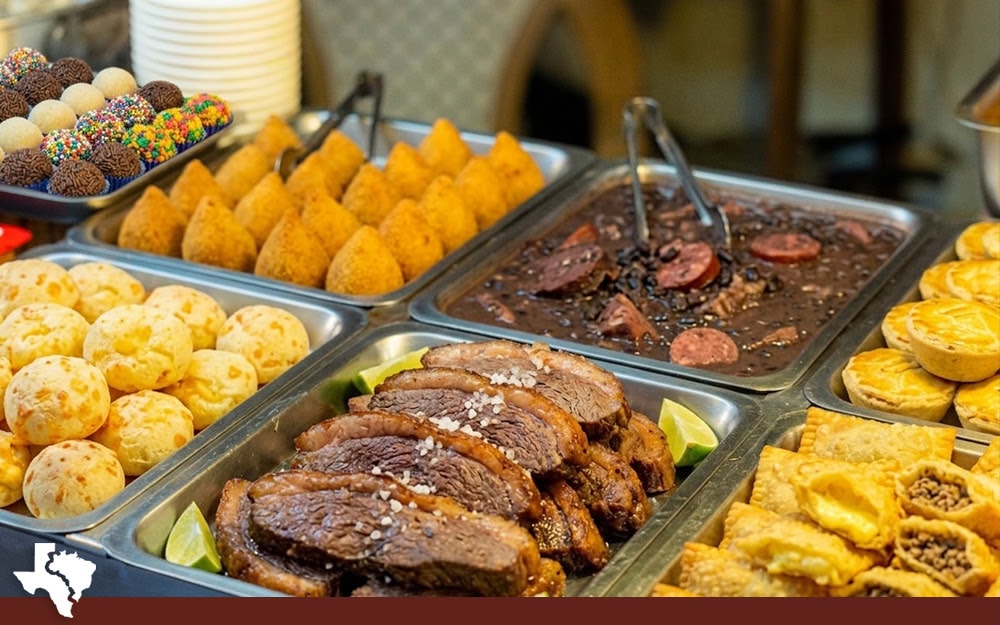
Regional identity is a big part of what sets this format apart. Where you are in Brazil comes through in what ends up on the counter (dishes rooted in the northeast might sit right alongside something from the São Paulo or Minas Gerais traditions), and it’s less about a standard menu and more about the breadth of Brazilian home cooking with dishes from all over the country on the same spread.
If a window into Brazilian home cooking is what you’re after, comida por quilo is about as direct as it gets. No set menu, no curated portions, no tasting flights – just a long spread of the same food that ends up on family tables all across the country each day.
With payment by weight, there’s no pressure to lock yourself into anything. Take a little of this, pass on that and go back for seconds on whatever stood out the first time around. As far as low-effort and high-reward meals go in Brazil, it’s pretty hard to beat.
How to Build a Smart Plate
Por quilo restaurants have a format all their own, and if you’ve never been to one before, a little bit of context can make your first visit a whole lot smoother. The first unwritten guideline to know about is that waste is pretty heavily frowned upon. Most Brazilians who eat at these restaurants are pretty deliberate and only take what they’re going to eat. The food counter is pay-by-weight, and there’s a social expectation that comes with it. The line can also run on the slower side at busier places, so keep an eye on anyone waiting behind you.
The weight system is the part of it that hits your wallet the hardest. Whatever ends up on your plate gets weighed at checkout, so what you load it with matters more than how full the plate looks. Leafy greens and lighter vegetables can take up plenty of space without adding much to the final weight – it helps keep your total down. Dense foods like rice, beans and heavier proteins are a different story – even a modest serving of them can push the weight up pretty fast.
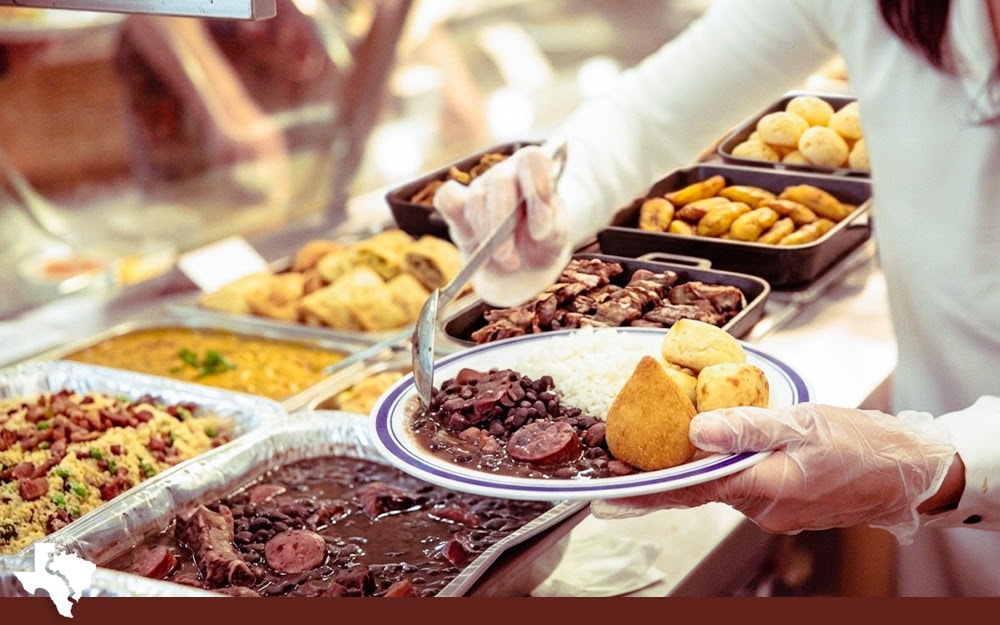
Rice is one of the heaviest items on the entire food line, so if you have it at the bottom of your plate, it can quietly push your total up. Swap that out for salad greens, and you’ll have just as much volume on your plate for a fraction of the caloric cost. You just have to be a little more strategic about what you layer on first.
With a little planning, a plate from a por quilo place can be one of the most affordable meals that you’ll find anywhere in Brazil.
Why Por Quilo Works for Brazilian Workers
For millions of Brazilian workers, por quilo is just lunch. A normal Tuesday. The format fits the rhythm of a Brazilian workday in a way that most other lunch options don’t. Most workers across Brazil also receive a workplace benefit called vale-refeição, which is a prepaid dining card from their employer to spend at restaurants. Por quilo works with that benefit mostly because the price is the same every time you go, and the whole meal gets done in well under an hour.
That last part is worth mentioning. A Brazilian office worker can walk straight in, load up a plate with a full meal, pay one flat price and be back at their desk – all without any stress. No server to wait on, no menu to look through and no bill at the end that takes any mental effort. The whole format was practically designed around the pace of a working lunch, and it does legitimately deliver on that.
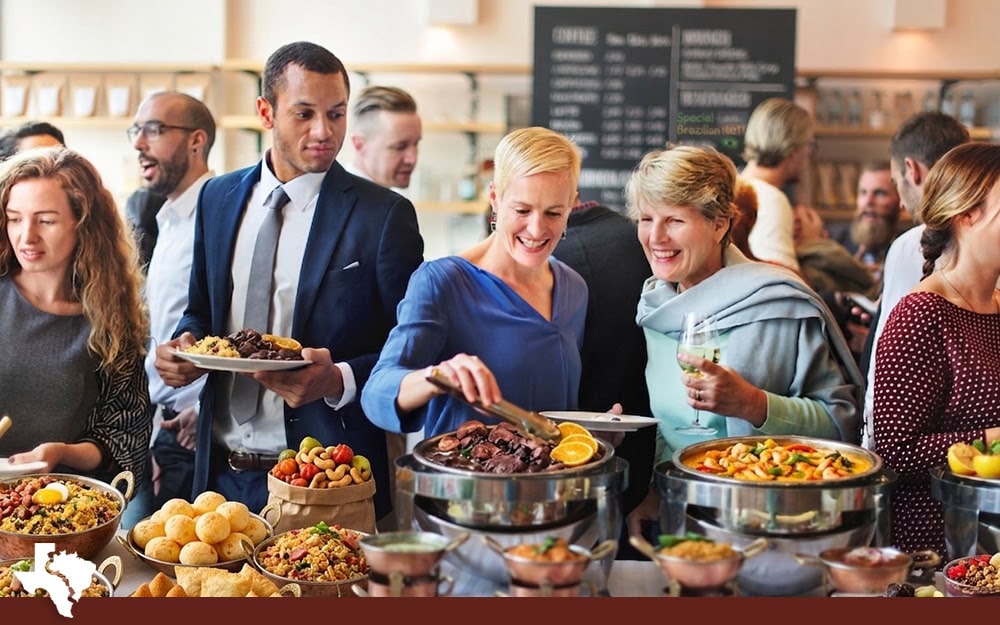
Walk in on a random Wednesday afternoon, and you’ll be surrounded by accountants, teachers and nurses – not travelers with a sightseeing checklist. Por quilo became what it is because it works for workers who have somewhere to be.
With that said, Brazil has a whole separate relationship with celebration. A dining tradition exists there that revolves around great company, a slow pace and a genuine dedication to food – and it works in a very different way than anything we’ve talked about so far. Where por quilo is about efficiency, this other tradition is about the opposite – time, tone and a table that you don’t have to rush from. Rodízio is the tradition where it all comes together.
Savor the Moment at Texas de Brazil
Por quilo and rodízio sit at just about opposite ends of the Brazilian dining experience. But underneath all that, the two of them are built around the same basic idea – great food, no fuss and a very satisfying meal. Por quilo was made for the lunch crowd, and rodízio is more the sort of meal where you pull up a chair and take your time with it.
A country that the whole world knows for its meat-heavy churrasco tradition also has this very no-nonsense side that quietly feeds workers day after day. Neither one is more authentically Brazilian than the other – they just serve very different moments in life, and both do it extremely well.
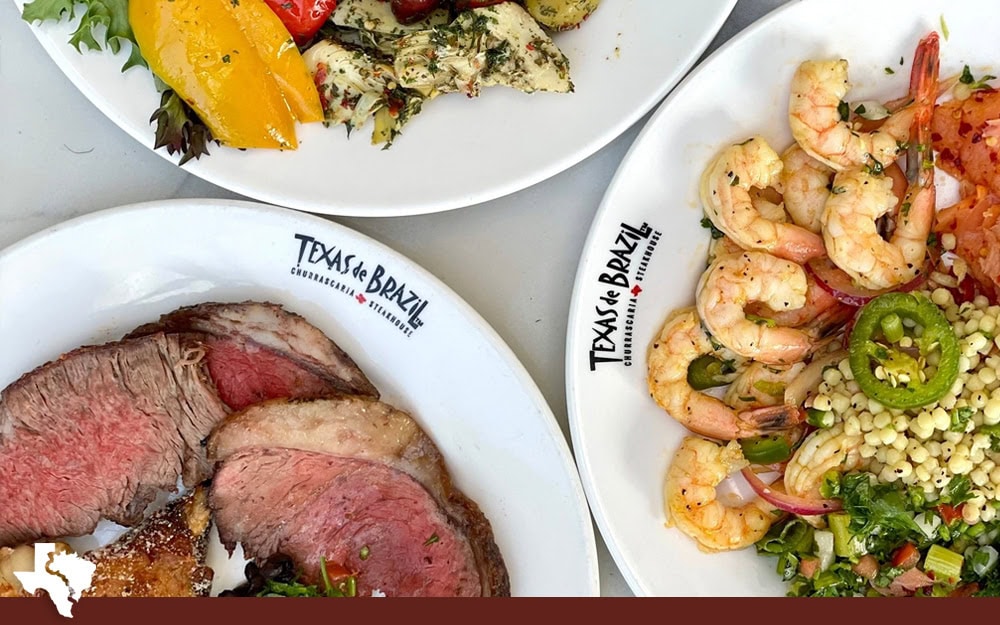
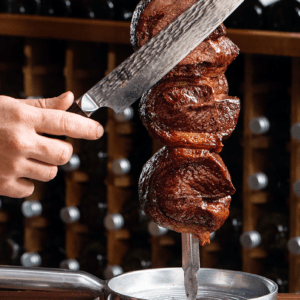
On the more celebratory end of the range, at Texas de Brazil, we offer a great rodízio experience if that’s what you’re after. The Gauchos come right to your table and carve fire-roasted meats in front of you. The gourmet salad bar alone has over 50 chef-prepared dishes to work through. It’s an indulgent sort of meal – the type where you actually do want to free up your schedule and settle in.
Whenever you’re ready for a visit, we’ve made it pretty easy to get started. A reservation takes about 2 minutes. A gift card is a great pick for anyone who deserves a great dinner out, and our eClub membership gets you $20 off your next visit when you sign up. We also have a Butcher Shop on-site for anyone who wants to take some of the premium cuts home.
Whichever way you want to experience what we do here, we’d love to be a part of it!