
Does Brazilian BBQ Meat Have Bones In It or Is It Boneless?
Curiosity about a food culture outside of your own is a good thing. When it comes to something like Brazilian food culture, though, you often run into a particular barrier: a lot of resources are in Portuguese! It’s one thing to be interested in a culture, but quite another to learn a whole language to do it. When online translations can be wrong, it’s worth asking an authority you can trust.
That’s why we try to cover as many questions about Brazilian food as we can, even when those questions might seem simple or obvious.
For one thing, the answer isn’t always obvious or straightforward. Something you feel is self-evident might actually have a lot of complexity or nuance to it, or might be very contextual. Other times, even if the answer is simple, the reason behind it might be fascinating or have a lot of history. We like exploring these kinds of topics.
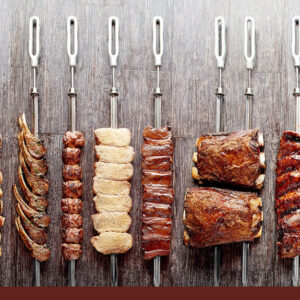
Which brings us to today’s question. Churrasco, the fantastic Brazilian method of barbecuing meats, is known to cook all manner of cuts of beef, alongside other meats like lamb, chicken, and pork. You’ve also likely read that we cook those meats on skewers over open flame. Yes, even the trickier cuts like sausages are skewered over the fire.
So, do we cook boneless meats, or bone-in meats, or both?
Table of Contents
Starting With the Simple Answer
To get the answer out of the way, it’s: both!
When you’re browsing the menu at a fine churrascaria, or you’re just enjoying the parade of meats the gauchos bring out in the rodizio, you’ll see everything from beef ribs to picanha, bone-in and boneless alike.
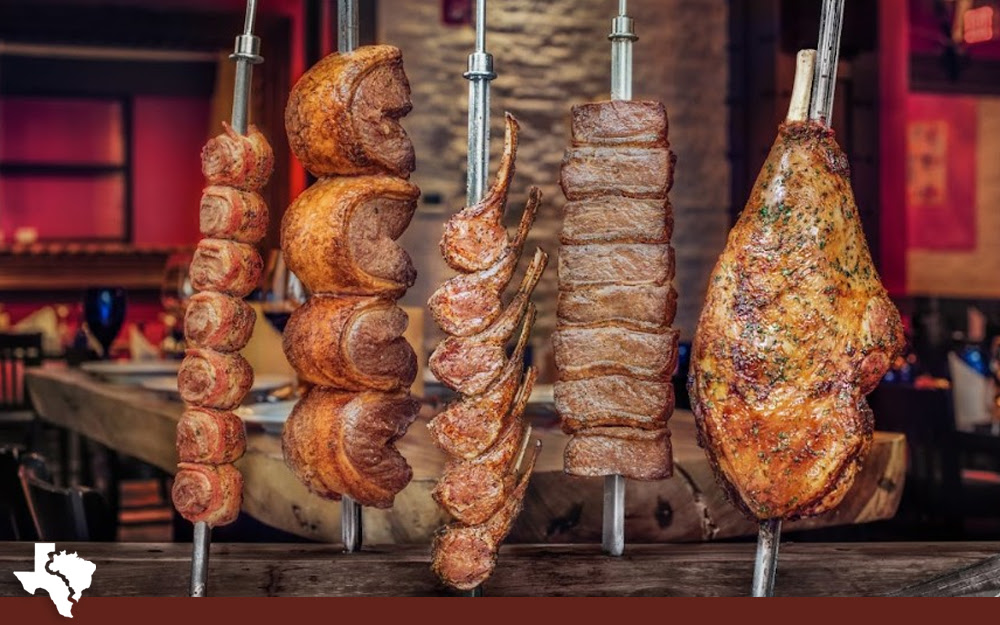
The truth is, Brazilians don’t much mind bones in their meat, so we don’t go out of our way to remove them. By the same token, there are plenty of cuts that are far enough away from a bone in the cattle that trying to keep them bone-in would be futile. It’s not like we need the bones to be there, either.
Why Aren’t Bones Removed Before Cooking?
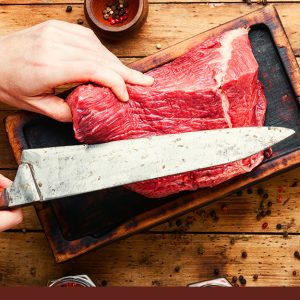
Boneless meats are easier to cut and serve, and when you have gauchos wielding their fancy knives to slice delectable pieces off for you to enjoy, you can see why a bone would get in the way.
So why aren’t bones removed from the cuts that still have them?
Mostly, it comes down to three things.
First is convenience. Something like beef ribs, when cooked slowly over the fire, renders their connective tissues down into flavor and becomes extremely tender. If you’ve ever had good beef ribs, you know the bones basically slide right out of the meat.
That’s after cooking; before cooking, those bones are firmly attached, and to try to get the meat off the bone before cooking it would leave you with a mess. You’d waste a lot of meat leaving bits on the bones, or you’d risk getting bits of bone in the meat, and that’s worse than whole ribs by a long shot.
When you think of some of the other meats we serve, you can also imagine how much work it would be to remove the bones for very little benefit. In particular, consider the Parmesan drumettes. Without the central bone, they’d basically be chicken nuggets, right? You don’t really gain anything by removing the bone, but you lose a lot to labor.
The second reason is presentation. Some meats that come on the bone would look mangled and messy if the bone were removed first. Others, like lamb chops, would leave you with tiny medallions that seem a lot less worth it when you see them. They’d be no less delicious, of course, but they’d feel less elegant and refined.
The third reason is the patterns in cooking. We’re well-versed in cooking these bone-in meats, but when you remove the bone, you remove a thermal mass and an insulator. Some of the texture and flavor come from in and around the bone, and if you strip that out, the whole thing changes.
Out of all of this, it really is just the convenience factor that makes the choice. Why pay someone to pull the meat from the bone when leaving the bone in doesn’t hurt anything? Why buy more expensive boneless meat that has been even more processed when you can just cook it with the bone right there?
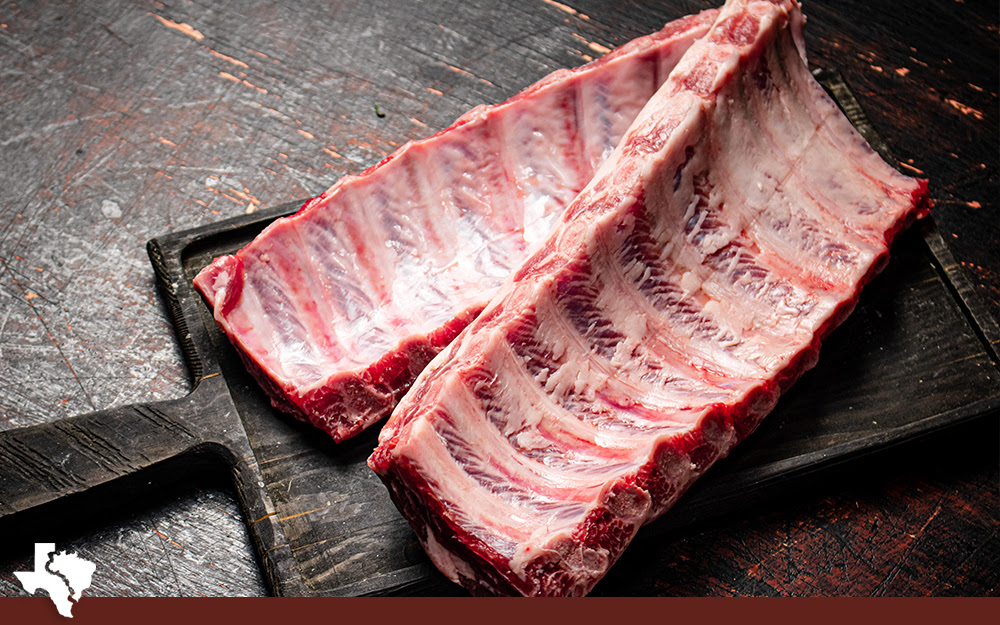
There’s also a secret that butchers know, but many home cooks don’t: sometimes, we serve both.
Take, for example, the T-bone or Porterhouse steak. Did you know that this is actually four different cuts, but at the same time, it’s all just one cut?
Imagine if you took a bunch of T-bone steaks and stacked them all up so the T-shaped bones lined up. Well, that’s how they are in the animal! When you see it whole, you get a picture of what it looks like.
This piece of meat, the short loin, can be cut in different ways. When you slice it across the bone, you end up with the iconic T-shaped bone separating two distinct pieces of meat.
That T-shaped bone isn’t all uniform, though, nor is the meat around it. IT tapers from one side to the other. On the more tapered side, the cuts are smaller, and that’s what we call a T-bone steak. On the other side, the bone and meat are larger, and that’s what gets called the porterhouse.
But it goes further than that. Look again at a T-bone steak. On one side of the T, you have a larger strip of steak. That strip is rich and flavorful, full of the inherent beefy goodness we all love in our meat. On the other side is a smaller medallion of meat, which is usually much more tender and milder in flavor, almost buttery from marbling.
The larger piece? That’s a NY Strip. The smaller one? That’s the tenderloin. When that piece of tenderloin is cut larger and away from the bone, it’s called a filet mignon.
Processed in different ways, this one cut of meat can be called four or more different things.
All of that is to say, it’s a fact that we serve not just meat with and without the bone, but we often serve the same cut with and without the bone. They just have different names, because that’s how butchery works.
What Are the Best Boneless and Bone-In Cuts?
Every cut is special in its own way, and they all have pros and cons that make them a great culinary experience. We love all our cuts equally, so it’s hard to choose a favorite, right?
Well, not quite. After all, one of them has emerged as Brazil’s favorite cut of meat, hands-down.
That cut is the boneless picanha. Picanha comes from the top of the rump, and it’s actually far enough away from the nearest bone that there’s a whole other cut in between it and the nearest bone! You can’t get picanha with a bone, because no such thing exists.
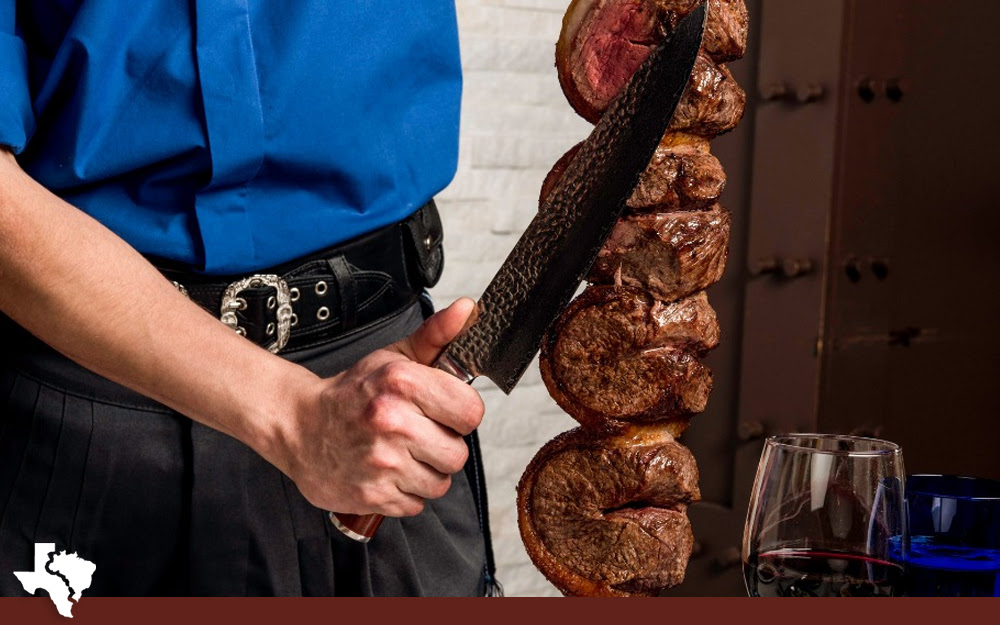
There are a few other cuts in the boneless category that everybody loves.
Filet mignon is a big one. Viewed as one of those expensive, high-class, delectable cuts of meat, it’s a little more accessible than some people realize, what with it being part and parcel of the porterhouse. Of course, it’s still rare, delectable, and valuable, since there are only a few short inches of meat that can be considered a filet mignon out of an entire cow. Its scarcity makes it a rarity!
On the opposite end of the spectrum is fraldinha, the flank steak. These steaks are large and sheet-like, and need to be both cooked and cut properly to make sure they’re tender and delicious. Cutting with the grain instead of against it leaves you with a stringier and chewier piece of meat. It will still be flavorful, since fraldinha is a well-marbled piece of meat, but it’s a better experience when it’s cut across the grain.
A third boneless favorite is simply the sirloin. The workhorse cut of meat (no horse involved, of course), the sirloin comes from the same broad area as the picanha: the rump. It’s a good mixture of flavor and tenderness without being too small or expensive like some of the smaller cuts. It’s one of the most commonly grilled meats in America, and for good reason.
What about the flip side? The bone-in cuts are also delicious, and no less fascinating just because they have a bone in them.
We’ve already mentioned the T-bone and porterhouse duo. We don’t actually offer those, since their shape makes them ideal for on-the-grill or in-the-pan frying rather than cooking on a skewer over open flame. It’s better, in our view, to take the strip and filet and cook those separately.
That goes doubly true in a churrascaria where rodizio is the style. You don’t want a whole T-bone when gauchos are coming by with cut after cut to try, right? You’d overload yourself with just the one, and then you’d miss out on a lot of the experience. While they’re great steaks for a more traditional American steakhouse, you won’t find them at a Brazilian churrascaria.
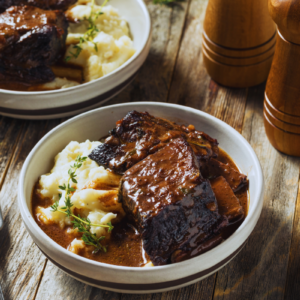
What you will find, though, is beef ribs. Beef ribs are incredible. The tender, delicious meat in between each rib (both full ribs and short ribs) is very flavorful and rich, but without cooking them the right way, they end up being a lot of work to handle.
We always love showing off our beef ribs to our customers, because they’re one area where Brazilian meats differ a lot from American meats. In America, when you get beef ribs, you’re generally getting something slow-braised or cooked to the point of falling off the bone, saturated in wood smoke like hickory or mesquite, and slathered in a sauce. Americans take great pride in their BBQ sauces, after all.
In Brazil, though, we love the meat for what it is, not for what it carries. The flavor of beef ribs is delicious, and those sauces cover it up! Some Brazilians will go so far as to call it a travesty. We won’t (every food culture is valid), but we still highly recommend giving the beef ribs a try.
See, when we cook beef ribs, they’re cooked slowly over the flame to render down that connective tissue. But, unlike American cooking, they’re still cooked on skewers, and they’re seasoned with little more than just sal grosso, the Brazilian coarse salt we use for churrasco.
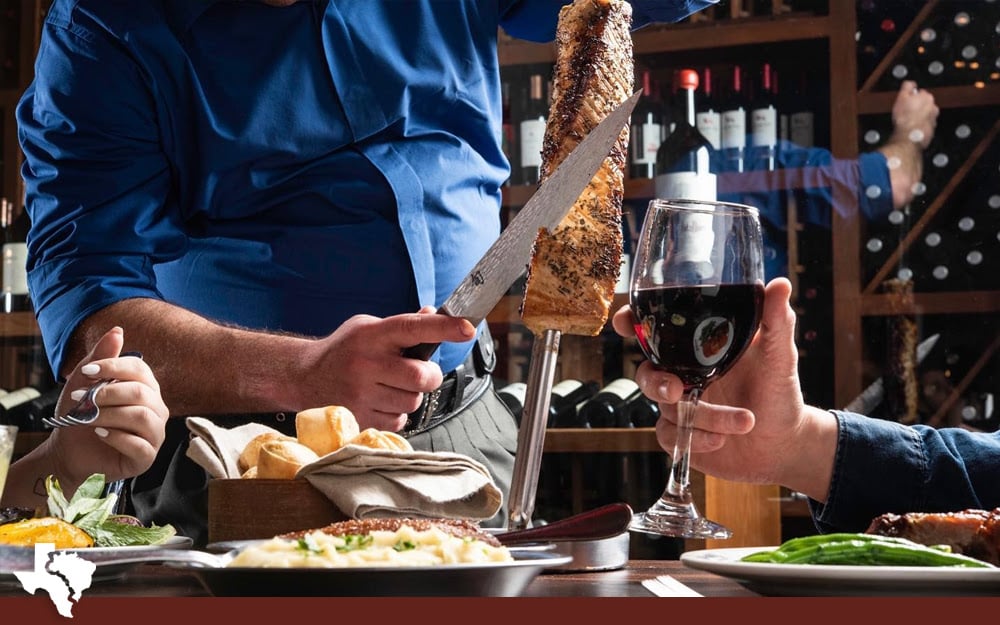
There are also bone-in cuts that go beyond the beef.
- Lamb. Lamb comes in two forms in our churrascarias, both of which have a bone featured prominently. The first is the small, almost lollipop-like lamb chops, small medallions of tasty and tender meat on a bone. The other is the much, much larger leg of lamb, carried on the single central bone, where slices can be cut off for diners, and the remainder returned for another round of cooking.
- Chicken. We actually offer chicken in both bone-in (Parmesan drumettes) and boneless (bacon-wrapped chicken breast) varieties. You’re probably familiar with chicken as much or more than anything else on our list, so there’s not much more to say about it, right?
- Pork. Much like beef ribs, we also offer pork ribs, though they do have a sauce. Like we said, it’s the beef we consider the star: the pork can enjoy the sauce all it likes.
See? Like we said up top, there can be a surprising amount of depth to these seemingly simple questions. Who among you knew that there was so much variety to the bone-in and boneless cuts of meat you can find at a churrascaria?
We’d love to show you first-hand, too. Find your nearest Texas de Brazil location and stop on in! We’re always ready to give you a taste of Brazilian cuisine without leaving the comfort zone of an American restaurant. You can book a reservation right here on our website, call ahead, or just stop in. Whatever you do, we look forward to seeing you!