
Why Do Brazilians Serve Orange Slices with Certain Dishes?
Healthy curiosity is a wonderful thing, and when you’re experiencing a new food culture for the first time, asking questions is how you learn.
One question we see a lot relating to Brazilian food is why it seems like there’s always an orange slice or two somewhere in the meal. Sometimes they seem like they’re everywhere (and sometimes they aren’t there, rare as it may be), but they’re certainly a lot more common than most American meals.
So, why do Brazilians serve oranges alongside certain dishes? Do they serve a purpose, or are they more of a garnish? The answer is both a little deeper than you might expect and nothing too unusual as far as ingredients go.
Table of Contents
Comparing Food Cultures
The first thing to remember is that there’s really no such thing as “Brazilians” in terms of some unified culture. Brazil is a huge country, nearly as large as the entire United States. People in the northeast have different traditions and food preferences compared to people in the west or further south. It’s a little like asking why Americans like okra so much.
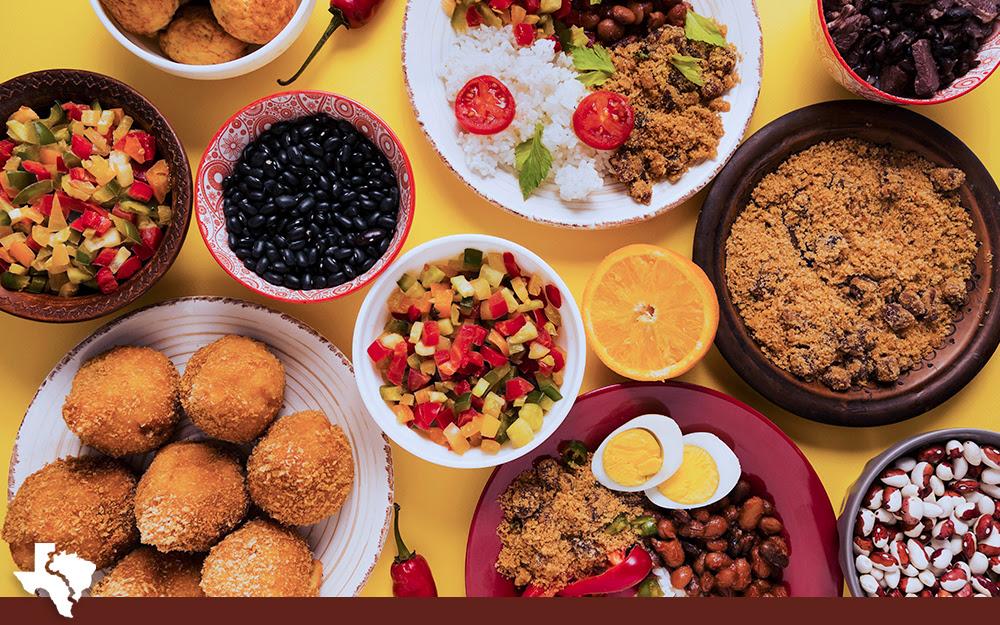
All of this is basically just a preamble and disclaimer. There’s a lot of variance throughout Brazil, and while we’re going to be talking in generalizations, there will always be counterexamples. Don’t stress too much about it, learn what you can, and enjoy the oranges when you’re given the opportunity.
After all, Brazil is the world’s leading producer of oranges, which means we have plenty to go around. And really, who could turn down a fresh tropical orange grown locally? Fresh tropical fruit is a delicacy that is hard to overstate.
Why Oranges?
Why not?
Oranges were first introduced to Brazil as far back as the 1500s, and spread rapidly throughout the northeast because the climate is very good for growing the citrus trees. Oranges are also a great fruit to mix with the other tropical staples native to Brazil, including passionfruit, papaya, and acai.
The orange trade has had some serious ups and downs throughout history, though. When they were introduced, they were quite popular, but they were mostly grown for local use, not regional export. Oranges also played a key role in fending off scurvy in sailors during this era.
One interesting fact is that oranges, as we know them in the United States, and oranges in Brazil are actually a bit different. See, there are three “core” citrus fruits: the True Mandarin, the Citron, and the Pomelo. Every other citrus, including oranges, lemons, and limes, is a crossbreed of these with varying amounts of each. Grapefruits are about 50/50 mandarin and pomelo; lemons are something like 50% citron, 25% mandarin, and 25% pomelo.
Different varieties of oranges are also different proportions of these other fruits, and the varieties popular in different regions are actually different kinds of fruit. The navel orange we find so popular in America was actually a mutation originally found in Brazil. But, they proved to be less useful for juicing than other species, which is why Brazil now grows mostly varieties like Pera and Natal. They’re still oranges, so they won’t be too unfamiliar when you get right down to it, but the differences can be interesting.
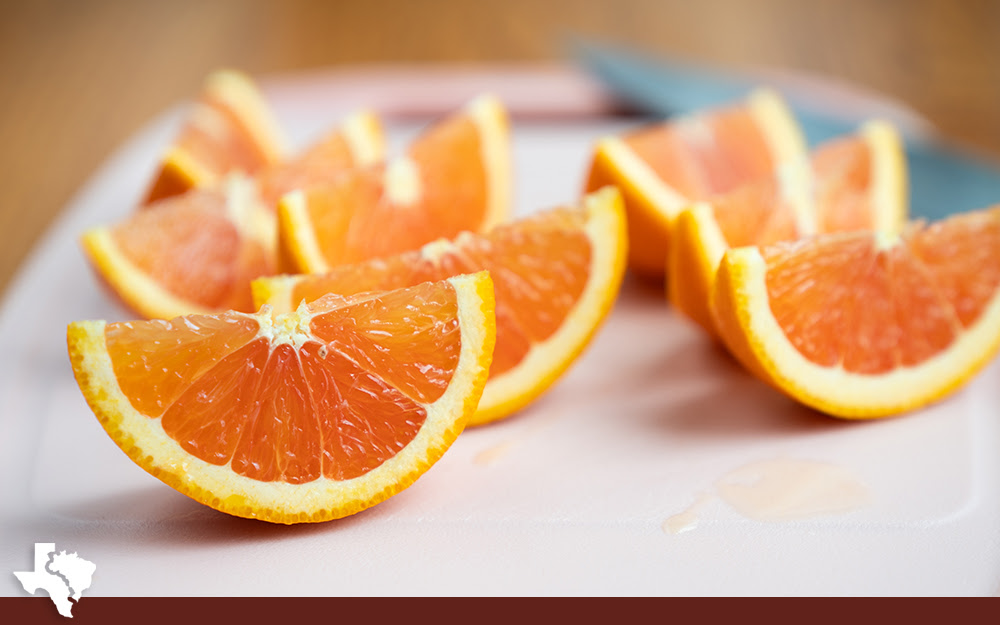
In the 70s, oranges exploded in popularity, and Brazil started investing heavily in citrus orchards for export. In particular, orange juice became a prime export, something that still holds true today. In fact, 80% of Brazil’s oranges are pressed into juice today, and a lot of that juice is exported.
In the 90s, various factors, including international demand, caused a drop in prices for oranges, and a lot of orange orchards failed. The ones that carried through to today are some of the biggest companies still growing fruit.
Fun fact! Brazilian oranges, particularly those grown further to the north, are actually mostly green, or a green-yellow or pale yellow color. This is because the vibrant orange color requires the chlorophyll in the rind to break down, and for that to happen, they need to experience colder temperatures or even a frost. Oranges grown further south in Brazil (or further north, in North America) get that orange color because of the temperature swings, but the consistently tropical weather in northern Brazil inhibits it.
For the most part, the popularity of oranges simply has to do with the fact that oranges taste great. A bright citrus tang is a good counterbalance to a lot of the heavier foods Brazilians eat, and orange lends itself well to both sweet and savory dishes, both of which are staples throughout Brazil.
What’s interesting is that the most common ways to enjoy oranges are very different in Brazil compared to places like the United States. Up here in the northern hemisphere, you usually cut an orange into wedges and eat the fruit, or peel it and separate the natural wedges and eat them whole. In Brazil, though, they’re viewed sort of like portable drinks. People will cut little lids off the top, run a knife through the inside to pop the flesh, and suck the juice out of them. They’re like natural little juice boxes!
Of course, oranges, either as juice or as slices of the fruit itself, can be ingredients in other dishes as well. That’s primarily what we’re here to talk about today.
What Dishes Have Oranges in Brazil?
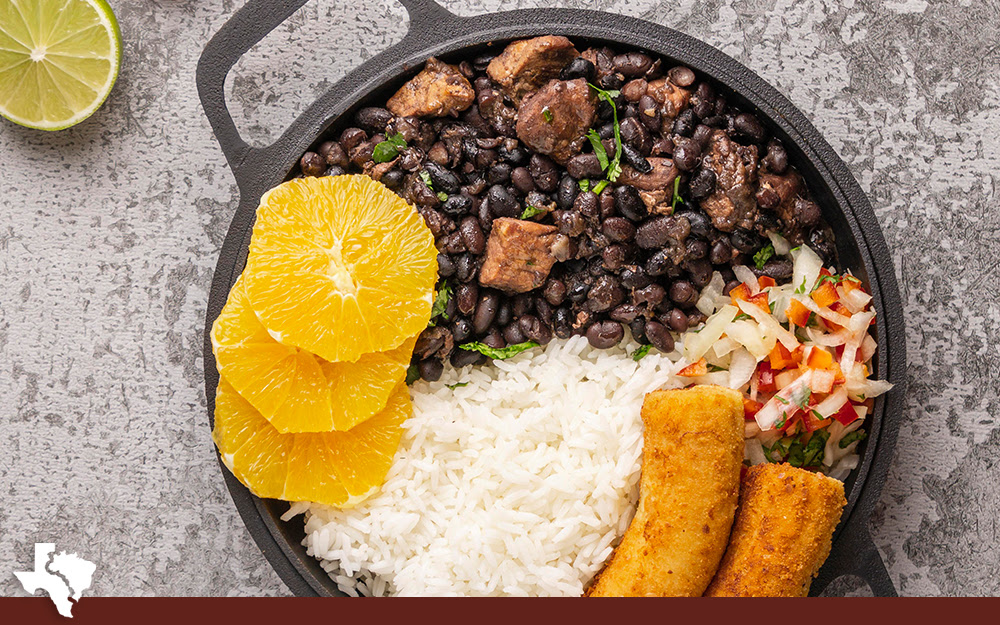
Oranges can be found in a lot of different dishes, but one of the most common has to be feijoada. Feijoada is Brazil’s national dish for a reason, after all.
Feijoada is a hearty, heavy stew. It’s made with black beans flavored with salty smoked meats, topped with farofa, and usually served alongside add-ons like sauteed kale and orange slices.
Feijoada sometimes even has orange in the dish itself, used as a light marinade or added ingredient to the meats. You don’t really taste it in the finished product, but the acidity helps brighten up some of the other flavors, slightly tenderize the smoked and dried meats, and adds some complexity to other flavors. If you’re served two batches of feijoada, one with orange and one without, chances are you’ll be able to tell the difference. Would you be able to tell that orange was used? Probably not.
When served alongside a dish like feijoada, orange can serve a few purposes. It’s actually somewhat similar to pineapple, though not quite the same, since oranges don’t have the same enzymes in them.
Oranges are a common addition to breakfast food, both as fruit to eat and as juice to drink. Cocktails also frequently feature orange as a flavor, including the ever-popular caipirinha.
Though not exactly served alongside, Brazil also has a pretty famous orange cake made primarily with oranges. It’s delicious and definitely worth a try.
Orange juice is also, as mentioned, a primary export of Brazil. That means it’s cheap and plentiful, so it’s widely available basically everywhere. Many Brazilian restaurants offer orange juice as a cheap beverage option, and it’s a very popular choice.
Aromatic and Flavor Depth
One of the most obvious reasons why oranges are served alongside feijoada and similar dishes is to add a bit of aromatic complexity to the assembly. Even if you don’t eat the orange, the smell will be present. Cutting an orange releases the essential oils in the rind, as well as the juice from the cut flesh. Your nose will pick up on that, even if you don’t consciously place it as a strong orange smell. That perky citrus scent can add a lot of appeal to a dish.
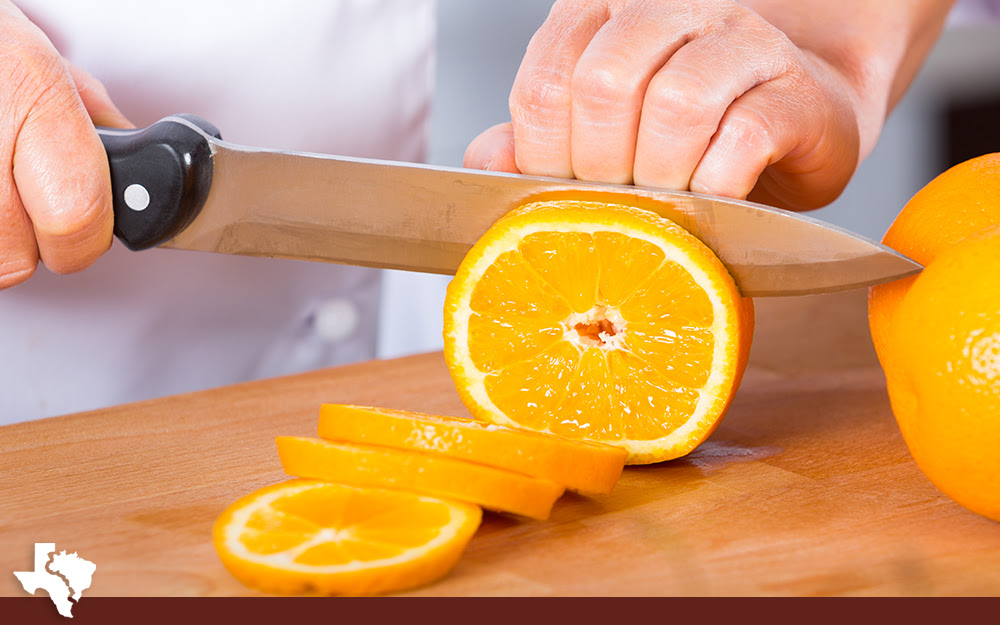
Orange can also go well with spice. While spice isn’t super popular in Brazil, the Bahia region in the northeast is the center of spicy foods largely imported from Northern Africa, and it’s also prime citrus-growing terrain. It’s no surprise that orange-and-spice dishes aren’t uncommon.
Palate Cleansing
Another benefit of orange, alongside a rich, heavy dish like feijoada, is as a palate cleanser. When you eat something that heavy, it “sticks to your ribs,” as they say. It can leave you feeling full, and leave the inside of your mouth, your nasal cavities, and the back of your throat all thoroughly saturated with the flavors of that dish.
If you then eat an orange slice, you break through a lot of that. The aroma of the orange goes up the nasal cavities and freshens them up. The acidity and tang of the juice cleans the mouth and throat, to prime you for further food.
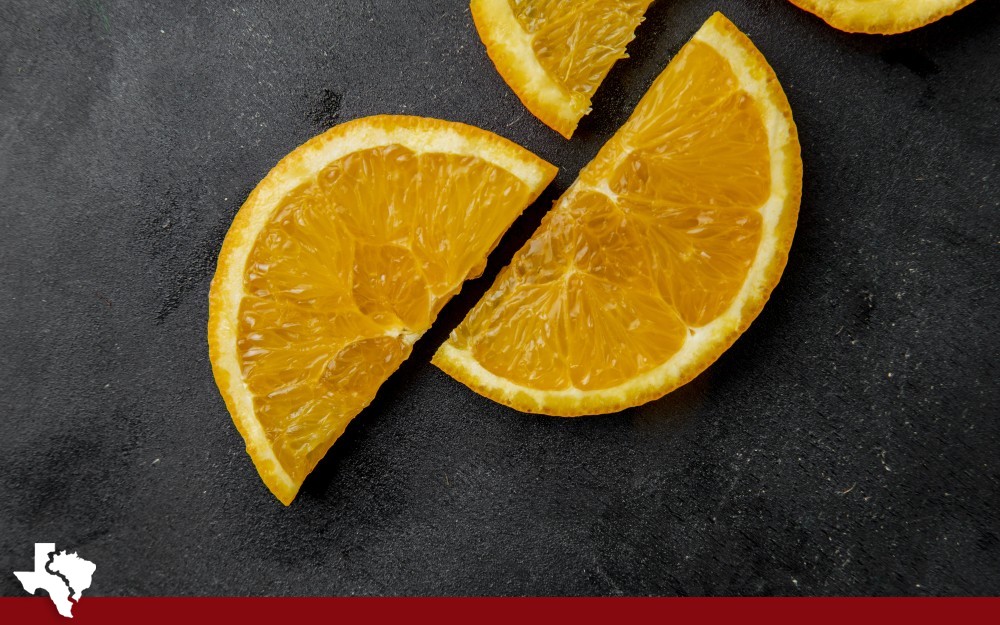
Since Brazilian meals ( especially lunch) tend to be the heaviest meals, being able to brighten up between foods and pack in more nutrition to finish off the day is beneficial.
This isn’t just mental, either. The acidity of the orange slices can strip and break down some of the lingering fats from heavier meat-centric dishes like feijoada or churrasco, making you feel less worn down by the act of eating it all. It’s similar in a sense to things like the pickled ginger served alongside many Asian meals. For that matter, Chinese food also often comes with orange wedges for the same purposes.
Digestive Aid
Another reason you might see oranges served alongside meals, especially meaty and fatty meals, is that they can serve as a digestive aid.
This probably started out as much as a folk remedy as anything. An orange with a heavy meal can aid in feeling good after the meal, and when people noticed that, it started to become more popular to serve an orange alongside those kinds of foods.

Scientific study actually backs this up. Oranges have a lot of dietary fiber in them, which helps with nutrient absorption, so you get more out of your food. The acid content can also aid in digestion by breaking down fats and proteins faster than your stomach acid alone.
Are the Oranges Mandatory for Enjoying Brazilian Food?
So, if you’re handed a Brazilian dish with oranges, do you really have to eat them to get the most out of the food? If they give you a dish that doesn’t have orange, should you ask for some?
It’s truly up to you. Brazilian food is broad and varied, and only some of it has oranges as a critical component. Even the feijoada, though it has a traditional set of orange slices alongside it, isn’t going to lose anything significant if you don’t have them. The bulk of the meal is there, with or without the orange.
If you don’t like oranges, feel free to skip them. If you don’t think you need the palate cleanser, don’t worry about it. If oranges are too acidic and upset your stomach, you aren’t going to miss out by not giving yourself a bellyache when you eat.
The key to Brazilian food, like the key to food everywhere around the world, is to enjoy it as much as you can. Try new things, experience new cultures, but don’t force yourself to do something you definitely don’t like and can’t stand just because it’s the way it’s done. There’s a balance to be found.
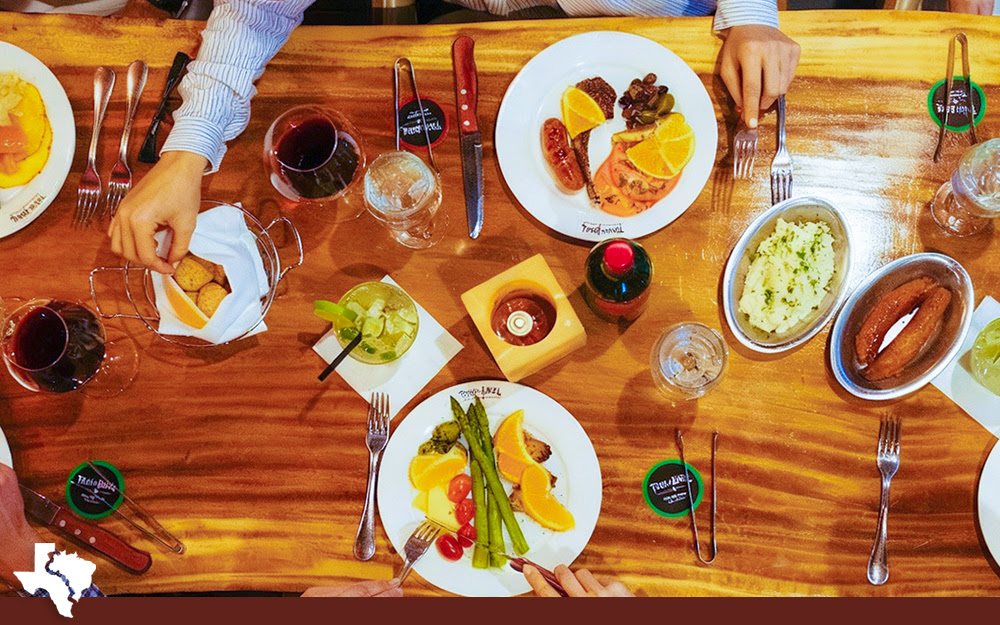
If you want to experience Brazilian food culture in a unique way, without stepping too far outside of your comfort zone, come on down to your nearest Texas de Brazil. We’ve worked hard to bring traditional Brazilian food, like churrasco, feijoada, farofa, pao de queijo, and more, to American audiences. We’re certain that you’ll love what you have, but you don’t have to go on a deep dive into Brazilian food culture just to try it out.
All you need to do is stop by. You can call ahead for a reservation (or make one directly from our website), or just swing in when we’re open. We do highly recommend joining our eClub for exclusive deals to make your trip even more worthwhile, too.
Enjoy some delicious grilled meats, try out the black bean stew, experience what all the fuss is about with farofa, and yes, enjoy a slice or two of orange in between plates. We’re sure you’ll love it!