
What Type of Cut of Meat is Bife Da Vazia in Brazil?
When you hear about Brazilian cuts of meat, the picanha is the star of the show. It’s one of the most unique cuts of meat we have in Brazil, one not generally cut and served by butchers around the world, so it’s something truly special and unique to our culture.
Other cuts of meat tend to be more familiar, though the names you know them by can be very different. One such cut is bife da vazia, a common cut with an uncommon name. What is it, why is it popular, and what can you do with it? Let’s explore the world of Brazilian Bife!
Table of Contents
What does Bife da Vazia Mean?
The word “bife” in Portuguese is exactly what it sounds like: beef. Meanwhile, “da vazia” refers to the specific cut. A direct translation is “of the void”, but that doesn’t really help anything. A colloquial translation is more helpful: flank steak.
What cut of Meat is Bife da Vazia?
It’s flank! But there’s a bit of confusion here.
Generally speaking, the bife da vazia is a cut of meat we in America know as the flank steak. But the meanings aren’t always accurate, and there’s some confusion between different cuts.
Specifically, some people get this cut confused with another cut, which is similar in texture and presentation but from a different area of the cow, and this confusion has propagated throughout a number of resources online.
That is, some people confuse flank steak and flap steak. Flap steak, the cut known as fraldinha in Brazil, is actually from a little higher up on the cow in the bottom loin. Bife da vazia, meanwhile, is from lower down below the short loin and near the plate.
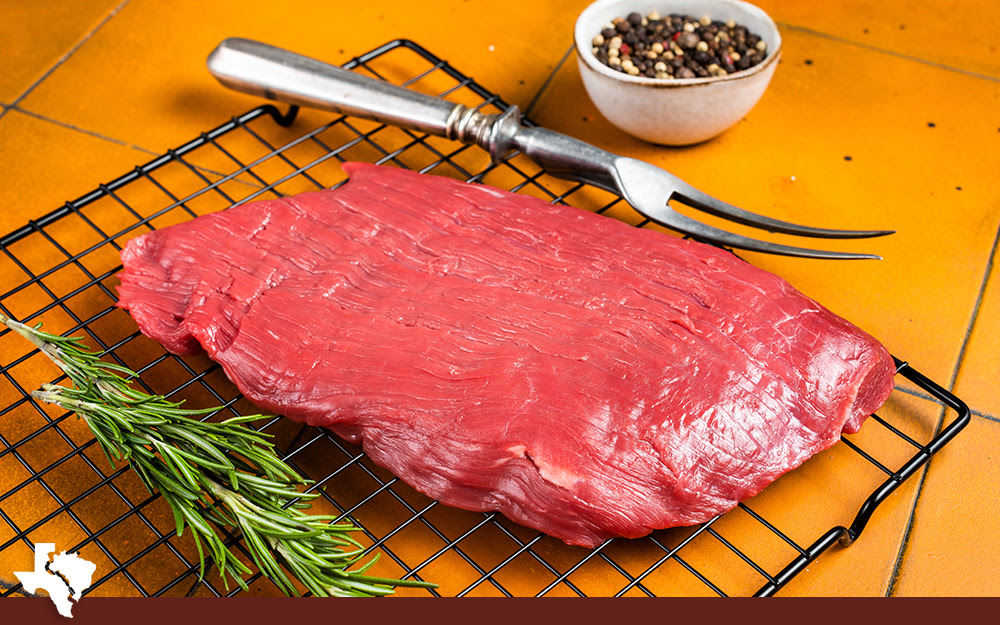
Sometimes you’ll see references to bife da vazia as a cut of sirloin, but this is incorrect. Though the end result can be similar, bife da vazia is a different cut from the sirloin-region fraldinha.
You might also see references to bife de vazia or bife do vazio. These are all the same thing; the specific vowel used doesn’t really matter in this case, it’s just a matter of English not quite having the right letters to convey the specific vowel sound the Portuguese uses.
Name confusion aside, bife da vazia by any moniker is a great cut, versatile and full of flavor, and a favorite for a handful of delicious purposes.
Is Bife da Vazia the Same as Picanha?
Not at all! Picanha is from the top of the sirloin (and can sometimes be found under the name “top sirloin cap”), and it’s very different. The similarity comes in the fact that both are Brazilian names for cuts of meat, and that they’re popular in Brazilian discussions of meat and grilling, but that’s about it.

The truth is, bife da vazia and picanha are extremely different in texture, flavor, and culinary use. Bife da vazia is lean and easy to overcook; picanha is much richer, thicker, and fattier. They’re both incredible in their own ways, so make sure to try them both!
Is Bife da Vazia the Same as Sirloin?
Nope! Bife da vazia is close to the sirloin, but it’s not the same region of meat. Again, though, the confusion tends to come from conflation between flank steak and flap steak, and their similarities.

Flap steak is also from relatively low on the cow, the lower end of the sirloin, and it’s also a relatively lean cut with lengthy muscle fibers that need to be cut properly for the tenderest meal. But they do have different tastes and textures, something you can really appreciate when you enjoy Brazilian churrasco and have no sauces or spices coming between you and the meat itself.
What Are the Main Attributes of Bife da Vazia?
What makes bife da vazia stand out from other cuts on the cow?
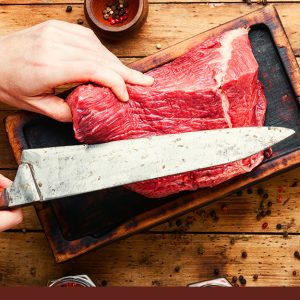
Bife da vazia, or flank steak, comes from the flank of the cow. The muscles here are long and large, and very well-exercised compared to some of the other cuts of meat you may be more familiar with.
What this means is you have a cut that is very distinctive.
- It’s very broad, since it runs a good length of the cow.
- It’s relatively thin, since it isn’t a large bundle of muscle.
- The muscle fibers tend to be very long, giving the meat a long horizontal grain.
- The well-worked muscle leaves no room for fat, so it’s a very lean cut. It lacks both marbling and a fat cap like you see with other cuts.
There are a couple of key attributes here that will inform how you cook and use bife da vazia in a recipe.
The first is the leanness of the cut. This gives it a fairly strong beef flavor, without the richness or fattiness of the more marbled cuts. This tends to be a more meaty kind of flavor, possibly with notes of nuttiness or earthiness, and occasionally some gaminess depending on the specific animal it was cut from.
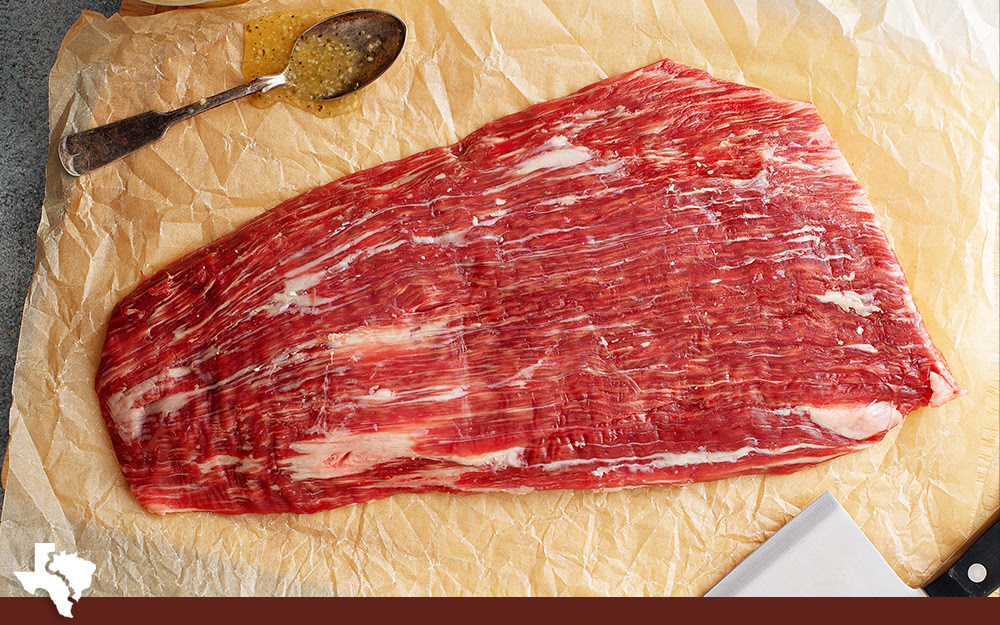
Leanness also means it’s a very easy cut to dry out, since there’s very little fat to render and saturate the meat. That usually means you risk drying it out if you overcook it, so you either need to cook it quickly over high heat to retain the juices or you need to use added liquid from some source, like a sauce, to balance the dryness.
We’ll give you a recipe later, but we often recommend a marinade to infuse the meat with more flavor and more moisture before cooking it.
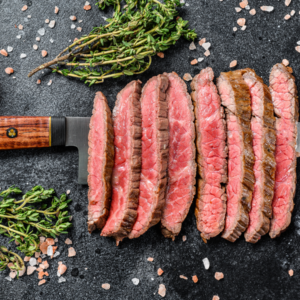
The third critical attribute of bife da vazia is the long-grain nature of the cut. Bife da vazia is a cut that absolutely needs to be cut contrafile; that is, against the grain.
If you’ve ever had a steak where the bites you took were tough and stringy, that’s meat that was cut along the grain. The grain is the muscle fibers, which can be tougher and harder to bite through. Cutting against the grain means you have a bunch of pre-cut stacks of fibers that are easier to chew through.
Think of it like trying to bite through a plastic straw, versus having to separate a bunch of straws held together; it’s easier to pull the straws apart along the grain than it is to chew through the grain. You can see it nicely illustrated here.
What this means is that you are pretty much never going to get a bife da vazia steak handed to you on a plate. Instead, the cut is most commonly either cooked as a whole roast and sliced against the grain into thin slices to serve, or it’s cut into those thin slices before cooking and made into something like carne asada. Which, yes, is more Mexican than Brazilian, but you get the idea.
All of this means that bife da vazia is best used for something like a stir fry or as part of a large recipe for something like tacos or fajitas.
How is Bife da Vazia Cooked in Brazil?
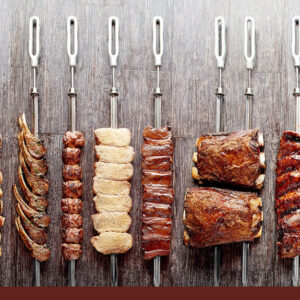
In Brazil, you can find bife da vazia in a lot of different ways, but two of them stand out. One is simple: the churrasco grilling method we use for all of our meats at Texas de Brazil. The other is a more traditional home-cooked meat, where it’s marinated, cooked over a lower heat, and grilled.
Authentic Churrasco Flank Steak
If you have access to a source of high, direct heat, you can replicate the churrasco method at home. You need that high heat, which is usually more than a simple grill can handle. You also need skewers.
The seasoning for churrasco is very simple: it’s salt. Salt is a flavor enhancer and draws out more of the natural beef flavor of the cut, while not lingering too much and leaving the meat unpleasant. In Brazil, we use sal grosso, a large rock salt, which can dissolve and infuse the meat but still be somewhat scraped off later.
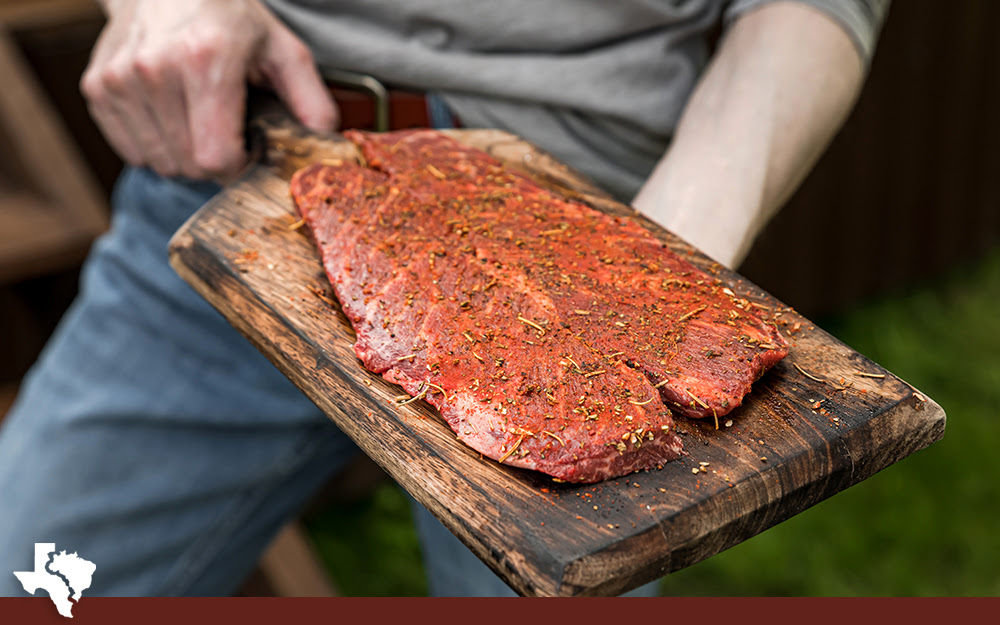
To cook churrasco, skewer the meat and coat it with salt. Then, over a high flame, cook it. You can raise and lower the skewers to get the heat just right; you’re looking for just that hint of char, while leaving the middle a nice medium-rare. Be careful not to over-cook it, or it can be left dry and tough!
Once the meat is done, you can slice (against the grain, always!) pieces of it off to enjoy. While Brazilian meats usually come with some kind of green sauce like chimichurri, make sure to try it without first, so you can experience the bold beef flavors without adulteration.
Brazilian Marinated Bife da Vazia with Chimichurri
The second recipe is a bit more intensive, and you’ll need a grill, a food processor, and plenty of ingredients. You can also read a more complete rundown on this recipe here.
The keys to this recipe are all in the marinade. The oil gives it a good base and helps infuse the flavors of the spices into the meat, while providing a bit more fattiness to it. The soy helps bring some umami and, critically, some acidic pH to help break down the meat and make it a little more tender.
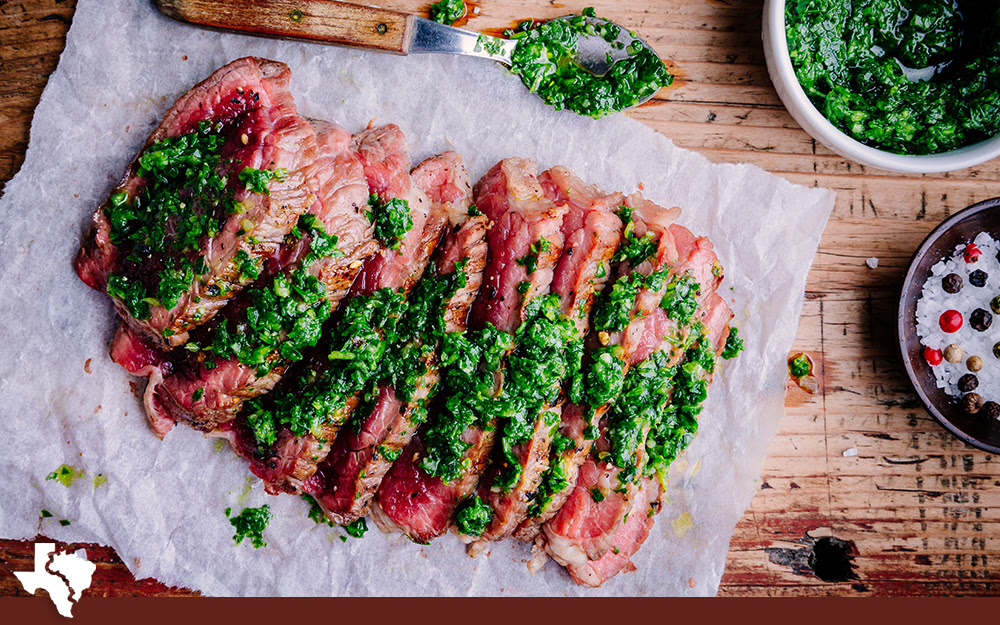
For the chimichurri, you need:
- 1 cup olive oil
- ¼ cup lemon juice (or red wine vinegar)
- 2 tablespoons minced garlic
- ½ cup fresh parsley
- ¼ cup fresh cilantro (optional if you have the anti-cilantro gene)
- 1 tablespoon oregano
- 1 tablespoon red pepper flakes (also optional if you prefer something without heat)
- Salt and pepper, to taste.
Pulse the garlic into a mince if you don’t have minced garlic handy, then add the herbs and pulse further to a uniform consistency. Add in the rest of the ingredients and pulse a few more times to combine. Try to limit over-blending here so you have a bit of texture to the sauce, rather than a fine paste.
For the steak marinade, you need:
- ¼ cup olive oil
- 2 tablespoons soy sauce
- 1 tablespoon minced garlic
- 2 teaspoons paprika
- ½ teaspoon salt
- 2/4 teaspoon cumin
- 1 teaspoon oregano
- 2 tablespoons brown sugar (honey is also an option)
Whisk all of these ingredients together and pour into a shallow dish or into a sealable bag. Add the flank steak (this is enough marinade for about 1-2 pounds of meat), turn to coat, and let it sit. Marinate for a minimum of 30 minutes, but ideally at least 2-3 hours.
Once marinated, extract the steak and cook it over medium-high heat in a pan of your choice. A grill pan gives you nice grill ridges, while a frying pan gives you a nicer crust. You can also just grill it directly, of course. Aim for medium-rare, around 130-135 degrees internal, to avoid over-cooking.
Finally, slice against the grain and serve with the sauce. Enjoy!
Experience Bife da Vazia at Texas de Brazil
Though we don’t call it bife da vazia on our menu (flank steak is more recognizable), you can experience authentic Brazilian churrasco beef at any of our global locations. It might not be as popular as picanha, but it’s still one of our top meats, and it’s one you’re sure to enjoy.

If you don’t have a local Texas de Brazil, or you don’t want to go out when you have a perfectly good grill at home, we can also help there as well. You can have us cater an event and bring the flavors of Brazilian churrasco right to you! You can also buy Brazilian cuts like picanha from our butcher shop directly. There’s no bife da vazia in our shop, though, since you’ll be able to find that at any local butcher or meat market, pretty much anywhere beef is sold.
If you’re planning to stop in, don’t forget to sign up for our eClub ahead of time. Not only do you get an introductory offer for joining, but we’ll also give you special deals and access to club-only promotions, and it’s all completely free.
We’re looking forward to sharing the best flavors of Brazil with you, so stop in as soon as you can!