
Why is Cassava Flour Used in Brazilian Food?
When you visit a Brazilian restaurant for the first time, a lot of what’s on the menu is probably going to be at least somewhat familiar. Sure, you might not know exactly what picanha is, but you know beef is beef. The salad area is full of favorites from potato salad and ciabatta bread to goat cheese terrine and bacon bits.
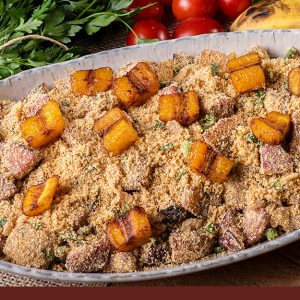
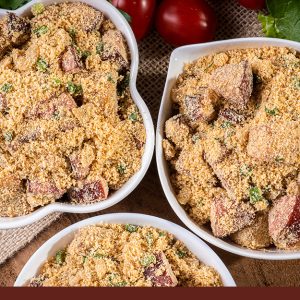
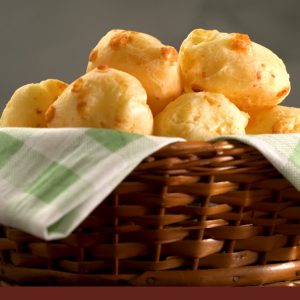
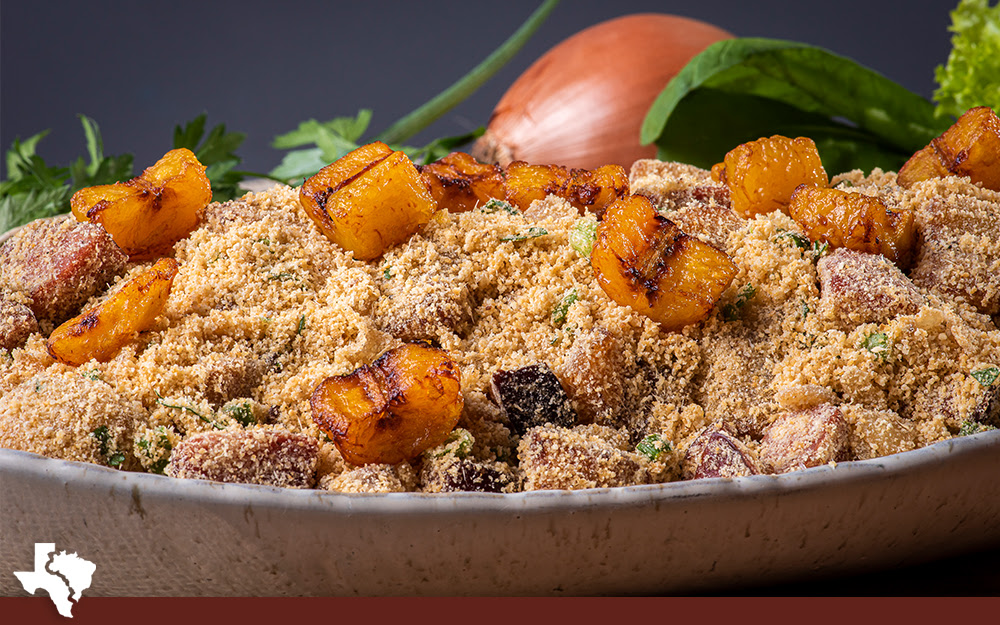
Now and then, though, you encounter something new. Something like the ever-popular Brazilian cheese bread, pao de queijo, or the staple topping you find everywhere, farofa.
Both of these have something in common. An ingredient you don’t often find in America, and when you do, it’s in a very different form. Something we call a staple in Brazil. That something is cassava flour.
Why do we use cassava flour so much in Brazilian food? Why is it so popular in dishes like farofa and as an ingredient in other foods? The answer may go deeper than you think. There’s a reason why it’s the third-most widely consumed carbohydrate in the tropics, after rice and corn.
Table of Contents
What is Cassava Flour?
Cassava flour is a flour made from the root of the cassava plant.
The cassava plant is known by many names. Scientifically, it’s Manihot esculenta, a species in the Euphorbiaceae family, more commonly known as spurges. Common names for cassava that you might also see in ingredients lists or on store shelves include manioc and yuca.
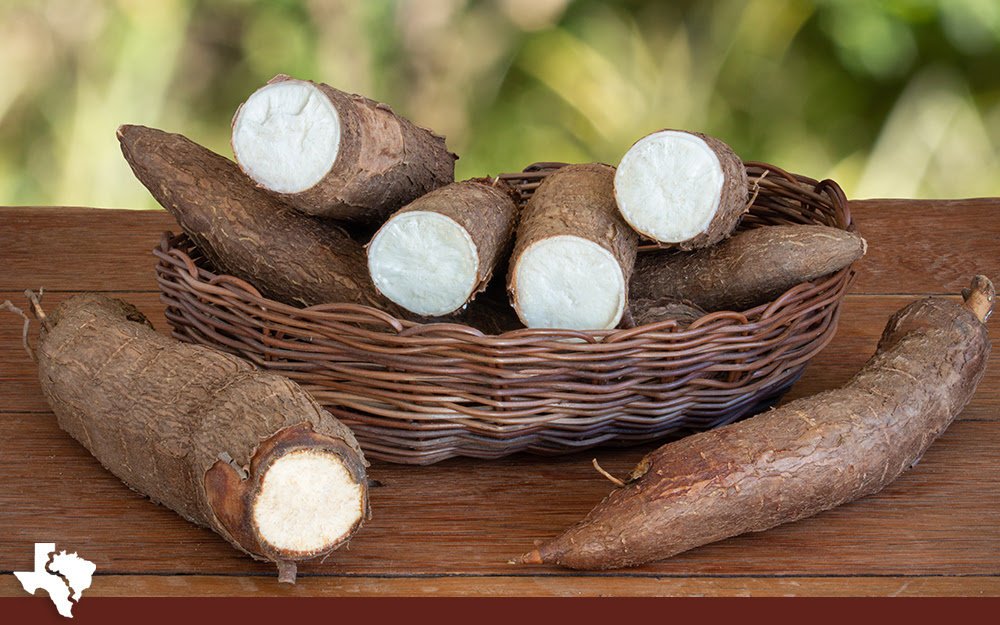
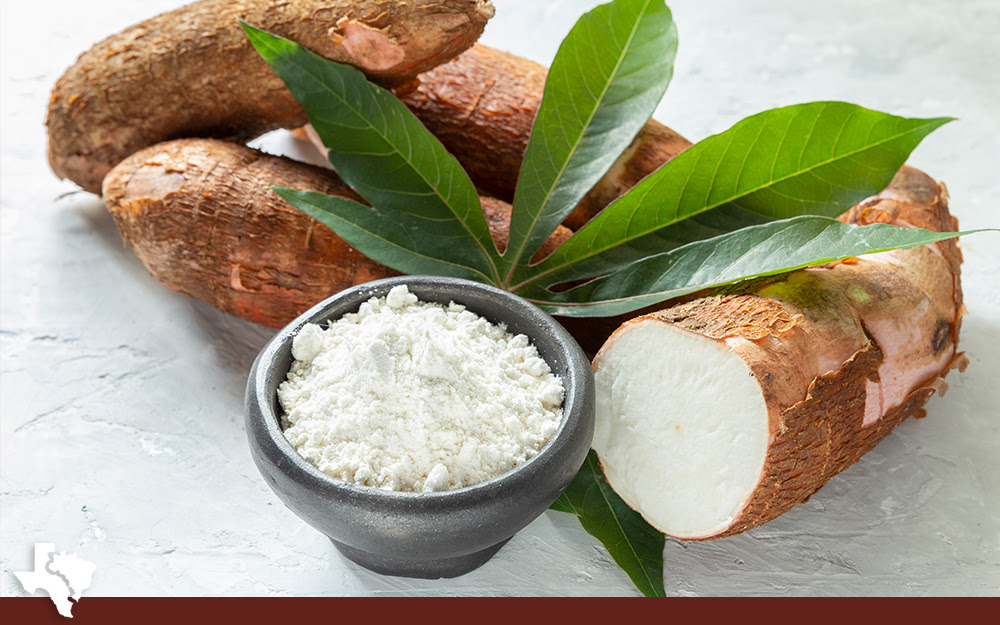
The plant itself isn’t terribly noteworthy except for the long, tuberous root called a storage root. This root is similar to potatoes and other large underground roots, with a brown rind and a starchy white or yellow flesh inside. Individual roots can be as much as four inches wide, tapering like a carrot, and as much as a foot long.
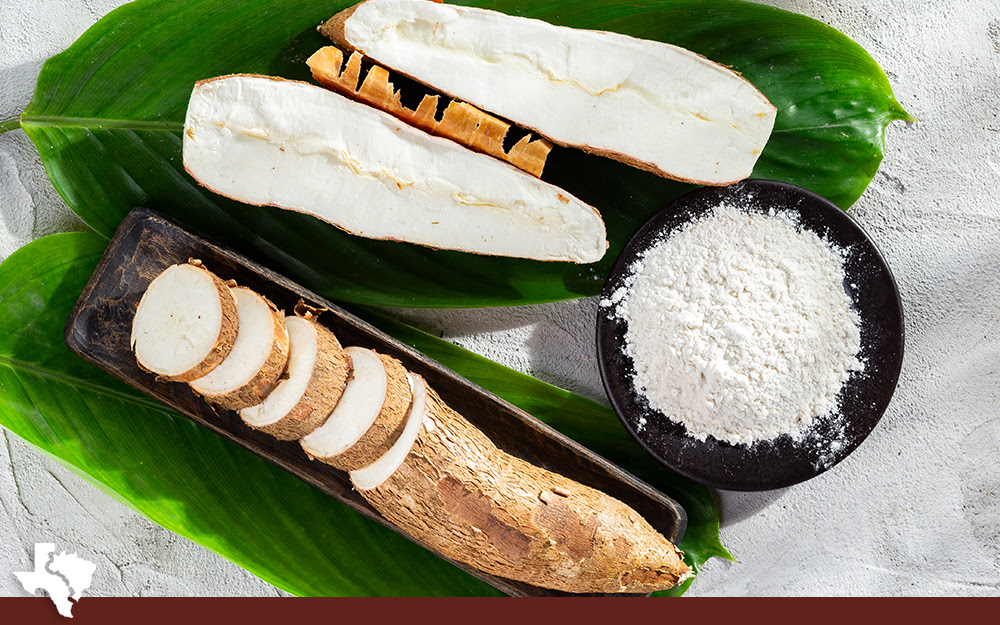
That root is harvested and processed using methods that were developed thousands of years ago to create cassava starch or cassava flour. It can also be processed in many other ways and is a big-time staple in South America.
One interesting fact is that spurges in general are pretty inedible (the name comes from the same root as “to purge” since some varieties were used medicinally to induce vomiting), and cassava is almost no different. Cassava actually contains toxins that can react and produce cyanide. Fortunately, both the cultivation of sweet cassava (which has much less of those molecules) and the processing methods (which remove them) make cassava wholly safe to eat.
How is Cassava Flour Made?
The way cassava flour is made is largely the same as it has been throughout history, though industrialized processes have enabled much larger and faster means of production.
The first step is the harvesting of the cassava roots. The roots are dug up, and the storage roots are harvested. The rest of the plant can be left alone, though, and will grow more storage roots over time, so cassava is a very readily renewable food source.
The tubers, when harvested, need to be processed. They’re first cleaned to get dirt off them (just like you would with potatoes), and the outer rinds are removed. This leaves you with clean, white, starchy flesh, ready to be processed. These roots are soaked, which helps remove the toxic molecules still in them and prevents premature spoilage.
The cassava is then processed, usually by grating, grinding, chipping, or otherwise pulping it. This pulp is then pressed to remove as much moisture as possible, and then it’s left to dry. Traditionally, this would be done using stands where it would be exposed to the sun and the wind, to carry moisture away. More modern processing can use dehydrators and ovens to dry it much faster.
Often, the liquid pressed out of the cassava is also collected. The near-microscopic particles of starch that are carried out with the liquid are allowed to settle in a vessel, and the remaining liquid is poured off. That remaining starch is also collected and sold as tapioca starch. That’s the same tapioca used for food products like tapioca sticks and boba pearls.
Finally, the remaining cassava is processed into flour in one of a few ways. Because, fun fact, there are several different kinds of cassava flour!
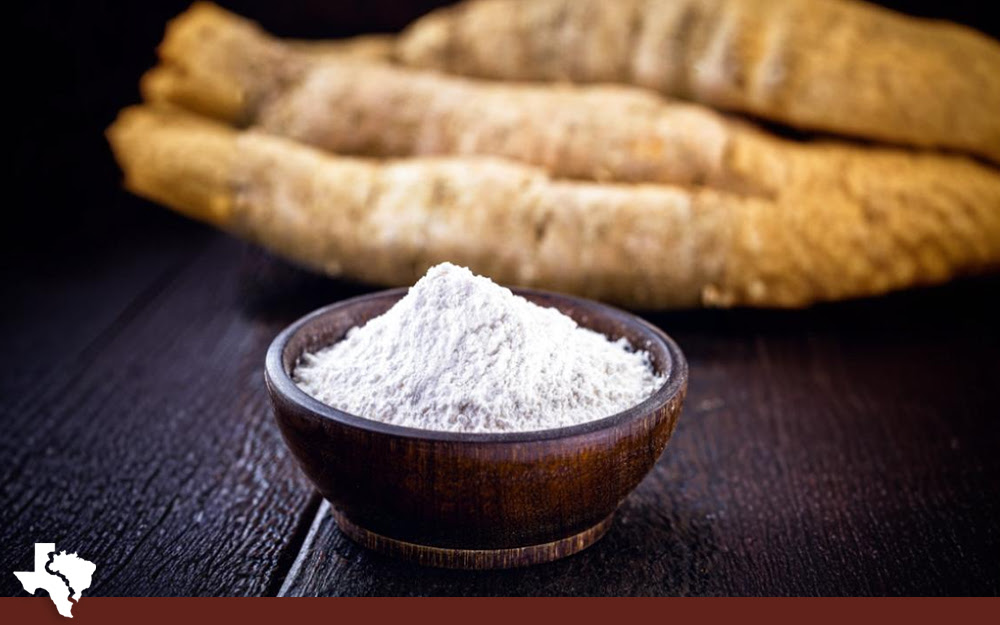
First of all, we lightly omitted one detail above: some kinds of cassava flour don’t peel the cassava first. By leaving the outer rind on, certain nutrients are kept in the cassava, and the final texture is a little coarser and richer in fiber. This is typically called farinha de mandioca, or plain cassava flour. It’s also the key to most authentic farofa recipes!
Then there are two kinds of cassava flour made out of the peeled cassava. These are also commonly known as cassava starch, rather than cassava flour. Or, in Brazilian Portuguese, as Povilho Doce and Povilho Azedo. These are used, individually or in a mixture, in baked goods such as pao de queijo.
Povilho Doce, or sweet cassava flour, is milled into flour immediately when it’s done being dried. The end result is a starchy, sweet, mild-tasting flour that is ideal for baked goods with a soft, fluffy texture.
Povilho Azedo, or sour cassava flour, has one additional step: it’s actually fermented a little before it’s processed. This fermentation process leaves you with something similar to how milk is different from kefir: a slightly tangy, slightly sour, molecularly different kind of material. In the case of cassava, this leaves the flour with a more potent flavor and a more elastic structure, which gives baked goods a chewier, stretchier kind of bite.
Why is Cassava Flour so Popular in Brazil?
Simply put, it’s a staple.
Cassava is native to Brazil, but its versatility, ability to grow quickly in a lot of different kinds of soil, and hardiness against drought have made it a popular cultivar throughout Asia and northern Africa as well.

Beyond that, cassava can be used in a whole lot of different ways. The flour is a popular and common option, but it can also be used for a ton of other foods.
- In Cuba, it’s boiled and topped with onions and garlic-infused olive oil. It can also be made into something similar to French fries.
- In Haiti, bread made with cassava is topped with peanut butter or milk for a sweet treat.
- In the Dominican Republic, cassava is grated and shaped into a croquette, stuffed with meat or cheese, and fried. It’s also a main ingredient in a popular stew known as Sancocho.
- In Puerto Rico, it’s ground into a paste and used as an ingredient in dishes similar to the Mexican tamale.
- In El Salvador, cassava is fried and served with a topping similar to cole slaw and pork rinds.
In Brazil, in addition to classics like farofa and pao de queijo, cassava is also fried and salted as a fry-like snack, infused into soups and stews to thicken and add heartiness to a meal, and even fried up into something similar to a tortilla and topped with all manner of ingredients.
There’s even a traditional dessert using tapioca pearls cooked with cinnamon and cloves in red wine, and served cold; one of the many sweet treats Brazilians absolutely adore.
And all of that is just food! Cassava is also used in a lot of other ways. It has uses in pharmaceuticals, in paper manufacturing, and even as an ingredient in biodegradable plastic alternatives. It’s used in bioethanol production and as animal feed as well. It truly is an immensely flexible plant.
A Look at the History of Cassava
A big part of why cassava is so popular in Brazil is because it’s native to Brazil. The first examples of domesticated cassava come from around 10,000 years ago, and by 6,600 years ago, it was widely spread throughout the Caribbean, the Gulf of Mexico, and throughout South America.
Deliberately cultivated cassava is at least 1,400 years old, with evidence from Mayan archaeological sites pointing to its use in El Salvador. It’s likely that it has been cultivated even longer down in Brazil itself. It’s even commonly portrayed in art, especially by the indigenous Moche people.
During the colonial era, occupiers from Spain didn’t like cassava, viewing it as potentially dangerous and not nutritious. This is when wheat, in particular, was largely imported. Nevertheless, cassava consumption continued, both because imports of wheat were expensive and unavailable to Brazilian natives (and slaves), and because traditions carry forward regardless.
Really, it’s no wonder why it’s so prominent throughout the region. It’s readily available, it’s renewable, it’s nutritious, and it’s cheap. What more could you ask for?
Fun fact: despite its origins and popularity in Brazil, the leader of cassava production globally is actually Nigeria, where conditions make it an extremely viable crop. Nigeria produces around 18% of the world’s total cassava.
Does Cassava Flour Have Health Benefits?
The answer here depends on your perspective.
Is cassava a superfood? Hardly. 100 grams of cassava is made up of 38 grams of carbohydrates and 60 grams of water, with the rest made up of dietary fiber and sugars, with only the barest hint of protein and fat. It has very little in the way of micronutrients beyond a reasonable amount of vitamin C.
Cassava is a staple carbohydrate. Since carbs are a key part of the diet necessary to live, they are a critical element of the diets of cultures stretching back millennia.
Despite that, there are some benefits to cassava as far as food goes.
- It’s low in allergens. It’s quite rare for anyone to be allergic to cassava, and when they are, it’s largely because of a molecular similarity between cassava and latex, so it can trigger latex allergies.
- It serves the purpose of a flour in baking, but unlike wheat flour, it’s gluten-free. This is excellent for people who need to avoid gluten for one reason or another, including intolerance and celiac disease.
- The starch in cassava is a prebiotic, which means it feeds the good bacteria present in the gut, while helping starve out the bad bacteria that cause metabolic problems and inflammation.
You aren’t going to be adding a spoonful of cassava flour to a superfood smoothie (unless you want it for the texture), but that’s okay. The bread you make with it, and the other recipes you can make, are an excellent trade-off.
Using Cassava Flour
Interested in trying out cassava flour for yourself? Great! You have a lot of options.
First of all, you can try your hand at making Brazilian staples like farofa and pao de queijo. As some of the most popular ways to use cassava, they’re delicious, relatively easy to make, and a great way to experience Brazilian food culture.
You can also experiment with using cassava flour as a replacement for wheat flour in any baking recipe you like. It will leave you with a different texture, for sure (something a little chewier, probably), but there’s nothing wrong with that. Start by replacing 1 cup of flour with about 3/4ths of a cup of cassava flour. Cassava flour absorbs more moisture than wheat flour, and ends up denser, so if you were to 1:1 replace it, you’d end up with a much heavier end result.
You can even try your hand at making cassava flour at home! Then you’re really getting into it.
Our recommendation, though, is a lot easier. Why not find your nearest Texas de Brazil location and stop on in? We have several cassava-bearing favorites, from Brazilian cheese bread to farofa, along with familiar foods and delicious meats that are sure to sate your appetite, no matter how big it is. You can make a reservation directly on our website or give us a call, as well.
Before you stop in, be sure to sign up for our eClub. You get a great introductory offer, coupons and deals regularly, and more.
Don’t forget that we also offer catering! Whether you’re planning a big event (Thanksgiving is coming up) or just have a lot of friends and family over, we can bring all your favorites right to you.
Whatever you choose, we’re sure you’ll enjoy your foray into cassava, and you’ll definitely love the experience of rodizio at Texas de Brazil.