
5 Brazilian Table Manners Americans Get Wrong
Visiting other cultures can be an eye-opening experience, but the friction of getting cultural norms wrong can be stressful and disruptive. Certainly, many people on both sides of the coin are going to extend grace and explanations to their counterparts, but not everyone is as happy a participant in cultural exchange.
Moreover, there are often cases where you might violate cultural norms in ways you wouldn’t have even thought of as relevant.
For example, table manners. You’ve heard of table manners like “don’t put your elbows on the table”, one of the most common and seemingly nonsensical bits of etiquette taught in America, a holdover from times far enough gone as to be the subject of fiction more than fact.
Yet, table manners are a core component of different cultures. In some areas of the world, eating with your hands is expected; in others, it’s uncouth. In some places, noises like belching and slurping are considered rude, while in others, it’s a signal of approval and enjoyment in a meal.
Let’s bring it in a little closer. We’re a Brazilian fusion restaurant, bringing Brazilian food and culture to America. While we certainly have a few elements of Brazilian food culture in our restaurants, such as how to behave in a rodizio, by and large, the etiquette, dress code, and food norms are all pulled from America.
But our origins are Brazilian, and no small number of our patrons are inspired to one day visit our country of origin. So, if you’re planning a trip to Brazil and you want to make sure you don’t violate any of these minor social taboos, what should you keep in mind?
The answers may actually surprise you. Here are five table manners you’re likely to get wrong, possibly without even realizing it.
Table of Contents
A Cultural Disclaimer
Before we dive right in, it’s worth taking a moment to say: depending on your experience, everything in this post could be wrong.
Well, not wrong. Just not entirely accurate. Brazil is a huge country, and different regions have different cultural norms. What they consider normal in Porto Alegre, in the south of Brazil, might be very different from what you experience in Brasilia or Salvador, let alone areas in the northwest of the country like Manaus.
They can also vary depending on whether you’re dining with hosts in a casual setting, eating at a fast-casual restaurant, enjoying a more elegant dinner, or even eating at a foreign-inspired restaurant.
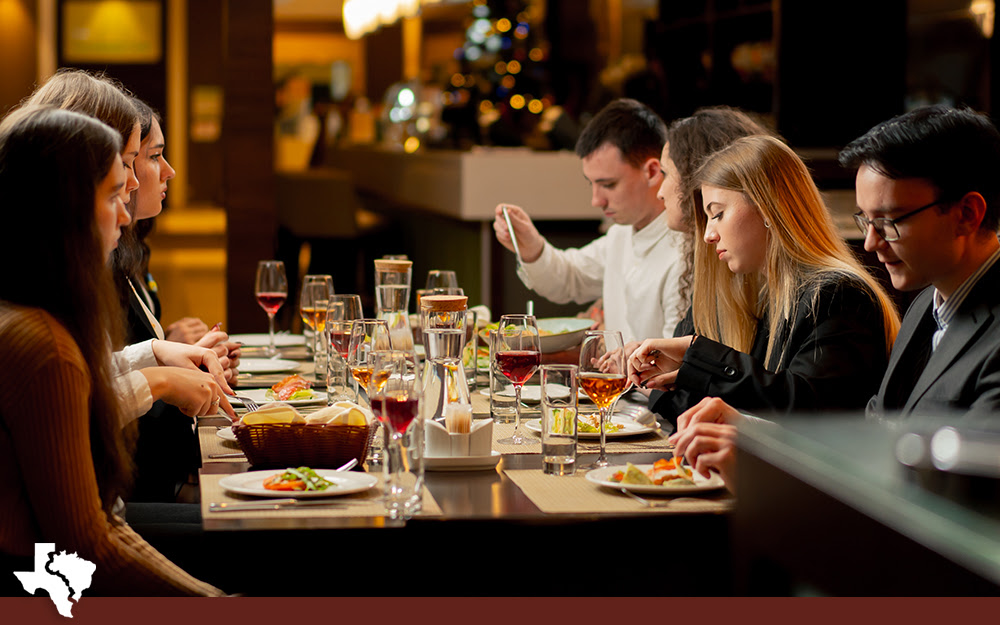
Everyone is going to have their own unique experiences and ideas of what is important in culture. The best thing you can do is have an open and earnest discussion with the goal of learning. Trust us; we’re more than happy to help you learn, instead of dealing with a stereotypical self-centered American tourist (not that any of our fine diners would be so crass, obviously.)
Even still, here are some common norms you’re likely to encounter, even if they aren’t entirely omnipresent.
#1: Not Using the Napkins
The biggest element of Brazilian table manners that an American is likely to get wrong is the attitude toward cleanliness while dining.
In America, it’s often just expected that some meals are going to be messy. Most aren’t on the order of BBQ ribs, where a bib and some wet wipes are included in the experience, obviously, but a lot of them expect at least a little bit of grease or crumbs somewhere.
- Picking up a slice of pizza.
- Grabbing a handful of chips.
- Enjoying a slice of toast.
- Double-hand gripping a greasy burger.
You grab your food, you take a bite or two, you put it down, and you wipe your hands with a napkin. It’s simple and commonplace, right?
Well, not in Brazil it isn’t!
Every table in a restaurant in Brazil is going to come with a napkin dispenser, but the first time you try to grab one to wipe off your hands, you’re in for a rude awakening: that’s not really a napkin, and it’s not for cleaning.
Instead, these “napkins” are actually little strips of waxed paper. As you might imagine, with a coating of wax, they very much aren’t going to clean anything off of your hands. But that’s fine, because they’re not a cleanup tool; they’re a preventative tool.
The idea is that any time you would be grabbing a food item with your hands, you use a napkin to grab it instead. Even things like pizza and burgers are held with these napkins or in wrappers, rather than eaten with your hands.
This way, your hands are kept free of any grease or crumbs. Conversely, anything on your hands is kept away from the food, which can be important, especially for day laborers who might be grabbing a meal fresh off work, though we do prize cleanliness and will wash up first regardless.
Depending on where you are, more cleanup-oriented napkins might be available as well, especially in homes and casual settings. But, don’t expect the napkin dispenser on your table to have something that will sop up grease.
#2: Sharing Entrées the Right Way
Another element of food culture that surprises Americans can be the way entrées aren’t as individual as they are in America.
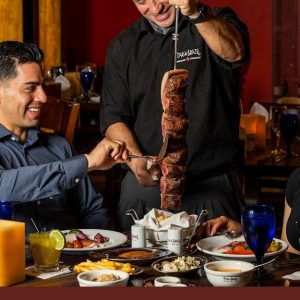
Sure, in a churrascaria where rodizio is the norm, you’re expected to use tongs to take your slices and leave your knife and fork for your own enjoyment. Touching the shared meat with the same utensils that touch your mouth is rude and dirty.
But the same goes for even normal entrées at non-rodizio restaurants, as well.
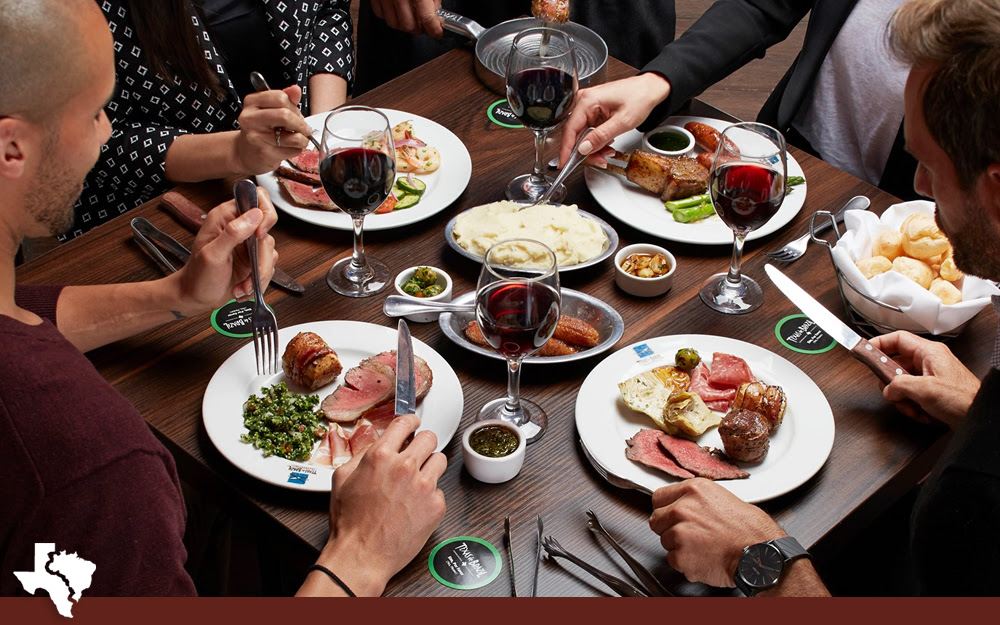
Americans are often used to ordering whole entrées for themselves, so there’s no real need to share. And sure, you can still do that. Depending on the kind of restaurant, it might even be the expectation. You aren’t going to split a burger, generally, right?
But for many other locations, an entrée is large and meant to be shared. A serving spoon, a special set of utensils, or even just a box of toothpicks might be the go-to option for transferring portions of food to your plate from the shared platter. That way, you aren’t using your own utensils for both your mouth and the shared food.
It really is all about cleanliness.
There’s nothing too strange about using a serving spoon for shared food; Americans do it, too. It’s just something you encounter much more often in Brazil, even with smaller entrées, whereas in America, you’re more likely to see it only with larger group dining, buffet-style dining, and the ever-popular potluck.
#3: Keep the Noises to a Minimum
This one is actually pretty similar to America, but tends to be a little stricter in Brazil than many visitors might expect. Brazilians generally want the act of eating to be as minimally disruptive as possible, and that includes being as non-disruptive as possible for other people.
There’s always going to be some noise, obviously. Crinkling of paper, clanking of utensils, the shifting of ice in a glass, that’s all to be expected.
It’s the human noises that you want to keep on the down-low. Avoid smacking lips, chewing noises, slurping, burping, and all the rest.
This actually ties in with some of the other elements of Brazilian dining. In particular, Brazilians often cut their food into very small bites, specifically so the act of chewing can be as minimal as possible. Even finger foods are cut down as often as not.
#4: Take Your Time
In a lot of cases, American diners are encouraged to make their orders, eat, and move on fairly quickly. Leisurely dining is more reserved for parties, family gatherings, and home meals, but restaurants are expecting to keep traffic moving, so no one has to wait for a space to open up for their own meals.
In Brazil, dining is a much more leisurely experience. A lot of elements of Brazilian culture are very laid-back, and that’s expressed in the food culture just as much.
In part, this is because mealtimes are meant just as much for relaxation, socialization, and fraternization as they are for eating. You take your time with your meals, you chat with your friends while you’re dining, and you thoroughly enjoy your meal along the way.
This is part of why rodizio works so well for us; no one wants to order a steak and have most of it be cold by the time they’re eating it, but with rodizio, new slices of hot, fresh meat are circulated on the regular.
Related to this, many meals will end with a cup of coffee. This helps aid digestion and settle food, but it’s also just a continuation of the socialization aspect of the meal. Even if you’re not a fan of coffee, it’s considered rude to leave before everyone has enjoyed their cup, so plan that extra time into your schedule.
#5: Wait for Everyone to be Served
This is another one that isn’t too uncommon in America, but is taken more seriously in Brazil than you might expect. Basically, it’s just considered rude to tuck into your meal if there are people at your table who haven’t yet been served theirs.
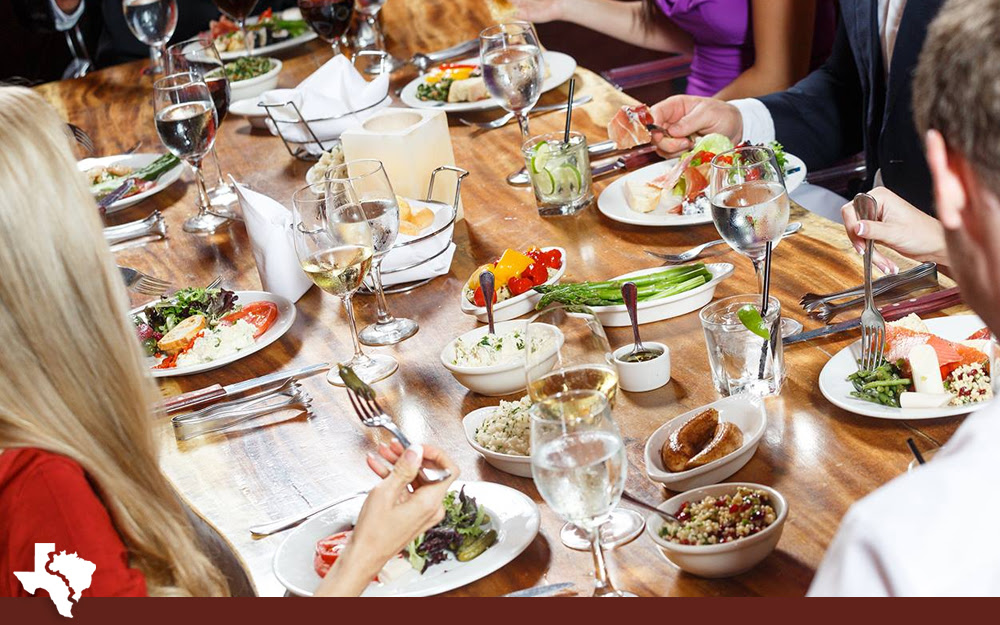
Yes, the food is going to look and smell delicious, but you still need to hold off until the last person is served. Don’t worry; it will still be delicious a few minutes from now, too.
Other Small Dining Etiquette Rules
There are a handful of etiquette rules surrounding dining that we didn’t give a whole section above, but are worth mentioning.
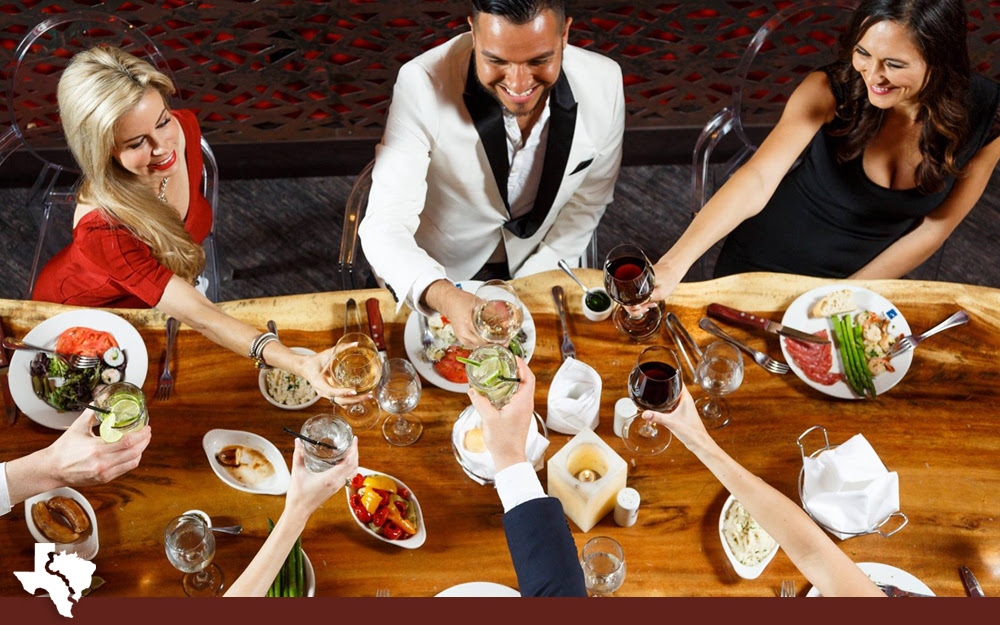
Some of these are “rules” that are often ignored or are only observed in the most formal settings. Others might be limited to specific situations, like when you’re dining with older people who stand by their etiquette, rather than younger folks who don’t mind it.
- Keep your hands visible above the table. Resting your wrists on the table is fine, but elbows stay off. This is another one of those older rules that everyone follows but not many people know why they exist, so they’re falling out of fashion. You might get some dirty looks or uncomfortable glares and not know why if you violate these rules.
- Hide your toothpick use. Using a toothpick after a meal isn’t frowned upon or anything, but showing your teeth can be, so it’s better to hide your mouth behind your hand or a napkin if you have to pick something loose from your teeth.
- In many cases, the person inviting you out to eat is intending to pay the bill, and you won’t need to contribute. This is often divided by class, though; people with lower incomes and younger people tend to be more inclined to split the bill, since they might not be able to afford paying for everyone.
- Don’t sit at the head of the table. That space is reserved for the head of the household. More importantly, the person at the head of the table is also often the person footing the bill, so be careful; you might have an unexpected expense if you sit in the wrong place!
- Hold utensils the right way. Specifically, the fork goes in the left hand and the knife in the right, and they don’t swap places. For some people, this can feel uncomfortable, but it’s how we do it in Brazil. This is another of those traditions that isn’t as readily observed, but can still be a source of friction.
The good news is, Brazilians are generally friendly people, so even if you’re making a bit of a social faux pas, they’re just going to write it off as tourist behavior and won’t necessarily hold it against you. Sure, they may be a little blunt, and you might encounter some culture shock, but hey, that’s part of travel!
The truth is, Brazil is gorgeous enough, and there’s enough to see and do that little elements of social friction like this aren’t going to add up to much as long as you’re broadly at least trying. It really is the thought that counts!