
Why Brazilians Put Farofa on Almost Everything They Eat
At any Brazilian table (a weekday lunch, a Sunday churrasco and a holiday feast), a small bowl of warm, toasted crumbs is usually going to make an appearance. Visitors from outside Brazil will see it and go quiet – they won’t be quite sure if they should reach for it or just leave it alone. That hesitation makes total sense because there’s nothing like it in Western cooking, and there’s nothing sitting next to it to give you any clue what it’s even for.
Farofa is just a bit hard to categorize. It’s not a sauce, it’s not a spice, and it doesn’t fit into any side dish you’d already know. On a plate, it just sits next to the rice and beans, gets sprinkled over the grilled meat and quietly soaks up whatever juices pool at the bottom. The whole point of it can be a little hard to make sense of if you’ve never had it before.
Farofa’s role in Brazilian cuisine (and why no self-respecting Brazilian would dream of leaving it off the table) makes a whole lot more sense when you look at the texture, the history and the culture behind it. Farofa started as a survival staple for Indigenous peoples, picking up influences from Portuguese settlers and African slaves along the way and slowly working its way onto millions of Brazilian plates – and has stayed there ever since. A dish with roots that go back thousands of years deserves quite a bit more credit than just being a topping.
Here’s why farofa is Brazil’s all-time favorite topping for just about anything.
Table of Contents
What Farofa Is and Where It Began
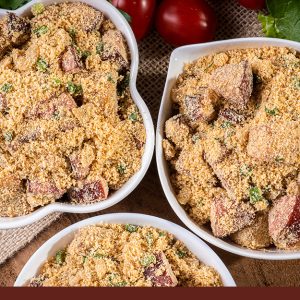
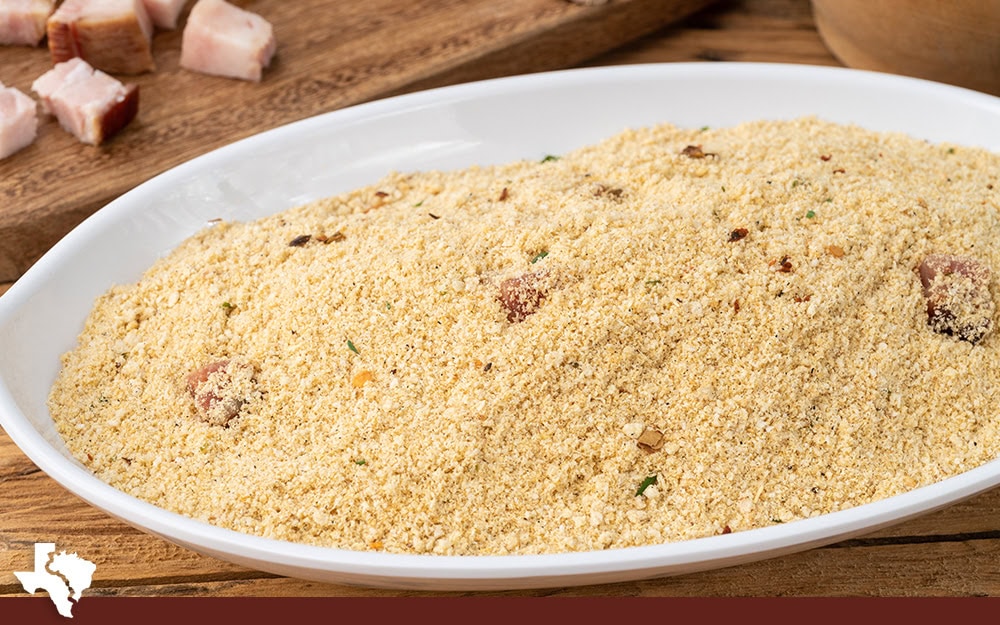
Farofa is cassava flour that gets toasted in a pan with butter or oil until it turns golden brown and a little bit crispy. From there, it’s left to whoever is making it – garlic, onions, bacon, eggs, fresh herbs, or just about any combination of them will work well. Every cook has their own take on it, and the flexibility that comes with that is a big part of what makes it so interesting. No two recipes are ever quite the same – every family, every region and every cook across Brazil has their own version of it.
Cassava has been a part of South American life for thousands of years because it literally grew here and was farmed here, and Brazilian cooks have had enough time with it to make it feel their own. That history tends to come through in the food itself, which is probably why farofa fits well at almost any Brazilian meal.
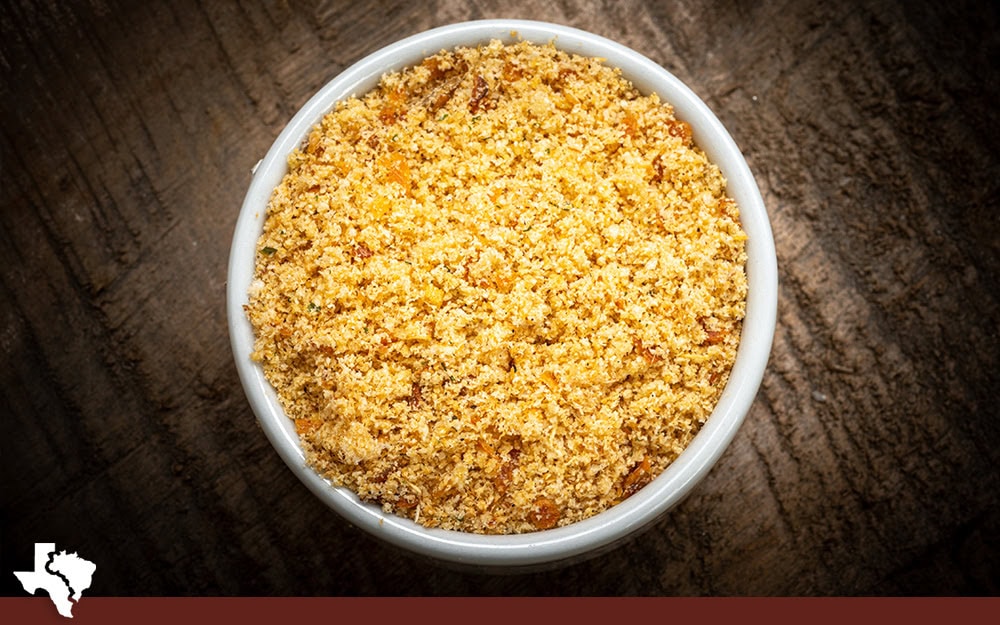
What those outside Brazil don’t quite get is that farofa acts more like a seasoning or a finishing touch, something you can scatter over rice, beans, meat, or just about anything else on your plate, and it all comes from the toasting process. The heat pulls the moisture out of the flour and leaves it with a loose, almost sandy texture – a texture that actually changes the way everything else on the plate feels as you eat it. That part alone is worth paying attention to, and it’s where farofa starts to set itself apart from everything else on the table.
Farofa Brings a Crunch to Every Plate
Farofa ends up on almost every Brazilian plate for a reason. That reason can depend on how it feels in your mouth. Brazilian food tends to be rich and full of flavor, and farofa is more or less what keeps that from tipping into a bit too much at once.
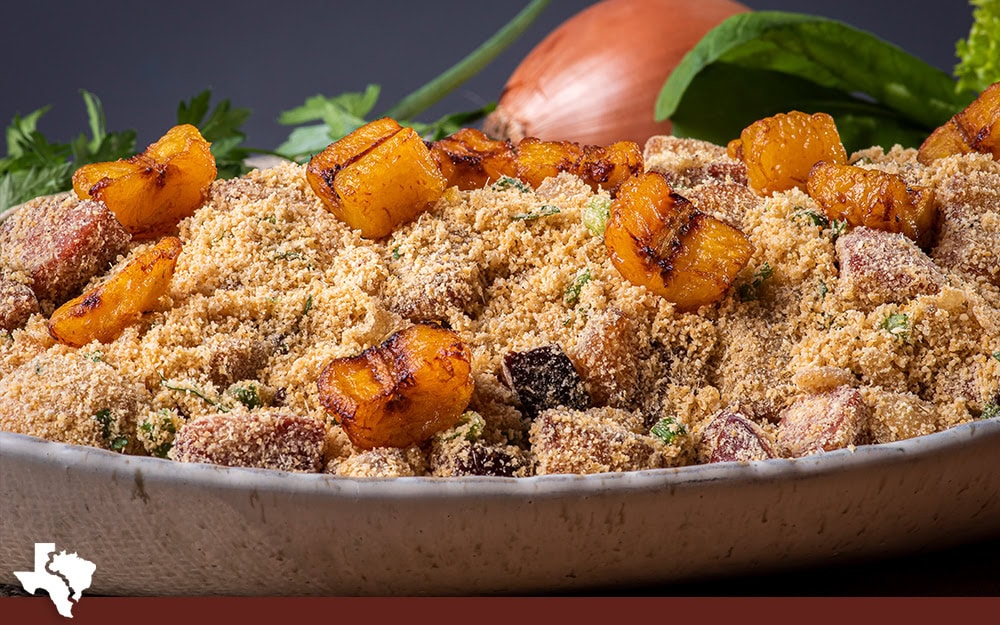
Feijoada is a slow-cooked stew of black beans and pork, and on its own, it’s pretty satisfying – rich, hearty, and so comforting. But without farofa alongside it, the dish can sit a little heavy and start to feel like too much of the same. Farofa brings some texture and breaks everything up in the best possible way.
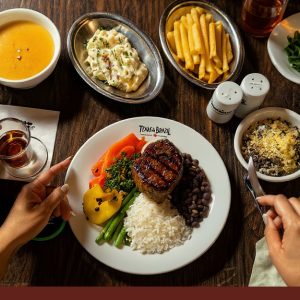
This works just as well with grilled meats. A cut of churrasco releases juice as you cut into it. That runs right across the plate. Farofa serves two purposes here – it soaks up every drop of that flavor, so nothing gets left behind, and each bite ends up more satisfying than the one before it.
That contrast is what pulls the whole dish together. A saucy, tender bite with a toasty, slightly gritty crunch that arrives at the exact same time – it lifts the whole plate. It’s the combination that has you going back for another forkful before you’ve even finished the one you’re on.
Bread, rice and potatoes are all decent sides. But most of them just fade right into whatever dish they’re served with – more of a filler than a feature. Farofa is different – it’s its own flavor, its own texture and its own presence on the plate, which is why it remains a fixture at Brazilian tables.
How Farofa Grew From Survival to Tradition
Farofa didn’t start out as a side dish – it started as survival.
Long before Portuguese ships reached Brazilian shores, Indigenous peoples across the region had already built their entire diets around cassava. The root wasn’t easy to work with – you had to process it, extract its natural toxins, dry it and grind it down into flour. That effort paid off, though. That flour kept communities fed through dry seasons and long journeys, and it held up without refrigeration – easy to store, filling and reliable.
Then colonization changed everything. Portuguese settlers arrived and found that cassava flour fit right into their own culinary traditions. Enslaved Africans, brought to Brazil by force, carried with them generations of hard-won knowledge about how to season and elevate even the plainest ingredients into something legitimately worth eating. Farofa as we know it now grew out of that combination of necessity and creativity – not invented but slowly shaped over time by those who had very little choice but to work with what they had.
That history is still there in every spoonful. What started as a matter of survival eventually became something that families actually looked forward to sharing together. Recipes weren’t written down – they were watched and committed to memory and passed from one generation to the next. At some point along the way, it stopped being about necessity and became something far more personal. A dish like this carries its identity with it.
That’s a big part of what makes farofa mean what it does to Brazilians. The texture, the crunch, the way it drinks up every drop of juice from the rest of the plate – it all points back to something quite a bit older than any single family’s tradition.
How Farofa Is Different Across the Regions
In the Northeast of Brazil, farofa stays pretty true to its roots – butter, salt and not much else past that. The restraint is actually the whole point. Families across states like Bahia and Pernambuco have always preferred the most stripped-down version, and it’s hard to argue with them.
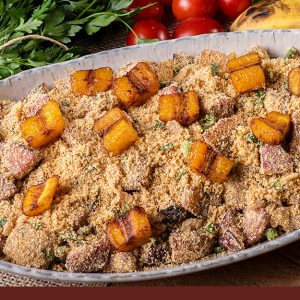
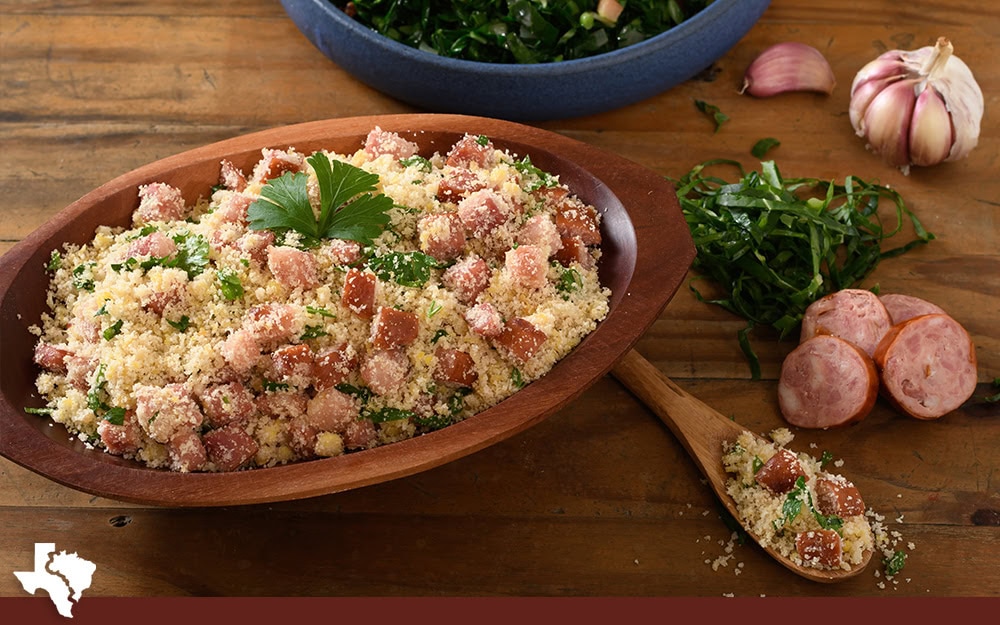
Head south to São Paulo or Rio de Janeiro, and the dish takes on a whole different personality. The cooks down there aren’t shy about it – they pile in ingredients like bacon, smoked sausage and caramelized onion. Plenty of versions will even add slices of banana. That little bit of sweetness cuts right through all that salt.
The Amazon is a different story altogether. The cooks up there pull from what the land and the river give them (tucupi, Brazil nuts, dried river fish) and what comes out looks almost nothing like what you’d find in Recife. The same base ingredient. But it’s a different dish by the time it hits the plate.
What makes farofa interesting is that it’s a loose framework – one that each region fills in with whatever happens to grow, swim or get smoked nearby. A bowl of farofa in Belém has a very different personality than one you’d find alongside a churrasco in Porto Alegre – even when they hit the table the same way.
Farofa at Every Table That Matters
At a Brazilian Christmas dinner, farofa holds its place right next to the turkey and rice, as natural a part of the spread as anything else on the table – and everyone in that room would agree.
Weekend churrascos carry their own set of expectations. The meat is always going to get most of the attention – and rightfully so. But farofa is more of a quiet fixture – the staple that families pass around without a second thought. It’s just always been there, and at a churrasco, everyone expects to find it.
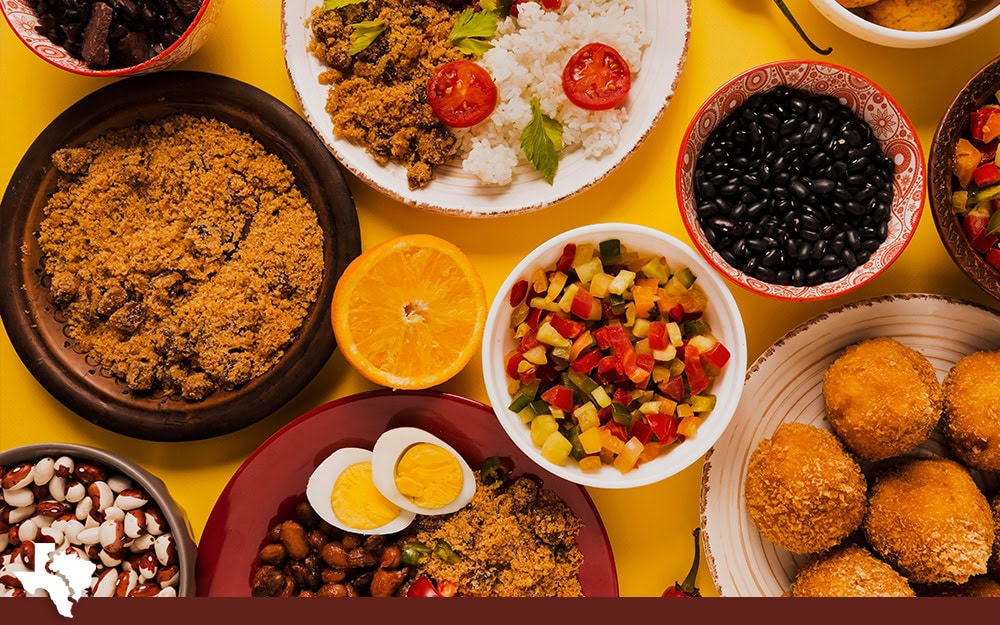
That presence is something that takes years to earn. A dish has to show up at the same moments, year after year – birthdays, holidays and lazy Sunday afternoons with the whole family packed in around the table. Over time, the food and the feeling become connected, almost inseparably. To eat farofa at a celebration is to find something warm and familiar, something that has always just been there.
Cultures have at least one dish that holds everything together – not because it’s the fanciest dish on the table. But because it’s always there and it connects this get-together to the last one and this generation to the one before it. For most Brazilian families, farofa is that dish. No one has to say anything about it or explain why it’s there. Its presence at the table already says everything.
The Wrong Way to Eat Farofa
Most people try farofa for the first time and expect something big and punchy – and they leave a little disappointed when it doesn’t deliver. But farofa was never meant to be the star of the plate. Its whole job is to add texture and to pull everything else together.
The other mistake worth mentioning is treating farofa like a garnish – a small pinch on the side of the plate and nothing more. That’s not how anyone in Brazil actually eats it. Farofa belongs layered generously over your rice, your beans or your meat, so every bite picks up a little of that toasted, nutty crunch.
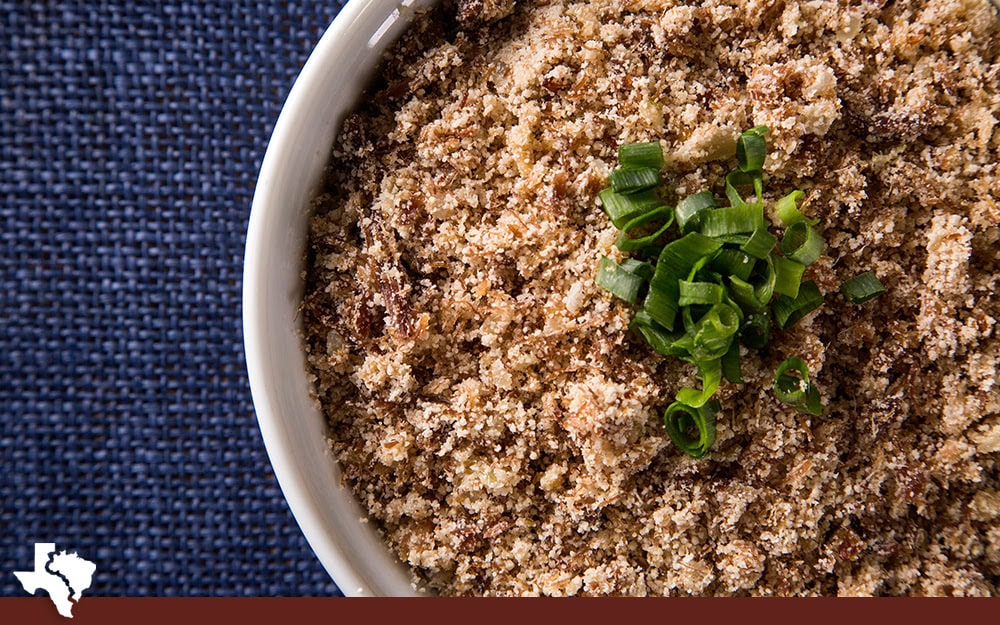
Farofa is probably going to feel very familiar to anyone who likes breadcrumbs on pasta, crispy onions on a green bean casserole or crushed crackers on a bowl of soup. They all share one common thread (a love of contrast and the idea that a soft dish just gets a little more interesting with something crunchy added to it) – it’s just what farofa brings to Brazilian cooking.
The pre-spiced farofa mixes you’ll find at Brazilian grocery stores are a great place to start for anyone who wants to make this at home. A little butter, a hot pan and just a few minutes on the stove are all it takes to pull one together. Most of them will carry flavors like bacon, onion or herbs that are already built into the combination, which takes most of the guessing out of a first attempt. After you’ve made the basic version a few times, it gets even easier to put your own touches on it.
Savor the Moment at Texas de Brazil
Farofa has earned its place at the Brazilian table for a few reasons all at once – it solves a texture problem, carries thousands of years of history behind it, and still manages to make a meal feel like home. It’s not a flashy ingredient by any stretch, and it never quite asks for your attention. A plate without it, though, just feels off in a way that’s hard to explain. That quiet, hard-to-replace quality is rare in any food, and it says quite a bit about what can happen when an ingredient is born out of necessity, from those who actually needed it.
The foods that matter most are almost never the most fussy ones – and farofa is probably the best proof of that you’ll ever find. At its core, it’s just toasted manioc flour. Flour, a pan and a little heat – that’s all it takes. And yet it grew with Indigenous farmers, African cooks, Portuguese settlers and generations of Brazilian families who reached for it at every meal that mattered. The next time you sit down to something rich and saucy and want just a little more contrast in the bite, farofa is what you’re after.
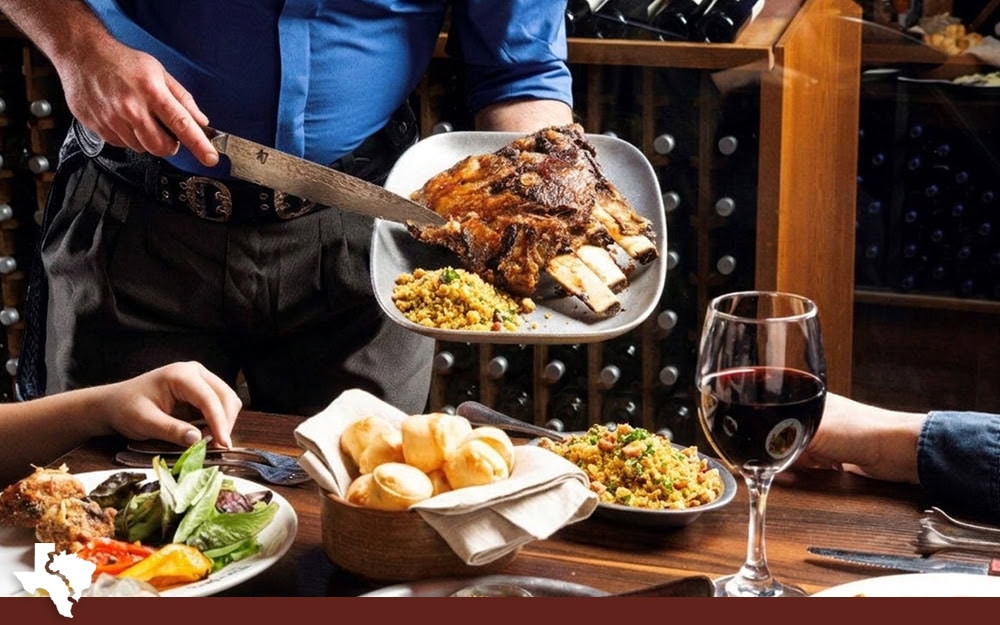
Few dining concepts bring together tradition and spectacle quite like a Brazilian churrascaria, and Texas de Brazil does it better than anywhere. A full churrasco experience includes tableside cuts of picanha, lamb chops and filet mignon. But if you’re cooking at home, the Texas de Brazil Butcher Shop has premium cuts ready to go, and either way, there’s a version of this for just about everyone.
The eClub takes $20 off your next visit, gift cards are a great pick for anyone who deserves a memorable meal, and reservations are open for whenever you’re ready. Come hungry!